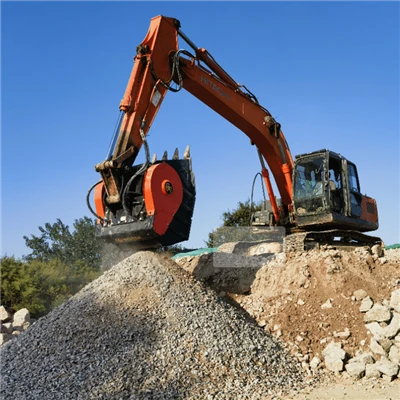
The bucket jaw crusher is a highly efficient and versatile crushing equipment widely used in various industries such as mining, construction, and recycling. As a leading supplier of bucket jaw crushers, we understand the importance of speed control in optimizing the performance of these machines. In this blog post, we will explore the different speed control methods of a bucket jaw crusher and their impact on the crushing process.
1. Importance of Speed Control in Bucket Jaw Crushers
The speed of a bucket jaw crusher plays a crucial role in determining the crushing efficiency, particle size distribution, and overall productivity of the machine. By adjusting the speed, operators can achieve the desired crushing results based on the characteristics of the material being processed and the requirements of the project.


- Crushing Efficiency: A proper speed setting ensures that the material is effectively crushed between the jaws of the crusher. If the speed is too slow, the material may not be crushed thoroughly, resulting in a lower throughput and higher energy consumption. On the other hand, if the speed is too fast, the crusher may experience excessive wear and tear, and the particles may be over - crushed, leading to an increase in fines.
- Particle Size Distribution: The speed of the crusher affects the size of the crushed particles. A slower speed generally produces larger particles, while a faster speed can result in a finer particle size distribution. This flexibility allows operators to customize the output according to the specific needs of the application, such as producing aggregates for concrete or asphalt.
- Productivity: By optimizing the speed, the bucket jaw crusher can operate at its maximum capacity, increasing the amount of material processed per unit of time. This is particularly important in large - scale projects where high productivity is essential for meeting deadlines and reducing costs.
2. Common Speed Control Methods
2.1. Mechanical Speed Control
- V - Belt Drives: One of the most traditional methods of speed control in bucket jaw crushers is through V - belt drives. In this system, the crusher is powered by an electric motor or an engine, and the speed is adjusted by changing the size of the pulleys on the motor and the crusher shaft. A larger pulley on the motor and a smaller pulley on the crusher shaft will result in a higher speed, while the opposite configuration will reduce the speed.
- Advantages: V - belt drives are relatively simple and cost - effective. They are easy to install and maintain, and can provide a certain degree of speed adjustment.
- Disadvantages: The speed adjustment range is limited, and the efficiency of power transmission may decrease over time due to belt wear. Also, the belt may slip under heavy loads, affecting the stability of the crusher speed.
- Gearboxes: Another mechanical speed control method is the use of gearboxes. Gearboxes can provide a more precise and wider range of speed adjustment compared to V - belt drives. By changing the gear ratio, the speed of the crusher can be increased or decreased according to the requirements.
- Advantages: Gearboxes offer high - torque transmission and can handle heavy loads. They provide a stable and reliable speed control, and the speed adjustment can be more accurately set.
- Disadvantages: Gearboxes are more complex and expensive than V - belt drives. They require regular maintenance, including lubrication and gear inspection, to ensure proper operation.
2.2. Hydraulic Speed Control
- Hydraulic Motors: Hydraulic speed control systems use hydraulic motors to drive the bucket jaw crusher. The speed of the hydraulic motor can be adjusted by controlling the flow rate and pressure of the hydraulic fluid. This is typically achieved through a hydraulic pump and a control valve.
- Advantages: Hydraulic speed control offers a wide range of speed adjustment, from very low to high speeds. It can provide smooth and precise speed control, and is capable of handling sudden changes in load without significant speed fluctuations. Hydraulic systems are also more compact and can be easily integrated into the crusher design.
- Disadvantages: Hydraulic systems are more complex and require specialized knowledge for installation and maintenance. They are also more expensive than mechanical systems, and there is a risk of hydraulic fluid leakage, which can be environmentally harmful.
- Variable Displacement Pumps: In combination with hydraulic motors, variable displacement pumps can further enhance the speed control capabilities of the bucket jaw crusher. These pumps can adjust the flow rate of the hydraulic fluid according to the load and speed requirements, allowing for more efficient operation.
- Advantages: Variable displacement pumps can optimize the energy consumption of the crusher by adjusting the flow rate to match the actual load. This results in lower operating costs and reduced wear on the components.
- Disadvantages: Similar to hydraulic motors, variable displacement pumps are complex and require careful maintenance. They are also more expensive than fixed - displacement pumps.
2.3. Electrical Speed Control
- Variable Frequency Drives (VFDs): VFDs are increasingly being used in bucket jaw crushers for speed control. A VFD controls the speed of an electric motor by varying the frequency and voltage of the power supply. By adjusting the frequency, the motor speed can be precisely controlled over a wide range.
- Advantages: VFDs offer excellent speed control accuracy, energy efficiency, and soft - start capabilities. They can reduce the starting current of the motor, which is beneficial for both the motor and the electrical system. VFDs also allow for easy integration with automation systems, enabling remote monitoring and control of the crusher speed.
- Disadvantages: VFDs are relatively expensive, and they require proper grounding and protection to prevent electrical interference. They also generate some heat during operation, which needs to be dissipated to ensure reliable performance.
3. Factors Affecting Speed Control Selection
When choosing a speed control method for a bucket jaw crusher, several factors need to be considered:
- Application Requirements: The specific requirements of the application, such as the type of material being crushed, the desired particle size, and the production capacity, will influence the choice of speed control method. For example, if a high - precision particle size distribution is required, an electrical speed control method like a VFD may be more suitable.
- Cost: The initial cost and operating cost of the speed control system are important considerations. Mechanical speed control methods such as V - belt drives are generally more cost - effective in the short term, while hydraulic and electrical systems may have higher upfront costs but can offer long - term savings in terms of energy efficiency and productivity.
- Maintenance: The ease of maintenance is another factor. Simple mechanical systems are easier to maintain and repair, while more complex hydraulic and electrical systems may require specialized technicians and more frequent maintenance.
- Compatibility: The speed control method should be compatible with the existing crusher design and the power source. For example, if the crusher is powered by a diesel engine, a hydraulic speed control system may be a better option, while an electric - powered crusher can benefit from a VFD.
4. Our Offerings as a Supplier
As a leading supplier of bucket jaw crushers, we offer a wide range of speed control options to meet the diverse needs of our customers. Whether you prefer the simplicity of mechanical speed control or the advanced features of hydraulic or electrical systems, we can provide the right solution for your application.
- Customization: We understand that every project is unique, and we are committed to providing customized speed control solutions. Our team of experts can work with you to analyze your requirements and recommend the most suitable speed control method for your bucket jaw crusher.
- Quality Products: All our speed control components, including V - belt drives, gearboxes, hydraulic motors, and VFDs, are sourced from reputable manufacturers and undergo strict quality control procedures. This ensures the reliability and performance of our crushers in even the most demanding environments.
- Technical Support: We offer comprehensive technical support to our customers. Our experienced technicians can assist with installation, commissioning, and maintenance of the speed control systems, ensuring that your bucket jaw crusher operates at its best.
If you are interested in our Pile Crusher, Large Jaw Crusher, or Small Jaw Crushers, or have any questions about speed control methods for bucket jaw crushers, please do not hesitate to contact us. We are ready to discuss your needs and provide you with the best possible solutions for your crushing projects.
References
- [1] Smith, J. "Crushing Technology Handbook." Publisher X, 2018.
- [2] Johnson, A. "Advanced Speed Control Systems in Industrial Crushers." Journal of Mining and Construction Equipment, Vol. 15, No. 2, 2020.
- [3] Brown, R. "Hydraulic and Electrical Speed Control for Mining Equipment." Proceedings of the International Mining Conference, 2019.