


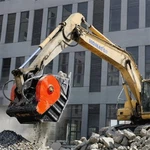


Screening Bucket
Screening buckets are installed on general construction machinery (host), such as excavators and loaders. Using the hydraulic power of the host machine, the rollers of the bucket are controlled by operating the foot valve. The roller rotates in both forward and reverse directions to crush, mix and stir the materials in the bucket. The mixed materials fall under the action of the roller and the weight of the materials. The loading process of materials by screening bucket is the same as that of ordinary bucket. If the roller does not move, the materials will not fall.
Motek coarse screening have 45mm and 75mm gaps for each series.
Customers can choose products with different gaps according to the construction site conditions.
| Model | Applicable Excavator(Ton) | Applicable Loader(Ton) | Bucket Capacity(m³) | Hydraulic Flow(L/min) | Product Size(cm) | Weight(kg) |
| MT208 |
10-18 |
5-9 |
0.8 |
80-200 |
270*150*145 | 1350 |
| MT312 |
18-25 |
9-14 |
1.2 |
120-200 |
190*150*160 | 2010 |
| MT317 |
25-30 |
12-22 |
1.7 |
150-220 |
240*150*160 | 2640 |
| MT320 |
30-45 |
14-30 |
2 |
200-320 |
270*150*160 | 3050 |
| MT427 |
45-55 |
30-45 |
2.7 |
200-320 |
270*150*172 | 3520 |

Motek Fine Screening Bucket

Motek can provide screening buckets with different blade thicknesses. Different blade thicknesses result in different dropping material sizes. At present, we can provide blades with thicknesses of 8mm(can change to 16mm), 16mm(can change to 32mm), 25mm(can change to 50mm, and 35mm.
| Model | Applicable Excavator(Ton) | Applicable Loader(Ton) | Bucket Capacity(m³) | Hydraulic Flow(L/min) | Product Size(cm) | Weight(kg) |
| MT208 |
10-18 |
5-9 |
0.8 |
80-200 |
270*150*145 |
1370 |
| MT312 |
18-25 |
9-14 |
1.2 |
120-200 |
190*150*160 |
2025 |
| MT317 |
25-30 |
12-22 |
1.7 |
150-220 |
240*150*160 |
2660 |
| MT320 |
30-45 |
14-30 |
2 |
200-320 |
270*150*160 |
3070 |
| MT427 |
45-55 |
30-45 |
2.7 |
200-320 |
270*150*172 |
3560 |


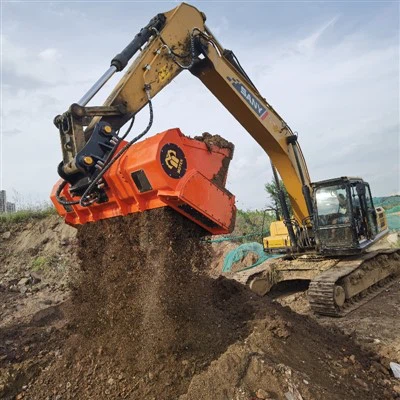


Trustworthy & Reliable Screening Bucket Manufacturer

why choose our products
Motek is leading manufacturer in China on construction machinery attachments, for over 20 years industrial experience. Motek independently develops innovative patented technologies such as special material blades, drive systems, and hydraulic control systems. This makes our products have excellent stability, reliability, and economy.
At the same time, Motek can provide customized services based on customer requirements and actual working conditions to meet the differentiated needs of different customers. Motek has a professional in-situ (on-site) solidifying construction team. Since its establishment, it has completed more than 2 million cubic meters of solidifying construction, making it one of the largest and most professional construction teams in China.
Unique Product Design
Motek has many products patents, which ensure our products perfect step by step in the development. And combined with our own construction experience, our products can adapt to various hard working conditions.
Professional Service
We have over 20 years of industrial experience and complete production management, quality supervision, 7*24h sales service. We also provide OEM&ODM services.
Good Price
After experiencing the quality of Motek, you will know that our price is very advantageous. Low price is not surprising, but high quality and high cost performance are.
Quick Delivery
Motek usually has stock, products can be delivered out in 7-15 days. For customization, we can ship out in 30 days. All products shipped out with export standard packing.
Application of MOTEK Screening Bucket
After years of development, Motek screening buckets are used in many fields, whether it is agriculture, construction, or industry, we can help customers solve problems well, ensuring work efficiency while improving economic benefits.
Coal Crushing Treatment
Remediation of Mine Arsenic Production Sites
Pipeline Fine Soil Backfilling
Remediation of Contaminated Soil
Oily Sludge Treatment
Tailings Treatment or Pebbles Screening
Used with Thermal Desorption Equipment
Polluted Sludge Treatment
Crushing, Screening and Aerating of Biocompost
Features of Motek Screening Bucket
An Ingeniously Crafted Attachment
A screening bucket is an ingeniously crafted attachment designed to integrate seamlessly with earthmoving machinery such as excavators and loaders. Its primary purpose lies in its sieve-like structure, allowing for the systematic sifting and sorting of materials. Whether it’s loose soil, fine sand, hefty rocks, or other construction debris, the screening bucket’s robust design ensures that only the desired materials are collected while the unwanted are filtered out.
Enhanced On-Site Efficiency
Timing and efficiency are everything when it comes to construction projects. With the screening bucket allowing the immediate on-site processing of materials, these attachments erase the need for transporting materials to different locations for sorting. As a result—this directly translates to fewer hours wasted in transit, fewer machinery requirements, and significant financial savings.
Customizable Screening Sizes
Versatility is at the core of a screening bucket’s appeal. Many come equipped with interchangeable screen panels or varying mesh sizes, enabling operators to adapt quickly to different sorting needs. Whether the task calls for coarse sorting or meticulous precision, the screening bucket is up to the task.
Environmental Benefits
In a time when sustainable practices are not just recommended but often required, the screening bucket proves more beneficial than ever. By drastically cutting back on the transport of materials—it results in reduced fuel usage and, consequently, decreased carbon footprints. Also, by enabling immediate reusability of materials, there’s a significant reduction in the demand for new raw materials.
Compatibility Matters
As with all machinery attachments, it’s crucial to ensure compatibility. Not all screening buckets will seamlessly fit all machinery. Factors like weight, bucket capacity, and the hydraulic power of the equipment play pivotal roles. It is important to ensure that the screening bucket’s specifications align with the machinery’s capabilities to avoid undue wear and ensure optimal performance.
Durability and Maintenance
Needless to say, considering the abrasive nature of the materials they handle, screening buckets undergo substantial wear-and-tear. It’s crucial to invest in high-quality buckets crafted from wear-resistant materials to ensure a longer operational life. Regular maintenance routines, from inspecting screens for damage to lubricating moving parts, play a critical role in preserving the bucket’s longevity and efficiency.
the Difference between Small and Large Screening buckets
01
Small Screening Bucket
The processing capacity is relatively small, usually suitable for small projects, narrow sites or sporadic operations. Its small size makes it easy to transport and operate.
02
Medium Screening Bucket
It has moderate processing capacity and can meet the needs of general-sized projects. It is more common in medium-sized construction sites, road maintenance and other projects.
03
Large Screening Bucket
It has strong processing capacity and can cope with large-scale engineering tasks. For example, in large-scale mining, large-scale infrastructure construction and other projects, it can efficiently complete the screening and crushing of large amounts of materials.

Accessories of Screening Bucket
Bucket Frame
It is the main load-bearing component of the bucket. It is generally made of high-strength steel. Its shape is similar to that of a traditional bucket, but it is equipped with a crushing and screening mechanism inside. The design of the bucket body must ensure sufficient strength and rigidity to withstand the impact and weight of the material.
Connecting Frame
It is used to connect the bucket to host machinery and equipment (such as excavators, loaders, etc.). It is usually welded from steel and has a strong connection structure and reliable fixing method.
Crushing Blades
It is a key component for crushing materials. It is usually made of high-hardness alloy steel and has various shapes, such as cones, wedges, etc. The crushing blades are fixed inside the bucket body by bolts or welding. When working, they squeeze, impact and shear the materials to achieve the crushing function.
Crushing Shaft
The component that connects the crushing teeth is usually made of high-strength steel and drives the crushing teeth to move by rotation. The design of the crushing shaft must ensure sufficient strength and stability to withstand the huge torque and impact force during the crushing process.
Driving Device
The component that provides power to the crushing shaft, generally driven by a hydraulic motor or electric motor. The power and speed of the drive device should be selected according to the processing capacity of the bucket and the characteristics of the material to ensure the crushing effect and efficiency.
Vibration Device
A component that provides vibration power for the screen, generally using a hydraulic vibrator or a mechanical vibrator. The vibration frequency and amplitude of the vibration device should be adjusted according to the material characteristics and screening requirements to improve the screening efficiency and accuracy.
Seal
Used to prevent material leakage and dust from entering the bucket, generally made of materials such as rubber or polyurethane. The installation position of the seal is mainly between the bucket body and the connecting frame, between the crushing mechanism and the bucket body, and between the screening mechanism and the bucket body.
Lubrication System
A system that provides lubrication for moving parts such as the crushing shaft and the drive device, generally using grease lubrication or thin oil lubrication. The design of the lubrication system should ensure the normal operation of the moving parts and reduce wear and failure.
Control System
Used to control the working state and parameters of the bucket, generally composed of an electric control box, a sensor and a controller. The control system can realize the functions of starting, stopping, speed regulation, amplitude modulation, etc. of the bucket, as well as monitoring and adjustment of the crushing and screening process.
How to Choose Your Screening Bucket ?
There are many kinds of screening buckets on the market, and it is particularly important for us to choose the screening bucket that suits us.
Screening accuracy
Understand the discharge size and screening efficiency of the bucket. The discharge size should be selected according to the required material size, and the screening efficiency determines the degree to which materials of different particle sizes can be effectively separated.
Durability
Consider the material and manufacturing process of the bucket. High-quality steel and advanced manufacturing processes can improve the wear resistance and service life of the bucket and reduce maintenance and replacement costs.
Adaptability
Check whether the bucket can adapt to different working environments and operating conditions. For example, some buckets are waterproof and dustproof, suitable for harsh working environments; some buckets can be installed on different types of engineering equipment, which improves their versatility.

How to Maintain Screening Bucket
Regular Cleaning: After each use, thoroughly clean the screening bucket to remove debris, soil, or materials that may have accumulated. This prevents blockages and reduces wear on the moving parts.
Inspect Wear Parts: Regularly inspect the wear parts, including the screening blades, drums, and mesh. Replace any worn or damaged components to ensure efficient screening and to avoid further damage to the bucket.
Lubrication: Properly lubricate all moving parts, such as bearings and hinges, to minimize friction and prevent wear. Follow the manufacturer's recommendations for the type and frequency of lubrication.
Check Hydraulic System: The hydraulic system powers the screening bucket. Periodically inspect hoses and connections for leaks or damage. Ensure that the hydraulic oil level is sufficient and replace any worn-out hydraulic components to avoid performance issues.
Tighten Bolts and Fasteners: Regularly check and tighten all bolts, fasteners, and connections to prevent loosening due to vibration and usage. Loose parts can cause misalignment and premature wear.
Monitor crushing Blades
Check the wear of the crushing blades regularly. If the blades are seriously worn, replace them in time. At the same time, check whether the crushing shafts are firmly installed. If they are loose, tighten them in time.
Avoid Overloading
Avoid exceeding the manufacturer's recommended load capacity, as overloading can strain the components and lead to premature wear or damage.
Store Properly
When not in use, store the screening bucket in a clean, dry place to protect it from environmental factors such as rust, corrosion, and weather damage.
Certificate

Frequently Asked Questions
What is screening bucket?
Screening bucket is an attachment used on excavators and loaders to separate different sizes of materials, such as soil, gravel, compost, or demolition debris. The bucket uses a rotating drum or mesh to sift and sort materials based on size, making it ideal for recycling, landscaping, and construction projects.
How does a screening bucket function?
A screening bucket works by scooping up material, which is passed through a rotating screening system inside the bucket. The material is separated based on its size, with finer particles falling through the mesh or drum and larger particles remaining in the bucket. This allows efficient on-site sorting and material reuse.
What types of materials can be screened with a screening bucket?
Screening buckets can handle a variety of materials, including soil, sand, gravel, compost, concrete debris, and organic waste. Some models are specifically designed to handle wet or sticky materials, making them versatile for use in many industries, such as construction, demolition, and landscaping.
What are the key advantages of using a screening bucket?
The primary benefits of a screening bucket are on-site material separation, reduced transportation costs, and increased efficiency. Instead of moving materials to a separate location for sorting, everything can be processed at the worksite, saving time. It also reduces the need for additional equipment, which cuts operational costs.
How do I choose the right screening bucket for my machine?
To choose the right screening bucket, you need to match the bucket size and weight to the specifications of your excavator or loader. Consider the material type you will be screening and the desired output size. Some screening buckets have interchangeable mesh or drum sizes for added versatility.
Can a screening bucket handle wet or sticky materials?
Yes, many screening buckets can handle wet or sticky materials, though specific models or mesh types may be better suited for such tasks. Wet materials may require a different mesh design or higher rotational power to avoid clogging and ensure efficient screening, so it's essential to choose the right bucket.
What maintenance is required for a screening bucket?
Regular maintenance includes cleaning the bucket after use to prevent debris buildup, inspecting wear parts like the mesh or drum, lubricating moving components, and checking hydraulic systems for leaks. Additionally, you should tighten all bolts and fasteners to avoid loosening due to vibration and keep the hydraulic hoses in good condition.
How do I adjust the screen size of a screening bucket?
Most screening buckets allow for interchangeable meshes or drums, enabling users to adjust the screen size to suit different materials. The process involves loosening bolts or clamps, removing the current mesh, and replacing it with one of the desired size. Always consult the manufacturer's manual for specific instructions.
How long does a screening bucket typically last?
The lifespan of a screening bucket depends on the type of material being processed, the frequency of use, and the level of maintenance. With proper care and regular maintenance, a high-quality screening bucket can last for several years. However, frequent use with abrasive materials may shorten its lifespan.
What is the processing capacity of a screening bucket?
304 stainless steel meets the international requirements of food grade, 316 stainless steel is not only food grade or medical grade. However, the use of this medical grade as a production cup will not bring additional benefits to everyone. Why is it called 304 or 316? This is mainly defined according to the material composition. 316 stainless steel is not similar to mineral materials, after use can release some substances to promote human absorption,will not purify water quality, so when used as a water cup material,there is no difference. The difference is that the price of raw materials is different from the size of the sound of the long stunt.
Can screening buckets be used for demolition projects?
Yes, screening buckets are often used in demolition projects to separate reusable materials such as concrete, brick, and debris. This allows contractors to sort materials for recycling or reuse on-site, reducing the need to transport large amounts of waste to landfills and decreasing project costs.
What hydraulic requirements are needed for a screening bucket?
A screening bucket requires a certain hydraulic flow rate and pressure to operate properly. The exact requirements vary by model but generally range between 40-120 liters per minute of hydraulic flow and up to 250 bar of pressure. It's crucial to match your machine's hydraulic capacity with the bucket's needs.
What are the weight ranges of screening buckets?
The weight of a screening bucket can range from 500 kg for smaller models to over 2,000 kg for larger, heavy-duty buckets. The size and weight of the bucket need to be compatible with the capacity of the excavator or loader to avoid overloading and damaging the machine or bucket.
Are screening buckets easy to install on excavators and loaders?
Yes, screening buckets are generally easy to install and use. Most models come with a universal mounting system, allowing them to fit a wide range of excavators or loaders. However, it’s important to ensure that the hydraulic system of your machine matches the requirements of the bucket for optimal performance.
Can a screening bucket reduce operational costs?
Yes, using a screening bucket can significantly reduce operational costs by allowing on-site material processing. This eliminates the need to transport materials to another location for sorting, cutting fuel and labor costs. Additionally, reusable materials can be separated and utilized, reducing the need for purchasing new materials.
What is the difference between a screening bucket and a crusher bucket?
A screening bucket separates materials based on size using a rotating drum or mesh, while a crusher bucket crushes larger materials into smaller, uniform pieces. Screening buckets are ideal for sorting and recycling, while crusher buckets are used for breaking down hard materials like concrete or rock.
How do I prevent clogging in a screening bucket?
To prevent clogging, avoid overloading the bucket and use the correct mesh size for the material being screened. Regular cleaning is also essential, especially when screening sticky or wet materials. In some cases, reducing the rotation speed or using a different mesh design can help reduce clogging.
Can screening buckets handle abrasive materials?
Yes, screening buckets can handle abrasive materials like gravel and concrete debris, but these materials can cause wear on the mesh and other parts. It’s important to regularly inspect and replace worn components to maintain efficiency and avoid damaging the bucket. Special wear-resistant parts can extend the lifespan.
What should I do if my screening bucket is vibrating excessively?
Excessive vibration may indicate an imbalance in the drum or mesh, loose bolts, or worn-out bearings. First, check all fasteners and tighten any that are loose. Inspect the drum for proper alignment and check the condition of the bearings. If the issue persists, consult the manufacturer for troubleshooting.
How do I change the mesh in a screening bucket?
Changing the mesh in a screening bucket involves loosening the bolts or clamps that hold the current mesh in place. Once loosened, the old mesh can be removed and replaced with a new one. Make sure to properly secure the new mesh and ensure it’s tensioned correctly for efficient operation.
Can a screening bucket improve recycling operations?
Yes, screening buckets are ideal for improving recycling operations, especially in construction and demolition industries. They allow for on-site separation of materials like concrete, bricks, and soil, reducing the need to transport mixed materials to recycling facilities. This increases efficiency and reduces costs.
What safety precautions should be taken when using a screening bucket?
When operating a screening bucket, ensure it is securely attached to the excavator or loader. Operators should stay clear of the bucket’s path, avoid standing near moving parts, and follow all safety guidelines provided by the manufacturer. Wearing appropriate personal protective equipment (PPE) is also recommended.
How often should wear parts be replaced on a screening bucket?
Wear parts like the screening mesh, blades, and bearings should be inspected regularly. Replacement depends on the material being processed and the frequency of use. Generally, parts should be replaced when they show signs of excessive wear, such as thinning or cracking, to maintain the bucket’s performance.
How should I store a screening bucket when not in use?
When not in use, the screening bucket should be cleaned and stored in a dry, sheltered area to protect it from weather-related damage such as rust or corrosion. Hydraulic components should be covered or disconnected, and the mesh or drum should be kept free from debris. Regular inspections during storage will ensure it’s ready for use.