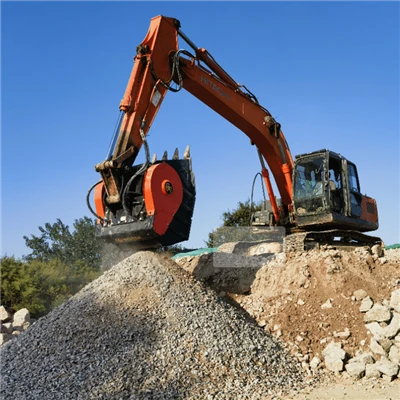
In the realm of aggregate production, rock crusher jaws play a pivotal and multi - faceted role. As a supplier of rock crusher jaws, I've witnessed firsthand how these components are the linchpin in transforming large rocks into valuable aggregates. This blog will delve deep into the significance of rock crusher jaws in aggregate production, exploring their functions, types, and the impact they have on the overall efficiency and quality of the process.
The Fundamental Function of Rock Crusher Jaws
At its core, the primary function of rock crusher jaws is to break down large rocks into smaller, more manageable pieces. Aggregate production starts with raw materials such as boulders, which are often too large to be used directly in construction or other industries. Rock crusher jaws work by applying compressive force to the rocks. When a rock is fed into the crushing chamber formed by the jaws, the movable jaw moves back and forth against the fixed jaw. This repetitive motion exerts pressure on the rock, causing it to fracture and break into smaller fragments.
The ability to control the size of the output is a crucial aspect of this function. By adjusting the gap between the jaws, operators can determine the maximum size of the crushed aggregates. This is essential because different applications require aggregates of specific sizes. For example, road construction may need larger aggregates for the base layer, while concrete production often demands smaller, more uniformly sized aggregates.
Types of Rock Crusher Jaws and Their Suitability for Aggregate Production
There are several types of rock crusher jaws, each designed to meet different needs in aggregate production.
Single - Toggle Jaws
Single - toggle jaws are a popular choice in many aggregate production plants. They are characterized by a simple and robust design. The movable jaw is connected to an eccentric shaft, which causes it to swing back and forth in an arc. This type of jaw crusher is known for its high reduction ratio, meaning it can break down large rocks into much smaller pieces in a single pass. Single - toggle jaws are efficient in handling hard and abrasive rocks, making them suitable for primary crushing in aggregate production. They are also relatively energy - efficient, which is an important consideration in large - scale operations.
Double - Toggle Jaws
Double - toggle jaws offer a different approach to rock crushing. They have a more complex mechanism, with two toggle plates that help transfer the force from the eccentric shaft to the movable jaw. This design provides a more intense and controlled crushing action. Double - toggle jaws are often used for secondary or tertiary crushing in aggregate production. They can produce a more uniform particle size distribution, which is beneficial for applications where high - quality aggregates are required.
Hydraulic Jaws
Hydraulic jaws are a modern innovation in rock crusher technology. They incorporate hydraulic systems that allow for easy adjustment of the jaw gap and overload protection. In aggregate production, hydraulic jaws can quickly adapt to changes in the feed material or the desired output size. If an uncrushable object enters the crushing chamber, the hydraulic system can automatically open the jaws to release the object, preventing damage to the crusher. This feature makes hydraulic jaws highly reliable and reduces downtime in aggregate production plants.
Impact on Aggregate Quality
The quality of the aggregates produced is directly influenced by the performance of the rock crusher jaws. Well - designed and properly maintained jaws can produce aggregates with the right shape, size, and texture.
Particle Shape
The shape of the aggregate particles is an important factor in their performance. Cubical - shaped aggregates are generally preferred in construction because they provide better interlocking and packing, resulting in stronger concrete and more stable road surfaces. The design of the rock crusher jaws can have a significant impact on particle shape. For example, double - toggle jaws tend to produce more cubical particles compared to single - toggle jaws, which may produce more elongated or flaky particles.
Size Consistency
Consistency in particle size is crucial for many applications. Rock crusher jaws that are worn or not properly adjusted can produce aggregates with a wide range of sizes, which can affect the quality of the final product. Regular inspection and maintenance of the jaws, including replacing worn parts, are essential to ensure consistent particle size. Hydraulic jaws, with their ability to precisely adjust the jaw gap, are particularly effective in maintaining size consistency.
Surface Texture
The surface texture of the aggregates can also influence their performance. Aggregates with a rough surface texture tend to bond better with cement in concrete, improving its strength. The type of rock and the crushing action of the jaws can affect the surface texture of the aggregates. Some types of jaws may produce aggregates with a smoother surface, while others can create a more rough and porous texture.


Efficiency and Productivity in Aggregate Production
Rock crusher jaws have a direct impact on the efficiency and productivity of aggregate production plants.
Throughput
The throughput of a crusher, which is the amount of material it can process in a given time, is largely determined by the design and performance of the jaws. High - quality jaws with a large crushing chamber and efficient movement can handle a greater volume of rocks, increasing the overall throughput of the plant. For example, a well - maintained single - toggle jaw crusher can process a significant amount of material per hour, making it suitable for large - scale aggregate production.
Energy Consumption
Energy consumption is a major cost factor in aggregate production. Rock crusher jaws that are designed to operate efficiently can reduce energy consumption. As mentioned earlier, single - toggle jaws are relatively energy - efficient due to their simple design. Additionally, modern hydraulic jaws can optimize the crushing process by adjusting the force applied based on the hardness of the rock, further reducing energy waste.
Maintenance and Downtime
Minimizing maintenance and downtime is crucial for maintaining high productivity in aggregate production. Rock crusher jaws that are made from high - quality materials and have a long service life can reduce the frequency of maintenance. For example, jaws made from wear - resistant alloys can withstand the abrasion caused by hard rocks for a longer time. Regular inspection and preventive maintenance of the jaws can also help identify potential problems before they cause significant downtime.
The Role of Rock Crusher Jaws in Sustainable Aggregate Production
Sustainability is becoming an increasingly important consideration in aggregate production. Rock crusher jaws can contribute to sustainable practices in several ways.
Recycling
Many modern aggregate production plants are incorporating recycling processes, where old concrete and asphalt are crushed and reused as aggregates. Rock crusher jaws can be used to break down these recycled materials effectively. They can handle the mixed composition of recycled aggregates and produce high - quality products that can be used in new construction projects. This reduces the demand for virgin materials and helps conserve natural resources.
Reduced Environmental Impact
Efficient rock crusher jaws can reduce the environmental impact of aggregate production. By minimizing energy consumption and reducing the amount of waste generated during the crushing process, they contribute to a more sustainable operation. Additionally, some advanced jaw crushers are designed to produce less dust and noise, which is beneficial for the environment and the health of workers.
Conclusion and Call to Action
In conclusion, rock crusher jaws are an indispensable component in aggregate production. They play a crucial role in breaking down rocks, controlling the size and quality of aggregates, and ensuring the efficiency and sustainability of the production process. As a supplier of rock crusher jaws, we are committed to providing high - quality products that meet the diverse needs of the aggregate production industry.
If you are in the aggregate production business and are looking for reliable and efficient rock crusher jaws, we invite you to [initiate a contact process]. Our team of experts can help you select the right type of jaws for your specific application and provide you with the support and maintenance services you need to keep your production running smoothly.
For more information on our products, you can also visit our website and explore our range of Excavator Jaw Crusher Bucket, Jaw Bucket, and Best Crusher Bucket.
References
- "Crushing and Screening Handbook", published by the Aggregate and Mining Association.
- "Advanced Rock Crushing Technologies", research paper from the International Journal of Mining and Aggregate Engineering.
- "Sustainable Aggregate Production Practices", report by the Environmental Protection Agency in the field of construction materials.