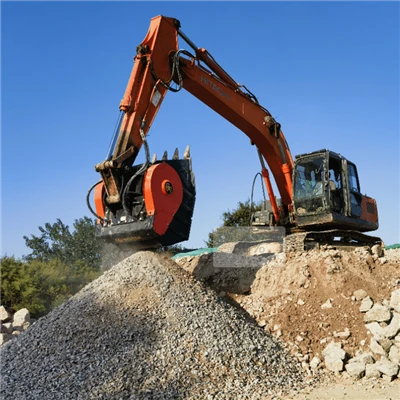
Hey there! As a supplier of large jaw crushers, I often get asked about the particle shape of the products crushed by these bad boys. So, I thought I'd take a deep dive into this topic and share some insights with you.
First off, let's talk a bit about large jaw crushers. These machines are workhorses in the mining, construction, and aggregate industries. They're designed to break down large rocks and materials into smaller, more manageable pieces. The basic principle behind a jaw crusher is simple: it uses a fixed jaw and a movable jaw to compress the material between them, causing it to break apart.
Now, onto the main question: what's the particle shape of the products crushed by a large jaw crusher? Well, it's not a one - size - fits - all answer. The particle shape can vary depending on several factors.
Factors Affecting Particle Shape
1. Feed Material Characteristics
The type of material you're feeding into the jaw crusher plays a huge role. For example, if you're crushing hard and brittle rocks like granite or quartzite, the particles tend to have a more angular shape. These materials fracture along their natural cleavage planes when subjected to the compressive forces in the crusher. On the other hand, if you're dealing with softer materials like limestone, the particles may be less angular and more rounded. This is because softer materials are more likely to deform under pressure rather than break cleanly along cleavage planes.
2. Crusher Settings
The settings of the large jaw crusher also impact the particle shape. The closed - side setting (CSS), which is the smallest distance between the fixed and movable jaws at the bottom of the crushing chamber, is a crucial factor. A smaller CSS generally results in a more cubical particle shape. When the CSS is small, the material is subjected to more intense crushing forces, which helps to break it into more regular - shaped pieces. However, if the CSS is too small, it can lead to increased wear on the crusher parts and lower throughput.
The speed of the crusher's eccentric shaft also matters. A higher speed can cause more rapid and violent impacts on the material, which may result in a more irregular particle shape. Conversely, a lower speed allows for more controlled crushing, potentially leading to better - shaped particles.
3. Crushing Chamber Design
The design of the crushing chamber in a large jaw crusher can influence particle shape. Some crushers have a deeper crushing chamber, which provides more opportunities for the material to be crushed multiple times. This can lead to a more uniform and cubical particle shape. Additionally, the profile of the jaws can affect how the material is crushed. For example, jaws with a more optimized shape can help to direct the material in a way that promotes better particle breakage and shape.
Typical Particle Shapes
In general, the products crushed by a large jaw crusher can have the following particle shapes:
Angular Particles
As mentioned earlier, angular particles are common when crushing hard and brittle materials. These particles have sharp edges and corners, which can be beneficial in some applications. For example, in concrete production, angular particles can provide better interlocking between the aggregates, resulting in a stronger concrete structure. They're also useful in road construction, where the angularity helps to improve the stability and skid resistance of the road surface.
Cubical Particles
Cubical particles are highly desirable in many industries. They have a more regular shape, with approximately equal dimensions in all directions. Cubical particles are often produced when the crusher settings are optimized and the material is crushed under the right conditions. They offer good flowability and packing characteristics, which are important in applications such as asphalt production and precast concrete manufacturing.
Elongated and Flaky Particles
Unfortunately, large jaw crushers can also produce some elongated and flaky particles. Elongated particles are much longer than they are wide, while flaky particles are thin and flat. These particles are generally considered undesirable because they can reduce the strength and workability of concrete and asphalt. They can also cause problems in conveyor systems and other downstream equipment due to their irregular shape. However, by carefully controlling the feed material and crusher settings, the production of elongated and flaky particles can be minimized.
Importance of Particle Shape
The particle shape of the crushed products is not just a cosmetic concern. It has significant implications for the performance and quality of the final products in various industries.
In the construction industry, the particle shape of aggregates affects the properties of concrete and asphalt. As mentioned earlier, angular and cubical particles can improve the strength and durability of concrete, while elongated and flaky particles can have a negative impact. In asphalt, the right particle shape helps to ensure good compaction and resistance to rutting.
In the mining industry, the particle shape can influence the efficiency of downstream processes such as grinding and separation. Well - shaped particles are easier to handle and process, which can lead to lower energy consumption and higher productivity.
Our Large Jaw Crushers and Particle Shape
At our company, we understand the importance of particle shape and have designed our large jaw crushers to produce high - quality, well - shaped particles. Our crushers are equipped with advanced features to optimize the crushing process and minimize the production of undesirable particle shapes.
We offer a range of Jaw Rock Crushers that are suitable for different types of materials and applications. These crushers have a robust design and precise crusher settings, allowing you to achieve the desired particle shape. Our Excavator Jaw Crushers are also popular among customers who need a portable and efficient crushing solution. They can be easily attached to an excavator, providing flexibility and convenience on the job site.
If you're in the business of crushing concrete, our Concrete Crusher Buckets are a great option. They're specifically designed to crush concrete efficiently and produce high - quality recycled aggregates with a good particle shape.
Contact Us for Your Crushing Needs
If you're looking for a reliable large jaw crusher that can produce the right particle shape for your application, look no further. We're here to help you find the perfect crusher for your needs. Whether you're in the mining, construction, or recycling industry, we have the expertise and products to meet your requirements.
Don't hesitate to reach out to us for more information or to discuss your specific needs. We can provide you with detailed product specifications, pricing, and technical support. Let's work together to achieve the best results in your crushing operations.


References
- Smith, J. (2018). "Crushing Technology: Principles and Applications." Mining Engineering Journal.
- Johnson, R. (2019). "Particle Shape Analysis in Aggregate Production." Construction Materials Review.