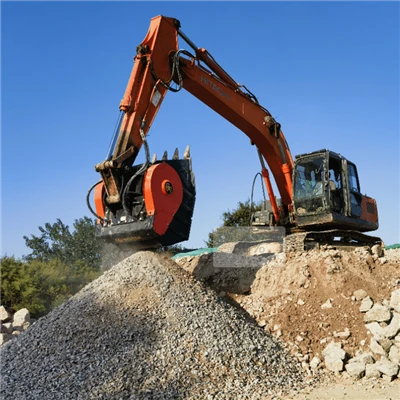
As a supplier of jaw buckets, one question I often get asked is whether a jaw bucket can be used in wet conditions. This is a crucial inquiry for many construction and mining operations where wet environments are common. In this blog, I'll delve into the technical aspects, advantages, challenges, and best practices related to using jaw buckets in wet conditions.
Technical Considerations
To understand if a jaw bucket can be used in wet conditions, we first need to look at its basic components. A jaw bucket consists of a fixed jaw plate and a movable jaw plate. The material is fed into the crushing chamber between these two plates, and the movable jaw moves back and forth to crush the material.


The main concern in wet conditions is the impact of water on the mechanical parts. Water can cause corrosion, which can weaken the structural integrity of the jaw plates and other components over time. However, modern jaw buckets are designed with high - quality materials that are resistant to corrosion. For example, some jaw plates are made of manganese steel, which not only has high wear resistance but also good corrosion resistance in wet environments.
Another important aspect is the electrical and hydraulic systems. In a jaw bucket, the hydraulic system is responsible for powering the movement of the movable jaw. Water ingress into the hydraulic system can cause damage to the seals, valves, and pumps. To prevent this, most jaw buckets are equipped with waterproof seals and protective covers for the hydraulic components. Additionally, the electrical components, such as sensors and control units, are also designed to be waterproof or at least water - resistant.
Advantages of Using Jaw Buckets in Wet Conditions
There are several advantages to using jaw buckets in wet conditions. First of all, in wet environments, the material is often softer and more pliable. This means that the jaw bucket may require less energy to crush the material compared to dry conditions. For example, in a quarry where the rocks are wet due to rain or groundwater, the jaw bucket can operate more efficiently as the wet rocks are easier to break apart.
Secondly, wet conditions can help to reduce dust emissions during the crushing process. Dust is a major concern in construction and mining operations as it can pose health risks to workers and cause environmental pollution. When using a jaw bucket in wet conditions, the water acts as a dust suppressant, keeping the air cleaner and creating a safer working environment.
Challenges of Using Jaw Buckets in Wet Conditions
Despite the advantages, there are also some challenges associated with using jaw buckets in wet conditions. One of the main challenges is the increased risk of clogging. When the material is wet, it tends to stick to the jaw plates and the inside of the crushing chamber. This can reduce the efficiency of the crushing process and may even cause the jaw bucket to stop working. To address this issue, some jaw buckets are designed with special anti - clogging features, such as self - cleaning mechanisms or smooth - surfaced jaw plates that prevent the material from sticking.
Another challenge is the potential for damage to the teeth of the jaw plates. In wet conditions, the abrasive action of the material may be different compared to dry conditions. The wet material can carry more fine particles, which can cause more rapid wear on the teeth of the jaw plates. Regular inspection and maintenance of the jaw plates are essential to ensure their proper functioning and to replace them when necessary.
Best Practices for Using Jaw Buckets in Wet Conditions
To ensure the safe and efficient use of jaw buckets in wet conditions, it is important to follow some best practices. First, before starting the operation, it is necessary to check the condition of the jaw bucket, especially the seals and protective covers of the hydraulic and electrical components. Make sure they are in good condition and there are no signs of damage or wear.
Secondly, during the operation, it is advisable to adjust the feeding rate according to the moisture content of the material. If the material is very wet, a slower feeding rate may be required to prevent clogging. Additionally, regular cleaning of the jaw bucket is necessary to remove any stuck material and prevent corrosion.
After the operation, it is crucial to dry the jaw bucket thoroughly. This can be done by running the jaw bucket empty for a short period to remove any remaining water. Also, applying a protective coating to the exposed metal parts can further prevent corrosion.
Comparison with Other Crushers in Wet Conditions
When compared to other types of crushers, jaw buckets have some unique advantages in wet conditions. For example, cone crushers may be more prone to clogging in wet conditions as the crushed material can easily accumulate in the narrow gaps between the mantle and the concave. On the other hand, jaw buckets have a relatively open crushing chamber, which reduces the risk of clogging to some extent.
Bucket Jaw Crusher is a popular choice among users due to its compact design and high efficiency. It can be easily attached to an excavator or a loader, making it suitable for various applications in wet environments. Similarly, Big Jaw Crusher and Large Jaw Crusher offer more power and capacity, which are ideal for large - scale projects in wet conditions.
Conclusion
In conclusion, a jaw bucket can indeed be used in wet conditions. With proper design, maintenance, and operation, it can offer many advantages such as efficient crushing, reduced dust emissions, and better performance in soft materials. However, it is important to be aware of the challenges and follow the best practices to ensure its long - term reliability.
If you are interested in purchasing a jaw bucket for your wet - condition operations, I encourage you to contact us for further details and a personalized solution. We have a wide range of jaw buckets to meet your specific needs, and our team of experts can provide you with professional advice and support.
References
- Smith, J. (2020). "Crushing Equipment in Wet Environments". Journal of Construction Engineering.
- Brown, A. (2019). "Advances in Jaw Bucket Design for Challenging Conditions". Mining Technology Review.