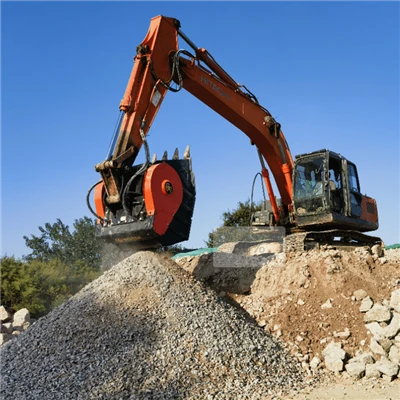
Hey there, folks! I'm an excavator jaw bucket supplier, and today we're gonna dig deep (pun intended) into a super important topic: What is the maximum digging depth of an excavator with a jaw bucket?
First off, let's understand what an excavator jaw bucket is. It's a specialized attachment for excavators, and it's a real game - changer in the construction and mining industries. If you're into heavy - duty work like breaking up concrete, rock, or other tough materials, an Excavator Jaw Crusher Bucket is your go - to tool. It's also known as a Jaw Crusher for Excavator. And if you're dealing with concrete specifically, the Concrete Crusher Bucket is a great option.
Now, back to the main question. The maximum digging depth of an excavator with a jaw bucket isn't a one - size - fits - all answer. It depends on several factors.
1. Excavator Size and Model
The size of the excavator plays a huge role. Smaller excavators, like mini - excavators, are great for tight spaces and light - duty jobs. They usually have a maximum digging depth ranging from 2 to 4 meters. These little guys are handy for small construction sites, landscaping projects, or utility work.
On the other hand, medium - sized excavators can dig deeper, typically between 4 to 7 meters. They're more powerful and can handle a wider range of tasks, from building foundations to road construction.


Large - scale excavators are the heavy hitters. They can dig down to 7 meters or more, sometimes even up to 10 meters or beyond. These monsters are used in major construction projects, large - scale mining operations, and deep - foundation work.
2. Boom and Arm Configuration
The design of the excavator's boom and arm also affects the digging depth. A longer boom and arm will allow the excavator to reach deeper. Some excavators come with adjustable booms and arms. You can configure them according to the job requirements. For example, if you need to dig really deep, you can set the boom and arm to their maximum extension. But keep in mind that a longer boom and arm might reduce the excavator's lifting capacity and stability.
3. Jaw Bucket Design
The design of the jaw bucket itself matters too. A well - designed jaw bucket will be optimized for digging efficiency. Some jaw buckets are designed with a specific shape to penetrate the ground more easily. A bucket with a sharp edge can cut through soil and rock more effectively, allowing for deeper digging. Also, the size of the jaw bucket can impact the digging depth. A larger bucket might be heavier and could potentially limit the excavator's ability to dig as deep, especially if the excavator's lifting capacity is already being pushed to the limit.
4. Ground Conditions
The type of ground you're digging in is a crucial factor. Soft soil, like sand or loam, is much easier to dig through than hard rock or compacted clay. In soft soil, an excavator can dig deeper and faster. However, when dealing with hard rock, the digging depth might be limited. The jaw bucket has to break up the rock first, which takes more time and energy. And if the rock is too hard, the excavator might not be able to dig as deep as it could in softer ground.
5. Operator Skill
Let's not forget about the operator. A skilled operator can get the most out of an excavator. They know how to adjust the boom and arm, control the bucket, and use the excavator's power efficiently. An experienced operator can make small adjustments to maximize the digging depth based on the ground conditions and the excavator's capabilities.
So, how do you figure out the maximum digging depth for your specific situation? Well, the first step is to check the excavator's specifications. The manufacturer usually provides information about the maximum digging depth in the machine's manual. But remember, these are just theoretical values. In real - world scenarios, you need to consider all the factors we've talked about.
If you're planning a project, it's a good idea to do a site survey. Analyze the ground conditions and measure the area where you'll be digging. Based on this information, you can choose the right excavator and jaw bucket combination.
Another thing to keep in mind is safety. When digging deep, the excavator's stability is crucial. You need to make sure the machine is on a firm and level surface. Also, you should follow all the safety guidelines and regulations. Over - digging can lead to the excavator tipping over, which is extremely dangerous.
Now, if you're in the market for an excavator jaw bucket, I'm here to help. As a supplier, I have a wide range of jaw buckets to suit different excavator sizes and job requirements. Whether you need a Concrete Crusher Bucket for a demolition project or an Excavator Jaw Crusher Bucket for general - purpose digging, I've got you covered.
If you're interested in learning more about our products or have any questions about the maximum digging depth or how our jaw buckets can fit into your project, don't hesitate to reach out. We can have a detailed discussion about your needs and find the perfect solution for you. Whether it's a small - scale job or a large - scale construction project, we can provide the right equipment to get the job done efficiently and safely.
Conclusion
To sum it up, the maximum digging depth of an excavator with a jaw bucket depends on multiple factors, including the excavator size, boom and arm configuration, jaw bucket design, ground conditions, and operator skill. There's no fixed number that applies to all situations. But by understanding these factors, you can make informed decisions when choosing an excavator and jaw bucket for your project.
If you're looking for high - quality excavator jaw buckets, I'm your go - to supplier. We offer top - notch products that are built to last. Contact us today to discuss your requirements and let's work together to make your project a success.
References
- Manufacturer manuals of various excavator models.
- Industry research on excavator performance and digging capabilities.
- Construction and mining industry best - practice guidelines.