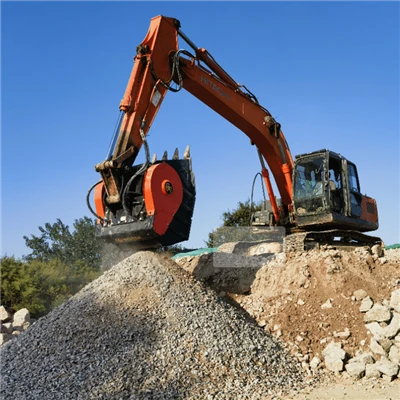
Hey there! As a supplier of screening buckets, I often get asked about the screening capacity of these nifty tools. So, I thought I'd sit down and write a blog post to share some insights on what the screening capacity of a screening bucket actually means and how it can impact your projects.
Let's start with the basics. A screening bucket, like the ones you can check out at Screening Bucket Excavator, is a powerful attachment for excavators and other heavy machinery. It's designed to separate materials of different sizes, such as soil, gravel, and debris. The screening capacity refers to the amount of material that the bucket can process within a given time frame.
Now, there are several factors that can affect the screening capacity of a screening bucket. First off, the size of the bucket matters. Generally speaking, larger buckets have a higher screening capacity because they can hold more material at once. For example, if you're working on a big construction site where you need to screen a large volume of soil, a bigger bucket will be able to get the job done faster.
The design of the screening bucket also plays a crucial role. Buckets with more efficient screening mechanisms, like the Bucket Screener, are able to separate materials more quickly and effectively. Some buckets have adjustable screens, which allow you to customize the size of the particles that are being screened. This flexibility can significantly impact the screening capacity, as you can optimize the process based on the specific requirements of your project.
The type of material being screened is another important factor. Different materials have different properties, such as density, moisture content, and particle shape. For instance, wet soil is going to be more difficult to screen than dry gravel. The moisture can cause the particles to clump together, making it harder for the bucket to separate them. So, if you're dealing with wet or sticky materials, the screening capacity might be lower compared to when you're working with dry and free - flowing materials.
The power of the machine that the screening bucket is attached to also affects the capacity. A more powerful excavator or loader can drive the screening process more efficiently, allowing the bucket to work at a higher speed and process more material. If your machine doesn't have enough power, the bucket might struggle to operate at its full potential, and the screening capacity will be reduced.
Let's talk a bit more about how to measure the screening capacity. Usually, it's measured in cubic meters per hour (m³/h) or cubic yards per hour (yd³/h). To get an accurate measurement, you need to consider the actual volume of material that the bucket can screen in an hour under normal working conditions. This includes taking into account factors like the time it takes to load the bucket, the speed of the screening process, and any downtime for maintenance or adjustments.
For example, if a screening bucket has a rated screening capacity of 50 m³/h, it means that under ideal conditions, it can process 50 cubic meters of material in one hour. However, in real - world scenarios, the actual capacity might be lower due to the factors we discussed earlier, like the type of material and the machine's power.
Now, why is knowing the screening capacity so important? Well, if you're a contractor or a project manager, it helps you plan your projects more effectively. You can estimate how long it will take to screen a certain amount of material and allocate the right resources accordingly. If you underestimate the screening capacity, you might end up with a project that takes longer than expected and costs more in terms of labor and equipment rental. On the other hand, if you overestimate it, you might end up with an underutilized bucket and wasted resources.
As a screening bucket supplier, I've seen firsthand how choosing the right bucket with the appropriate screening capacity can make a huge difference in the success of a project. That's why we offer a wide range of screening buckets, including the Bucket Screener, to meet the diverse needs of our customers. Whether you're working on a small landscaping project or a large - scale construction site, we can help you find the bucket that's right for you.
If you're in the market for a screening bucket and want to learn more about screening capacity or any other aspect of our products, don't hesitate to get in touch. We're here to answer your questions and help you make an informed decision. You can reach out to us, and we'll be happy to have a chat about your specific requirements and how our screening buckets can fit into your projects.
In conclusion, the screening capacity of a screening bucket is a complex but important concept. It's influenced by many factors, including the bucket's size, design, the type of material being screened, and the power of the machine. By understanding these factors and choosing the right bucket for your needs, you can ensure that your screening operations are efficient and cost - effective. So, if you're looking to take your project to the next level, consider investing in a high - quality screening bucket from us. We're confident that our products will meet your expectations and help you achieve your project goals.
References


- Industry reports on screening bucket technology
- Manufacturer's specifications for screening buckets
- Practical experience in the field of screening bucket applications