


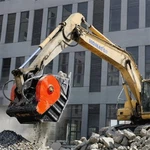


Bucket Screener
Anhui Motek Construction Machinery Co., Ltd. is top manufacturer in China on construction machinery attachments, established in 2014. We have two gantry machining centers, which can easily cope with the processing of large and complex parts with high precision and large stroke, ensuring that every detail is accurate.
Rich Product Variety
Our company has crushing buckets, screening buckets, soil stabilization systems, skid steer loader screening buckets, excavator crushing buckets, rock screening buckets, crusher bucket accessories, loader screening buckets, excavator screening buckets, etc.
Wide Range of Product Uses
Our screening buckets are widely used in soil remediation, solid waste treatment and other fields to screen and crush materials. Crusher buckets are mainly used for fine crushing of bulk materials and are one of the common accessories in construction machinery.
Advanced Equipment
We have two gantry machining centers, which can easily cope with the processing of large and complex parts with high precision and long stroke, ensuring the accuracy of every detail. And CNC lathes have advanced control systems and multi-axis linkage functions, which can process parts with complex shapes and high precision requirements.
Leading Service
We have many years of industry experience and a complete production management, quality supervision, sales service operation system. Whether you want to buy a screening bucket or a crushing bucket, just send your requirements by email and we can customize the product for you.

A Topsoil Screening Bucket is a specialized attachment designed for machinery such as excavators, skid steers, and loaders. Its primary function is to sift and separate high-quality topsoil from larger debris, rocks, and other unwanted materials. This bucket is equipped with a screening mechanism that typically includes a rotating drum or grate with adjustable mesh sizes.

Screener Bucket for Skid Steer
A Screener Bucket, also commonly referred to as a screening bucket, for a skid steer is a versatile attachment designed to sift through and separate various materials such as soil, gravel, sand, and debris based on particle size. This attachment transforms a skid steer loader into a mobile screening unit.

A Skid Steer Screener Bucket is a specialized attachment designed to fit onto skid steer loaders, enabling them to sift and sort through various materials on the job site. This attachment is equipped with a rotating drum or screen that separates materials based on size, removing larger debris, rocks, and unwanted particles, while allowing finer materials like soil, sand, or gravel to pass through.

A Soil Screener Bucket is a specialized attachment designed to improve and expedite the process of soil preparation. It's typically used with skid steers, excavators, or other heavy machinery. The bucket features a screening mechanism, usually a rotating drum with perforated steel plates or a mesh screen of specific sizes, which allows it to sift through soil and separate it from rocks, debris, roots, and other unwanted materials.

A Screener Bucket for an excavator is a specialized attachment designed to sift through and separate materials such as soil, gravel, sand, and debris based on particle size. This attachment is specifically engineered to fit onto an excavator arm, allowing for mobility and flexibility on construction, landscaping, and agricultural sites.

Screening Buckets are versatile attachments designed for heavy machinery such as excavators, skid steers, and loaders. These buckets are equipped with a built-in screening system, often a rotating drum with perforated plates or mesh, that allows for the separation of materials based on size.

Motek bucket screener can adapt to materials with different humidity. Whether it is dry particles or wet mixtures, it can effectively screen them, is not affected by changes in material humidity, and maintains stable working performance.

Motek best screening bucket has excellent flexible operation capabilities thanks to the mobility of the excavator. It can be quickly transferred between different work sites without complicated transportation and installation processes.

Motek screening bucket for digger shows stable performance in work. No matter what complex materials and working conditions it faces, it can maintain stable screening efficiency and quality.
What Is Bucket Screener
A Bucket Screener, also known as a screening bucket, is a specialized attachment primarily used for heavy machinery such as excavators, skid steers, and loaders. It is designed to sift and separate different materials found on construction, demolition, landscaping, and agricultural sites based on their size.
Enhanced On-Site Efficiency
Timing and efficiency are everything when it comes to construction projects. With the Bucket Screener allowing the immediate on-site processing of materials, these attachments erase the need for transporting materials to different locations for sorting. As a result-this directly translates to fewer hours wasted in transit, fewer machinery requirements, and significant financial savings.
An Ingeniously Crafted Attachment
A Bucket Screener is an ingeniously crafted attachment designed to integrate seamlessly with earthmoving machinery such as excavators and loaders. Its primary purpose lies in its sieve-like structure, allowing for the systematic sifting and sorting of materials. Whether it's loose soil, fine sand, hefty rocks, or other construction debris, the screening bucket's robust design ensures that only the desired materials are collected while the unwanted are filtered out.
Customizable Screen Sizes
Versatility is at the core of a Bucket Screener appeal. Many come equipped with interchangeable screen panels or varying mesh sizes, enabling operators to adapt quickly to different sorting needs. Whether the task calls for coarse sorting or meticulous precision, the screening bucket is up to the task.
Environmental Benefits
The screening bucket proves more beneficial than ever. By drastically cutting back on the transport of materials-it results in reduced fuel usage and, consequently, decreased carbon footprints. Also, by enabling immediate reusability of materials, there's a significant reduction in the demand for new raw materials.
Parts of Bucket Screener


Screening Drum
The screening drum is the heart of a bucket screener. Typically cylindrical, it rotates or vibrates to sift materials based on size. The drum has openings or meshes that allow smaller particles to pass through while larger debris stays inside for disposal or further processing. The size of these openings determines the bucket's screening efficiency and capability. For different applications, the drum can be equipped with interchangeable meshes or screens, allowing for customized sorting based on project needs.
Hydraulic Motor
The hydraulic motor powers the screening drum's rotation or vibration. It connects to the excavator's hydraulic system, converting hydraulic pressure into mechanical energy to drive the drum. The motor's power and speed can often be adjusted depending on the material being screened, ensuring flexibility for different work conditions. A strong, reliable hydraulic motor is essential for smooth, uninterrupted operation, as it directly influences the performance and speed of the screening process.
Side Panels and Frame
The side panels and frame provide structural support to the bucket screener, ensuring it remains durable and can withstand the stresses of daily use in rugged environments. These panels also serve as protective barriers that prevent materials from falling out during the screening process. Made from heavy-duty steel or similar materials, they are designed to resist wear and impact. In some models, side panels may have additional reinforcements or features like adjustable slots to control the flow of materials.
Interchangeable Screens
Most modern bucket screeners feature interchangeable screens or meshes that allow operators to switch between different mesh sizes depending on the type of material being processed. These screens are fitted inside the screening drum and are easily replaceable, offering flexibility across various job sites. Operators can choose finer screens for separating smaller particles, such as sand or topsoil, or coarser meshes for handling rocks, concrete, and other debris. The ability to customize the screen size optimizes the screener's versatility and application scope.
Mounting Bracket
The mounting bracket is the component that attaches the bucket screener to the excavator. It plays a critical role in ensuring that the bucket is securely fastened and can be operated safely. The bracket is typically designed to be compatible with various excavator models, allowing for easy installation and removal. Additionally, some mounting systems offer quick-release mechanisms, enabling operators to switch between different attachments swiftly, improving productivity on-site.
Bucket Teeth
Bucket teeth, usually located at the front edge of the screener, play an important role in digging and scooping up materials for screening. These teeth are typically made from hardened steel to ensure durability when digging into tough or rocky materials. Bucket teeth can be replaceable or fixed, depending on the model, and their design may vary depending on the type of material being processed. Sharp, well-maintained teeth help improve the digging and material collection efficiency of the screener.
Protection Guard
Some bucket screeners are equipped with a protection guard that shields the hydraulic motor, hoses, and other sensitive components from damage caused by debris or accidental impacts. This guard, typically made from steel or high-grade materials, is designed to prevent objects from entering the motor area, which could lead to hydraulic system malfunctions. A well-designed protection guard ensures the longevity of the screener by minimizing exposure to potentially damaging materials.
Control Valves and Hoses
Control valves and hydraulic hoses are essential for regulating the flow of hydraulic fluid between the excavator and the screener. These components ensure that the hydraulic motor operates smoothly, and that the speed and power of the drum can be controlled efficiently. High-quality hydraulic hoses are crucial for preventing leaks and ensuring consistent power delivery. Control valves allow operators to adjust the bucket screener's settings to suit the material being processed, optimizing performance and fuel efficiency.
How to Choose Appropriate Bucket Screener to Boost Productivity
Cutting Edge
The first step while screening the material is scooping it. It may not be obvious, but the cutting-edge of the bucket must fit the scooped material. However, if you want to use the bucket for various materials, there are bolt-on cutting edges available, which can be attached during the operation in the field.
Mesh Aperture
The mesh aperture needs to be adjusted to the size of the scooped material. Luckily, if you need diverse types of mesh apertures, it is possible to purchase custom meshes. It takes no more than 5 minutes to change it in the attachment.
The Number of Moving Parts
The general rule says that the more parts an attachment has the more chances there are that some of them might malfunction. If you cannot afford to lose any time or money, choose the screening bucket with fewer parts to avoid fouling, jamming, or tangling.
Spillage
The screening bucket can be fully loaded and will not spill any of the material, even when carried over long distances.
Applications of Bucket Screener
Construction and Site Preparation
One of the primary applications of a bucket screener is in construction and site preparation. Before any construction project begins, the ground needs to be cleared, and topsoil often needs to be sifted to remove debris, rocks, and other unwanted materials.
Demolition Waste Management
Demolition sites often produce a mix of materials, including concrete, bricks, asphalt, and debris. A bucket screener is particularly useful for sorting and recycling these materials. For example, can be repurposed for new construction projects, while other materials can be recycled or disposed of more efficiently.
Mining and Quarrying
In the mining and quarrying industries, a bucket screener is used to separate and grade materials such as gravel, sand, ore, and rocks. It helps extract usable minerals while filtering out smaller, unusable particles. By screening materials directly at the mining site, it enhances efficiency and reduces the need for secondary processing facilities.
Agriculture and Landscaping
In agriculture, bucket screeners are commonly used for soil preparation and compost screening. They help remove rocks, clumps, and other debris from soil, ensuring that it is finely sifted and ready for planting. In landscaping, the screener assists in separating soil from gravel or other landscaping materials, allowing for better resource management.
Certificate

Frequently Asked Questions
Hot Tags: bucket screener, China bucket screener manufacturers, suppliers, factory, screening bucket for loading systems, screening bucket for canning, screening bucket for management, used screening bucket, screening bucket for printing, Skid Steer Screening Bucket
Previous
Digger Screening BucketNext
Screening BucketYou Might Also Like


Send Inquiry