

Hey there! As a supplier of Soil Screener Buckets, I've been getting a lot of questions lately about the screening accuracy of these nifty tools. So, I thought I'd take some time to break it down for you all.
First off, let's talk about what a soil screener bucket actually does. It's a piece of equipment that attaches to a loader, digger, or other heavy machinery. Its main job is to sift through soil, gravel, sand, and other materials, separating the larger chunks from the finer particles. This is super useful in a whole bunch of industries, like construction, landscaping, and agriculture.
Now, the big question: What's the screening accuracy of a soil screener bucket? Well, it depends on a few different factors.
Factors Affecting Screening Accuracy
Mesh Size
The mesh size of the screening bucket is probably the most obvious factor. The holes in the mesh determine what size particles can pass through and what gets left behind. For example, if you have a bucket with a 10mm mesh, anything smaller than 10mm will fall through, while larger pieces stay in the bucket. So, if you're looking for a very fine screening, you'll want a bucket with a smaller mesh size. But keep in mind, a smaller mesh can also slow down the screening process, as it takes longer for the material to pass through the tiny holes.
Material Type
The type of material you're screening also plays a huge role. Different materials have different properties, like density, shape, and moisture content, which can all affect how well they're screened. For instance, dry, granular materials like sand or gravel tend to screen more easily and accurately than wet, sticky materials like clay. Clay can clog up the mesh, reducing the screening efficiency and accuracy.
Machine Speed
The speed at which the machine is operating can impact screening accuracy too. If the machine is moving too fast, the material may not have enough time to properly sift through the mesh, resulting in a less accurate screening. On the other hand, if it's moving too slowly, it can be a waste of time and energy. Finding the right speed for your specific material and bucket is key.
Bucket Design
The design of the soil screener bucket itself can make a difference. Some buckets have a more efficient shape or a special arrangement of the mesh that helps to improve screening accuracy. For example, a bucket with a curved shape may allow the material to move around more freely, increasing the chances of proper screening.
Measuring Screening Accuracy
So, how do we measure the screening accuracy of a soil screener bucket? One common way is to calculate the percentage of the material that passes through the mesh compared to the total amount of material being screened. This is called the passing rate. A high passing rate indicates a more accurate screening, as more of the desired particles are making it through the mesh.
Another way is to analyze the particle size distribution of the screened material. You can take samples of the material before and after screening and use a sieve analysis to determine the size of the particles. By comparing the two distributions, you can get a better idea of how well the bucket is separating the different sizes of particles.

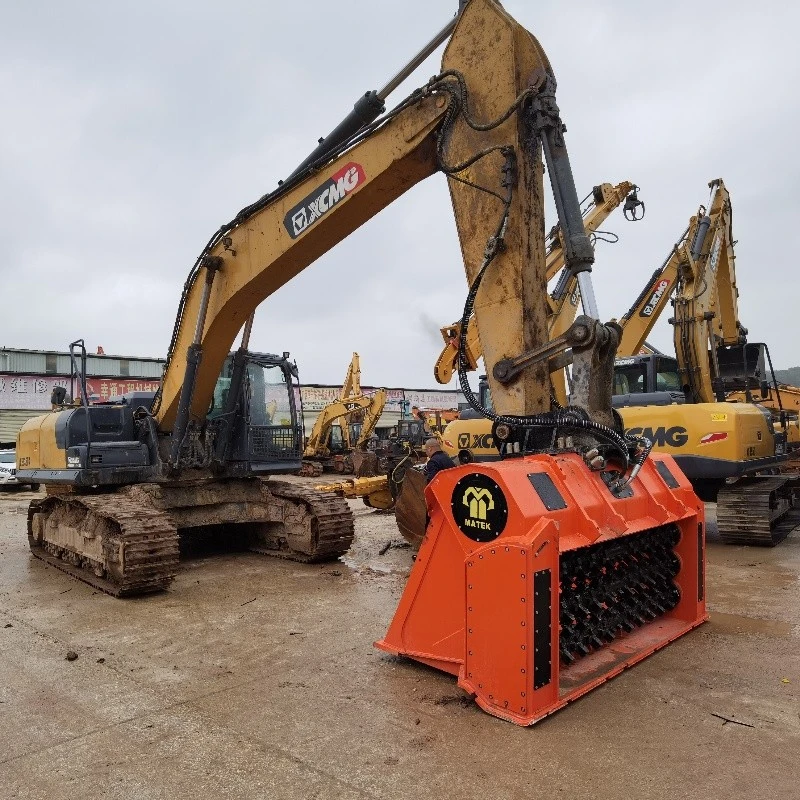
Real - World Examples
Let's say you're working on a construction site, and you need to screen some soil to use as backfill. You're using a Loader Screener with a 20mm mesh. You load up the bucket with a mix of soil, small rocks, and debris. After screening, you find that about 80% of the material passes through the mesh, and most of the remaining 20% are the larger rocks and debris that you wanted to separate out. This is a pretty good screening accuracy, indicating that the loader screener is doing its job well.
Now, let's consider a different scenario. You're in the asphalt industry, and you're using an Asphalt Screening Bucket to screen recycled asphalt. The asphalt has a high moisture content, which makes it sticky. You notice that the screening process is taking longer, and the passing rate is only about 60%. The sticky asphalt is clogging up the mesh, reducing the screening accuracy. In this case, you might need to take steps to dry out the asphalt or use a bucket with a larger mesh size to improve the screening.
Improving Screening Accuracy
If you're not getting the screening accuracy you want, there are a few things you can do.
Pre - Treatment of Material
As I mentioned earlier, the moisture content of the material can have a big impact on screening accuracy. If the material is too wet, you can try drying it out before screening. This can be as simple as letting it sit in the sun for a while or using a dryer if you have one. You can also break up any large clumps of material to make it easier to screen.
Regular Maintenance
Keeping your soil screener bucket in good condition is essential for maintaining screening accuracy. Regularly clean the mesh to remove any debris or clogs. Check for any damage to the mesh or the bucket itself and make repairs as needed. A well - maintained bucket will perform better and give you more accurate screening results.
Adjusting Machine Settings
Experiment with different machine speeds and settings to find the optimal conditions for your material. You may need to make some adjustments based on the type of material, the mesh size, and the specific requirements of your project.
Conclusion
So, there you have it! The screening accuracy of a soil screener bucket depends on a variety of factors, including mesh size, material type, machine speed, and bucket design. By understanding these factors and taking steps to optimize the screening process, you can achieve a high level of accuracy.
If you're in the market for a soil screener bucket, whether it's a Loader Screener, an Asphalt Screening Bucket, or a Digger Screening Bucket, we've got you covered. We offer a wide range of high - quality screening buckets that are designed to provide accurate and efficient screening.
If you have any questions or are interested in purchasing a soil screener bucket, don't hesitate to reach out. We're here to help you find the perfect solution for your needs.
References
- "Construction Equipment Handbook" - A comprehensive guide on various construction equipment, including screening buckets.
- "Soil Mechanics and Foundation Engineering" - A textbook that provides in - depth knowledge about soil properties and how they relate to screening processes.
- Industry research papers on the performance and accuracy of soil screener buckets.





