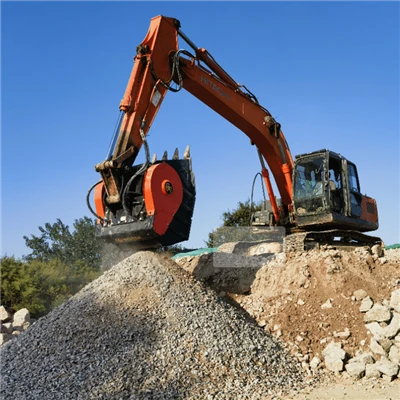
Hey there! As a supplier of Soil Mixing Heads, I often get asked about the response time of these nifty tools to parameter changes. It's a crucial question, especially for those in the construction and soil stabilization industries. So, let's dive right in and explore this topic in detail.
First off, what exactly is a Soil Mixing Head? Well, it's a key component in soil stabilization processes. It's used to blend different materials, like cement, lime, or other additives, with the existing soil to improve its engineering properties. This can include increasing its strength, reducing its compressibility, and enhancing its durability. You can check out our Soil Mixing Tool for more details on the specific features and applications.
Now, let's talk about parameter changes. These can include things like the flow rate of the additives, the rotational speed of the mixing head, the depth of penetration, and the type of soil being mixed. Each of these parameters can have a significant impact on the performance of the soil mixing process, and the response time of the soil mixing head to these changes is crucial for achieving optimal results.
When it comes to the response time of a soil mixing head to parameter changes, there are several factors to consider. One of the most important is the design of the mixing head itself. A well-designed mixing head will be able to respond quickly and efficiently to changes in parameters, ensuring that the mixing process remains consistent and effective. For example, a mixing head with a high-torque motor and a robust gearbox will be able to adjust its rotational speed more quickly in response to changes in the flow rate of the additives.
Another factor that can affect the response time of a soil mixing head is the control system. A modern soil mixing head will typically be equipped with a sophisticated control system that allows operators to adjust the parameters of the mixing process in real-time. This control system can use sensors to monitor the performance of the mixing head and make automatic adjustments as needed. For example, if the sensors detect a decrease in the flow rate of the additives, the control system can automatically increase the rotational speed of the mixing head to maintain the desired mixing ratio.
The type of soil being mixed can also have an impact on the response time of the soil mixing head. Different types of soil have different physical and chemical properties, which can affect the way they interact with the additives and the mixing process. For example, cohesive soils, such as clay, can be more difficult to mix than granular soils, such as sand. This is because cohesive soils tend to stick together and require more energy to break up and mix with the additives. As a result, the response time of the soil mixing head to parameter changes may be longer when mixing cohesive soils.
In addition to these factors, the experience and skill of the operator can also play a role in the response time of the soil mixing head. A skilled operator will be able to anticipate changes in the parameters of the mixing process and make adjustments accordingly. They will also be able to recognize when the mixing process is not working properly and take corrective action quickly. For example, if the operator notices that the soil is not being mixed evenly, they can adjust the depth of penetration or the rotational speed of the mixing head to improve the mixing performance.
So, what is the typical response time of a soil mixing head to parameter changes? Well, it really depends on the specific design and configuration of the mixing head, as well as the factors mentioned above. In general, a well-designed soil mixing head with a modern control system should be able to respond to parameter changes within a few seconds to a few minutes. However, in some cases, the response time may be longer, especially when dealing with complex soil conditions or large-scale mixing projects.
To illustrate the importance of the response time of a soil mixing head to parameter changes, let's consider an example. Imagine you're working on a construction project where you need to stabilize a large area of soft soil. You're using a soil mixing head to blend cement with the soil to increase its strength and stability. At the beginning of the project, you set the parameters of the mixing process based on the initial soil conditions. However, as you progress through the project, you notice that the soil conditions are changing. The soil is becoming more cohesive, and the mixing process is becoming less effective.


In this situation, the response time of the soil mixing head to parameter changes becomes crucial. If the mixing head can respond quickly to the changes in the soil conditions, you can adjust the parameters of the mixing process in real-time to ensure that the soil is being mixed effectively. This can help you avoid costly delays and ensure that the project is completed on time and within budget.
On the other hand, if the mixing head has a slow response time, you may have to stop the mixing process and make manual adjustments to the parameters. This can be time-consuming and may result in inconsistent mixing results. In some cases, it may even require you to start the mixing process over again, which can be very costly and disruptive to the project.
As a supplier of Soil Mixing Heads, we understand the importance of providing our customers with high-quality products that can respond quickly and efficiently to parameter changes. That's why we invest heavily in research and development to ensure that our mixing heads are designed with the latest technology and features. Our Excavator Soil Mixer and Excavator Silt Solidification System are both designed to provide fast and reliable response times, even in the most challenging soil conditions.
If you're in the market for a Soil Mixing Head, we encourage you to contact us to learn more about our products and how they can help you achieve your soil stabilization goals. Our team of experts is always available to answer your questions and provide you with personalized advice and support. Whether you're working on a small-scale project or a large-scale infrastructure development, we have the right soil mixing solution for you.
In conclusion, the response time of a soil mixing head to parameter changes is a crucial factor in achieving optimal results in soil stabilization processes. By understanding the factors that can affect the response time and choosing a high-quality mixing head with a modern control system, you can ensure that your soil mixing process is efficient, effective, and consistent. So, if you're looking for a reliable and responsive soil mixing solution, don't hesitate to contact us today.
References
- "Soil Stabilization: Principles and Practice" by David J. Little and H. Ronald Hudson
- "Geotechnical Engineering: Principles and Practices" by Braja M. Das
- "Soil Mechanics and Foundation Engineering" by S. K. Garg