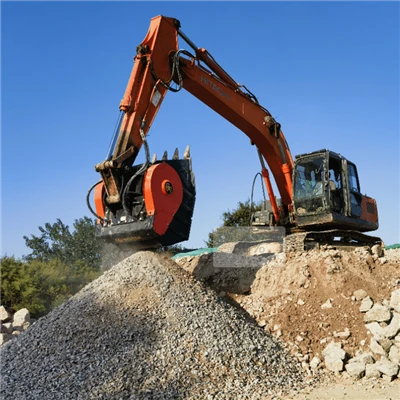
The operating speed of a soil screener bucket is a crucial factor that significantly impacts its efficiency and productivity in various construction, landscaping, and waste management applications. As a leading supplier of soil screener buckets, we understand the importance of this parameter and are committed to providing our customers with high - performance equipment that meets their specific needs.
Understanding the Basics of a Soil Screener Bucket
A soil screener bucket is a specialized attachment designed to separate different sizes of materials, such as soil, gravel, and debris. It typically consists of a frame, screening elements (such as bars or mesh), and a mechanism for agitation. The bucket is attached to a machine like a skid steer loader, excavator, or backhoe, allowing it to be easily maneuvered around a worksite.
The Skid Steer Screening Bucket is a popular choice for smaller - scale projects. It is highly versatile and can be used in tight spaces. The Soil Screening Bucket is designed specifically for handling soil, with optimized screening elements to ensure efficient separation. The Screening Bucket for Digger is ideal for larger projects where a more powerful machine is required.
Factors Affecting the Operating Speed
Several factors influence the operating speed of a soil screener bucket:
1. Machine Power
The power of the host machine (skid steer, excavator, etc.) plays a vital role. A more powerful machine can provide greater hydraulic flow and pressure, which enables the screener bucket to operate at a higher speed. For example, a large - capacity excavator can supply more hydraulic energy to the bucket's agitation mechanism, allowing it to screen materials more quickly.
2. Material Characteristics
The type, density, and moisture content of the material being screened have a significant impact on the operating speed. Dry, loose soil will generally be screened faster than wet, compacted soil. If the material contains a high percentage of large rocks or debris, the screening process may slow down as the bucket has to work harder to separate the different components.
3. Screening Element Design
The design of the screening elements, such as the spacing between the bars or the size of the mesh, affects the operating speed. A wider spacing between bars or a larger mesh size will allow larger particles to pass through more quickly, increasing the overall screening speed. However, this may result in a less precise separation.
4. Bucket Size
The size of the soil screener bucket also matters. A larger bucket can hold more material, but it may require more power to operate and may take longer to empty and refill. Smaller buckets, on the other hand, can be filled and emptied more quickly, but they may need to make more trips to screen the same amount of material.
Measuring the Operating Speed
The operating speed of a soil screener bucket is usually measured in terms of the volume of material screened per unit of time, such as cubic meters per hour (m³/h). To accurately measure the operating speed, several tests need to be conducted under controlled conditions.
First, a known volume of material is loaded into the bucket. The bucket is then attached to the machine and operated for a specific period. The amount of screened material collected at the end of the test is measured, and the operating speed is calculated by dividing the volume of the screened material by the time taken.
It is important to note that the operating speed can vary depending on the specific application and the operator's skill. An experienced operator can optimize the machine's settings and the bucket's movement to achieve a higher screening speed.


Importance of Operating Speed in Different Applications
1. Construction Projects
In construction, time is money. A soil screener bucket with a high operating speed can quickly separate the soil and remove unwanted debris, allowing for faster site preparation. For example, in building foundation construction, a fast - screening bucket can prepare the soil for pouring concrete in a shorter time, reducing the overall project duration.
2. Landscaping
Landscaping projects often require the screening of large amounts of soil to create a smooth and fertile surface. A high - speed soil screener bucket can process the soil more efficiently, enabling landscapers to complete their projects on schedule. It can also help in recycling soil and compost, which is an environmentally friendly approach.
3. Waste Management
In waste management, the ability to quickly screen and separate different types of waste is essential. A soil screener bucket with a high operating speed can increase the throughput of waste materials, reducing the time and cost associated with waste disposal.
Our Products and Operating Speed
As a supplier of soil screener buckets, we offer a range of products designed to provide optimal operating speeds. Our engineers have carefully designed the screening elements and the agitation mechanisms to ensure efficient and fast screening.
For example, our Skid Steer Screening Bucket is engineered to work in harmony with skid steer loaders, providing a high screening speed even in small - scale applications. Our Soil Screening Bucket is optimized for soil screening, with a design that allows for quick separation of soil particles. The Screening Bucket for Digger is built to handle large volumes of material at a high speed, making it suitable for large - scale projects.
Conclusion
The operating speed of a soil screener bucket is a complex parameter influenced by multiple factors. Understanding these factors and choosing the right product can significantly improve the efficiency and productivity of your projects. Whether you are working on a construction site, a landscaping project, or a waste management facility, our soil screener buckets are designed to meet your needs.
If you are interested in learning more about our products or would like to discuss your specific requirements, we encourage you to reach out to us. Our team of experts is ready to assist you in finding the perfect soil screener bucket for your application.
References
- Construction Equipment Handbook: A comprehensive guide to construction machinery and attachments.
- Landscaping Industry Best Practices: A collection of industry - specific knowledge and techniques.
- Waste Management Principles and Technologies: An in - depth look at waste management processes and equipment.