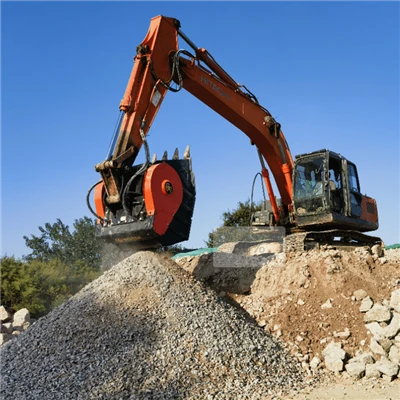
When it comes to soil mixing machines, one of the most frequently asked questions is about the maximum particle size of soil they can handle. As a leading supplier of soil mixing machines, we understand the importance of this parameter for our customers. In this blog post, we will delve into the factors that determine the maximum particle size, the implications for different applications, and how our machines are designed to meet these requirements.
Factors Affecting the Maximum Particle Size
The maximum particle size that a soil mixing machine can handle is influenced by several key factors. These include the design of the mixing chamber, the power of the mixing mechanism, and the type of soil being processed.
Mixing Chamber Design
The design of the mixing chamber plays a crucial role in determining the maximum particle size. A well-designed mixing chamber should allow for efficient movement of soil particles during the mixing process. If the chamber is too narrow or has sharp corners, larger particles may get stuck, leading to clogging and reduced mixing efficiency. Our soil mixing machines are equipped with optimized mixing chambers that are designed to accommodate a wide range of particle sizes. The smooth interior surfaces and spacious design ensure that even larger particles can move freely through the chamber, resulting in thorough mixing.
Mixing Mechanism Power
The power of the mixing mechanism is another important factor. A more powerful mixing mechanism can exert greater force on the soil particles, enabling it to break down and mix larger particles. Our machines are equipped with high-power motors and advanced mixing blades that are capable of handling tough soil conditions. The robust design of the mixing mechanism ensures that it can withstand the forces generated during the mixing of large particles, providing reliable and consistent performance.
Soil Type
The type of soil being processed also affects the maximum particle size. Different soil types have different particle sizes and properties. For example, sandy soils typically have larger particles compared to clayey soils. Our soil mixing machines are designed to be versatile and can handle a variety of soil types. However, for extremely coarse or rocky soils, additional pre-treatment may be required to reduce the particle size to a level that the machine can handle effectively.

Implications for Different Applications
The maximum particle size that a soil mixing machine can handle has significant implications for different applications. Here are some examples:
Soil Remediation
In soil remediation projects, the goal is to remove or reduce contaminants from the soil. This often involves mixing the contaminated soil with treatment agents. If the soil contains large particles, it may be difficult to ensure uniform mixing of the treatment agents, which can affect the effectiveness of the remediation process. Our soil mixing machines are designed to handle a wide range of particle sizes, ensuring thorough mixing of the soil and treatment agents, even in challenging remediation projects.
Soil Stabilization Products
Soil stabilization is the process of improving the engineering properties of soil, such as its strength and durability. This is often achieved by mixing the soil with additives, such as cement or lime. The maximum particle size of the soil can affect the performance of the stabilization process. If the particles are too large, the additives may not be able to penetrate and bond effectively with the soil, resulting in poor stabilization. Our machines are capable of handling soil particles of various sizes, ensuring proper mixing and effective soil stabilization.
Construction Projects
In construction projects, soil mixing machines are used to prepare the soil for foundations, roads, and other structures. The maximum particle size of the soil can impact the compaction and stability of the prepared soil. Our soil mixing machines can handle larger particles, allowing for the use of a wider range of soil materials in construction projects. This can reduce the need for expensive soil replacement and improve the overall efficiency of the construction process.

How Our Machines Are Designed to Handle Different Particle Sizes
At our company, we have invested heavily in research and development to ensure that our soil mixing machines are capable of handling a wide range of particle sizes. Here are some of the features of our machines:
Adjustable Mixing Parameters
Our machines are equipped with adjustable mixing parameters, such as mixing speed and blade configuration. This allows operators to customize the mixing process according to the particle size and properties of the soil. For example, when dealing with larger particles, the mixing speed can be increased to ensure more effective mixing.
Advanced Screening Systems
To prevent large particles from entering the mixing chamber, our machines are equipped with advanced screening systems. These systems can remove oversized particles before they reach the mixing chamber, reducing the risk of clogging and damage to the machine.
Robust Construction
Our soil mixing machines are built with robust construction materials and components. This ensures that they can withstand the forces generated during the mixing of large particles and provide long-term reliability. The durable design of our machines also reduces maintenance requirements and downtime, saving our customers time and money.
Contact Us for More Information
If you are interested in learning more about our soil mixing machines and their ability to handle different particle sizes, please do not hesitate to contact us. Our team of experts is available to answer your questions and provide you with detailed information about our products. We can also assist you in selecting the right machine for your specific application.
Whether you are involved in Soil Remediation, Soil Stabilization Products, or construction projects, our soil mixing machines are designed to meet your needs. Contact us today to start a conversation about how we can help you achieve your goals.
References
- ASTM International. (2023). Standard Test Methods for Particle - Size Analysis of Soils. ASTM D422 - 63(2023).
- Holtz, R. D., & Kovacs, W. D. (1981). An Introduction to Geotechnical Engineering. Prentice - Hall.
- Lambe, T. W., & Whitman, R. V. (1969). Soil Mechanics. Wiley.