Basalt, a common volcanic rock known for its hardness and durability, is widely used in construction, road building, and other industries. When it comes to crushing basalt, many people wonder if small jaw crushers can be up to the task. As a supplier of small jaw crushers, I'd like to share some insights on this topic.
Understanding Basalt's Characteristics
Before delving into whether small jaw crushers can crush basalt, it's essential to understand the properties of basalt. Basalt is an igneous rock formed from the rapid cooling of lava. It typically has a high density, ranging from 2.8 to 3.3 g/cm³, and a Mohs hardness of 6 to 8. This means that basalt is relatively hard and abrasive, which poses challenges for crushing equipment.

The Working Principle of Small Jaw Crushers
Small jaw crushers are a type of primary crushing equipment that operates on the principle of compression. They consist of a fixed jaw and a movable jaw, which form a V-shaped crushing chamber. When the movable jaw moves towards the fixed jaw, the basalt rocks are squeezed and crushed between the two jaws. The crushed materials are then discharged through the opening at the bottom of the crushing chamber.
Advantages of Using Small Jaw Crushers for Basalt Crushing
Despite the hardness of basalt, small jaw crushers can still be effectively used for its crushing under certain conditions. Here are some advantages of using small jaw crushers for basalt crushing:
1. Cost - Effective
Small jaw crushers are generally more affordable than larger crushing equipment. They require less initial investment and lower operating costs, making them a cost - effective option for small - scale basalt crushing projects.

2. Compact Design
These crushers have a compact and lightweight design, which makes them easy to install and move. They can be transported to different job sites with relative ease, providing flexibility for on - site basalt crushing operations.
3. High Crushing Ratio
Small jaw crushers can achieve a relatively high crushing ratio, which means they can reduce large basalt rocks into smaller particles in a single pass. This helps to improve the efficiency of the crushing process.
4. Simple Operation and Maintenance
The operation of small jaw crushers is relatively simple, and they require minimal maintenance. This makes them suitable for operators with limited technical skills and for use in remote areas where maintenance services may be scarce.
Limitations of Small Jaw Crushers for Basalt Crushing
However, small jaw crushers also have some limitations when it comes to crushing basalt:
1. Limited Capacity
Compared to large - scale crushing equipment, small jaw crushers have a limited production capacity. If you need to process a large amount of basalt in a short period, a small jaw crusher may not be sufficient.
2. Wear and Tear
Due to the hardness and abrasiveness of basalt, the jaws of small jaw crushers are subject to significant wear and tear. Frequent replacement of jaw plates may be required, which can increase the operating costs over time.
3. Particle Size Control
Achieving a very fine and uniform particle size can be challenging with small jaw crushers. If your project requires a specific particle size distribution, additional secondary or tertiary crushing equipment may be needed.
Factors to Consider When Using Small Jaw Crushers for Basalt Crushing
If you decide to use a small jaw crusher for basalt crushing, there are several factors you need to consider:
1. Feed Size
The maximum feed size of the small jaw crusher should be appropriate for the size of the basalt rocks. If the rocks are too large, they may not fit into the crushing chamber or may cause excessive stress on the crusher.
2. Crushing Chamber Design
Choose a small jaw crusher with a suitable crushing chamber design. A well - designed crushing chamber can ensure efficient crushing and reduce the risk of blockages.
3. Jaw Plate Material
Select high - quality jaw plate materials that are resistant to wear and abrasion. Materials such as manganese steel or alloy steel can provide better performance when crushing basalt.
4. Maintenance Schedule
Establish a regular maintenance schedule to ensure the proper functioning of the small jaw crusher. This includes checking and tightening bolts, lubricating moving parts, and inspecting the jaw plates for wear.
Complementary Equipment for Basalt Crushing
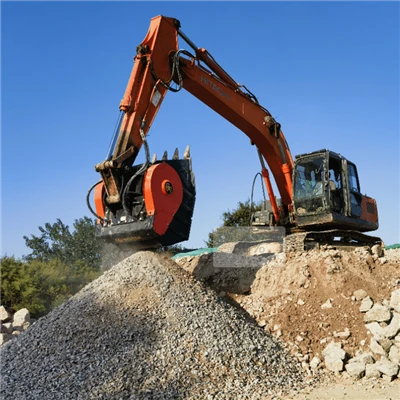
In addition to small jaw crushers, other equipment can be used in conjunction to improve the basalt crushing process. For example, Rock Crusher Excavator Bucket can be attached to an excavator for on - site crushing of basalt. These buckets are designed to crush rocks directly at the excavation site, eliminating the need for transporting large rocks to a stationary crusher.
Excavator Crusher Bucket is another option that offers high - efficiency crushing in a compact and mobile form. It can be used for a variety of applications, including basalt crushing in construction and mining projects.
Hydraulic Crusher Bucket is powered by the hydraulic system of an excavator, providing a powerful and reliable crushing solution. It can handle basalt rocks of different sizes and shapes, making it a versatile choice for basalt crushing operations.
Conclusion
In conclusion, small jaw crushers can be used for crushing basalt, but their suitability depends on various factors such as the scale of the project, the required production capacity, and the desired particle size. While they offer cost - effectiveness, compactness, and simplicity, they also have limitations in terms of capacity and wear resistance. By carefully considering these factors and using complementary equipment, small jaw crushers can be an effective solution for small - scale basalt crushing projects.
If you are interested in our small jaw crushers or other related equipment for basalt crushing, we welcome you to contact us for more information and to discuss your specific requirements. We are committed to providing high - quality products and excellent customer service to meet your crushing needs.
References
- ASTM International. Standard Test Methods for Abrasion Resistance of Stone. ASTM C1353/C1353M - 14.
- Esen, H., & Bilgin, N. (2008). Prediction of the Bond work index from the point load strength and rock abrasivity index for some igneous rocks. International Journal of Rock Mechanics and Mining Sciences, 45(4), 609 - 617.
- Singh, R. N., & Goel, R. K. (2009). Engineering Properties of Rocks. Taylor & Francis.