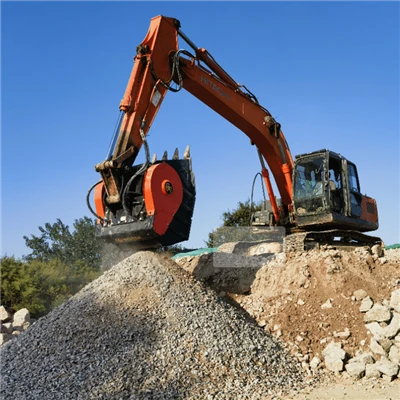
The crushing chamber is a critical component in a Bucket Rock Crusher, as it directly influences the crusher's performance, efficiency, and durability. As a leading supplier of Bucket Rock Crushers, I am often asked about the materials used in the crushing chamber. In this blog, I will delve into the various materials commonly employed in the construction of the crushing chamber, their properties, and how they impact the overall functionality of the crusher.
Importance of the Crushing Chamber Material
The crushing chamber is where the actual crushing process takes place. It is subjected to extreme forces, high pressures, and abrasion from the rocks being crushed. Therefore, the material used in the crushing chamber must possess certain key properties to withstand these harsh conditions. These properties include high hardness, wear resistance, toughness, and the ability to maintain its structural integrity under heavy loads.
Common Materials Used in the Crushing Chamber
Manganese Steel
Manganese steel is one of the most widely used materials in the construction of crushing chambers. It is known for its excellent work - hardening properties. When subjected to impact and abrasion, the surface of manganese steel hardens, which helps to resist further wear. This makes it ideal for handling large, hard rocks.
The high manganese content in this steel gives it a unique combination of toughness and hardness. It can absorb a significant amount of energy without fracturing, which is crucial when dealing with the sudden shocks and impacts during the crushing process. For example, in a Excavator Crusher Bucket, manganese steel liners in the crushing chamber can effectively crush large boulders without suffering from premature wear or damage.
However, manganese steel also has its limitations. It is relatively expensive, and its work - hardening process can sometimes lead to a brittle surface if the steel is over - stressed. This can result in cracking and spalling, which may require frequent replacement of the liners.


High - Chrome Iron
High - chrome iron is another popular choice for crushing chamber materials. It offers superior wear resistance compared to many other materials. The high chromium content forms hard carbides within the iron matrix, which act as a barrier against abrasion.
This material is particularly suitable for crushing abrasive rocks such as granite and quartzite. In a Digger Crusher Bucket, high - chrome iron liners can provide long - lasting performance even when dealing with highly abrasive materials.
One of the advantages of high - chrome iron is its ability to maintain its hardness at high temperatures. During the crushing process, a significant amount of heat is generated, and high - chrome iron can withstand these elevated temperatures without losing its wear - resistant properties. However, high - chrome iron is more brittle than manganese steel, which means it may be prone to cracking under high - impact loads.
Composite Materials
In recent years, composite materials have emerged as an alternative for the crushing chamber. These materials are engineered to combine the best properties of different substances. For example, a composite material may consist of a high - strength matrix with embedded hard particles for enhanced wear resistance.
Composite materials can be tailored to meet specific requirements. They can offer a good balance between hardness, toughness, and wear resistance. In some cases, they can also be lighter than traditional materials, which can reduce the overall weight of the crusher and improve its fuel efficiency.
However, the use of composite materials in the crushing chamber is still relatively new, and there may be some challenges in terms of manufacturing and cost - effectiveness. Further research and development are needed to fully optimize their performance in Bucket Rock Crushers.
Impact of Material Choice on Crusher Performance
The choice of material for the crushing chamber has a direct impact on the performance of the Bucket Rock Crusher. A well - selected material can improve the crusher's efficiency, reduce downtime, and lower operating costs.
If the material is too soft, it will wear out quickly, leading to frequent liner replacements. This not only increases the cost of maintenance but also results in significant downtime as the crusher needs to be shut down for repairs. On the other hand, if the material is too brittle, it may crack or fracture under impact, which can also cause the crusher to malfunction.
For instance, in a Rock Crusher Jaws, the material of the crushing chamber liners determines the size and shape of the crushed particles. A hard and wear - resistant material can ensure a more consistent particle size distribution, which is important for many applications such as construction and road building.
Factors to Consider When Choosing the Material
When selecting the material for the crushing chamber, several factors need to be taken into account.
Type of Rocks to be Crushed
The hardness and abrasiveness of the rocks are crucial factors. If the crusher is mainly used to crush soft rocks, a less expensive and more ductile material may be sufficient. However, for hard and abrasive rocks, a more wear - resistant material such as high - chrome iron or manganese steel is recommended.
Crushing Capacity
The crushing capacity of the crusher also affects the material choice. A high - capacity crusher will generate more force and impact during the crushing process, which requires a material that can withstand these high loads.
Operating Conditions
The operating conditions, such as temperature, humidity, and the presence of corrosive substances, can also influence the material selection. For example, in a humid or corrosive environment, a material with good corrosion resistance may be required.
Conclusion
As a supplier of Bucket Rock Crushers, I understand the importance of choosing the right material for the crushing chamber. Each material has its own advantages and disadvantages, and the choice depends on a variety of factors such as the type of rocks to be crushed, the crushing capacity, and the operating conditions.
Whether you are in the market for an Excavator Crusher Bucket, a Digger Crusher Bucket, or a Rock Crusher Jaws, we can provide you with expert advice on the most suitable material for your specific needs.
If you are interested in our Bucket Rock Crushers or have any questions about the crushing chamber materials, please feel free to contact us for a detailed discussion and procurement negotiation. We are committed to providing you with high - quality products and excellent customer service.
References
- "Materials Science for Engineers" by Donald Askeland and Pradeep Fulay
- "Crushing and Screening Handbook" by Metso Minerals
- Research papers on wear - resistant materials in crushing equipment from industry - related journals