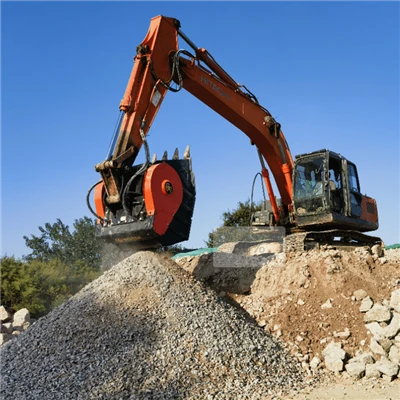
In the realm of construction, landscaping, and waste management, the choice of equipment can significantly impact the efficiency and quality of work. Among the essential tools are buckets, which come in various types to suit different tasks. Two commonly encountered types are soil screening buckets and regular buckets. As a supplier of Screening Bucket, I am well - versed in the differences between these two, and in this blog, I'll explore these disparities in detail.
Design and Structure
Regular buckets are designed with a simple and straightforward structure. They typically consist of a large, open - topped container attached to the arm of a loader, excavator, or skid - steer. The sides and bottom of the bucket are solid, with a sharp edge at the front for scooping materials. The design is optimized for moving large volumes of loose materials such as sand, gravel, dirt, or debris from one place to another.


On the other hand, soil screening buckets have a more complex design. They are also attached to heavy - machinery arms but feature a screening mechanism. The bucket is usually equipped with bars, grids, or perforated plates that allow smaller particles to pass through while retaining larger ones. The spacing between the bars or the size of the perforations can be customized according to the specific screening requirements. For example, if you need to separate fine soil from rocks, you can choose a soil screening bucket with a relatively small bar spacing.
Functionality
The primary function of a regular bucket is to load, carry, and dump materials. It is excellent for tasks like filling trucks, moving large piles of construction waste, or transferring bulk materials around a job site. When you use a regular bucket, you are simply scooping up a large quantity of material in one go and transporting it to the desired location.
Soil screening buckets, however, are designed for a more specialized task: screening. They can separate materials based on size. This is extremely useful in many applications. In landscaping, for instance, a soil screening bucket can be used to sift through topsoil, removing rocks, roots, and other debris to create a smooth and uniform planting medium. In construction, it can help in recycling concrete and asphalt by separating the aggregates of different sizes. The screening process not only improves the quality of the material but also reduces the amount of waste that needs to be disposed of.
Efficiency in Different Applications
When it comes to moving large volumes of homogeneous materials quickly, regular buckets are the clear winner. Their large capacity and simple design allow for rapid loading and unloading. For example, in a large - scale earth - moving project where you need to move tons of sand from a stockpile to a construction site, a regular bucket can get the job done much faster than a soil screening bucket.
Soil screening buckets, though slower in terms of pure material - moving speed, offer unparalleled efficiency in applications where material separation is required. Consider a project where you are renovating an old garden and need to prepare the soil for new plantings. Using a regular bucket would mean having to manually pick out the rocks and roots from the soil, which is a time - consuming and labor - intensive process. A soil screening bucket can automate this process, saving both time and labor costs.
Versatility
Regular buckets are highly versatile in the sense that they can be used with a wide range of materials. Whether it's sand, gravel, dirt, or even snow, a regular bucket can handle the job. They are also compatible with different types of heavy machinery, including front - end loaders, backhoes, and skid - steers.
Soil screening buckets, while more specialized, also offer a certain degree of versatility. The ability to adjust the screening size makes them suitable for a variety of materials and applications. For example, a Screener Bucket for Skid Steer can be used for small - scale landscaping projects as well as for screening compost in a waste - management facility. Additionally, some soil screening buckets can be used for mixing materials while screening, adding another dimension to their functionality.
Cost Considerations
In general, regular buckets are less expensive than soil screening buckets. Their simple design and construction require fewer materials and less complex manufacturing processes, which translates into a lower price tag. This makes them a more budget - friendly option for projects where screening is not necessary.
Soil screening buckets, due to their more complex design and the added screening mechanism, are typically more expensive. However, when you factor in the savings in labor and the added value of the screened materials, they can be a cost - effective investment in the long run. For example, in a recycling project, the ability to separate and reuse materials can offset the initial higher cost of the soil screening bucket.
Maintenance
Regular buckets are relatively easy to maintain. They have fewer moving parts, and the main maintenance tasks usually involve checking for wear and tear on the bucket's edges and welding any cracks or holes. Lubrication is generally not required, and cleaning is as simple as hosing off the dirt.
Soil screening buckets require a bit more maintenance. The screening mechanism, such as the bars or perforated plates, needs to be inspected regularly for damage or clogging. If the bars are bent or the perforations are blocked, the screening efficiency will be reduced. Additionally, the moving parts of the bucket, if any, need to be lubricated to ensure smooth operation.
Conclusion
In summary, the difference between a soil screening bucket and a regular bucket lies in their design, functionality, efficiency, versatility, cost, and maintenance requirements. Regular buckets are great for general material - moving tasks, offering speed and simplicity. Soil screening buckets, on the other hand, are specialized tools that provide the ability to separate materials based on size, which is invaluable in many applications.
If you are in the market for a Bucket Screener or need to understand which type of bucket is best for your project, I encourage you to get in touch. As a supplier of high - quality soil screening buckets, I can provide you with detailed information and customized solutions to meet your specific needs. Whether you are a small - scale landscaper or a large - scale construction company, I am here to assist you in making the right choice.
References
- Construction Equipment Handbook, various editions
- Journal of Construction and Building Materials, multiple issues related to equipment efficiency
- Landscaping Industry Best Practices Guides