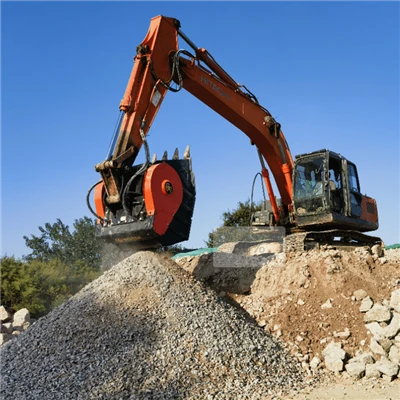
Hey there! If you're in the market for efficient material screening equipment, you've come to the right place. As a supplier of Bucket Screeners, I'm super excited to share with you how these nifty machines work.
What's a Bucket Screener Anyway?
A Bucket Screener is a game - changer in the world of construction, mining, and waste management. It's an attachment that can be fitted onto loaders, excavators, or other heavy - duty machinery. Think of it as a multi - purpose tool that combines the functions of a bucket and a screening device.
The Basics of How It Works
Loading the Material
First things first, the process starts with loading the material into the bucket screener. You can use a loader or an excavator to scoop up all sorts of stuff, like soil, gravel, sand, or even waste materials. Once the material is in the bucket, the real magic begins.
The Screening Mechanism
Inside the bucket screener, there are a series of bars or grids. These bars are spaced at specific intervals depending on the size of the material you want to screen. When the bucket is agitated or rotated, the material starts to move around.
Smaller particles that are smaller than the gaps between the bars fall through, while larger particles stay on top. This separation is the key to the screening process. It's like using a sieve in your kitchen, but on a much larger and more industrial scale.
Agitation and Rotation
To make the screening process more efficient, bucket screeners are designed to agitate or rotate the material. There are different ways this can be achieved. Some bucket screeners use hydraulic systems to create a shaking or vibrating motion. Others have a rotating drum inside the bucket that helps to tumble the material.
This agitation and rotation ensure that all the material gets a chance to pass through the screening bars. It also helps to break up clumps of material, making the screening process more effective.
Different Types of Bucket Screeners and Their Working Principles
Loader Screening Bucket
The Loader Screening Bucket is a popular type of bucket screener. It's specifically designed to be attached to loaders. These loaders are often used in construction sites to move large amounts of material.
The working principle of a loader screening bucket is similar to what I described earlier. The loader scoops up the material and then starts to shake or rotate the bucket. The screening bars inside the bucket separate the small and large particles. The smaller particles fall out of the bottom of the bucket, while the larger ones can be dumped elsewhere.
Screening Bucket Attachment
The Screening Bucket Attachment is a versatile option. It can be attached to different types of machinery, not just loaders. This type of bucket screener usually has a more advanced hydraulic system that allows for precise control of the agitation and rotation.


The hydraulic system can adjust the speed and intensity of the shaking or rotating motion. This means that you can customize the screening process based on the type of material you're working with. For example, if you're screening a very sticky material, you might want to increase the agitation to break up the clumps.
Mineral Screening Bucket
The Mineral Screening Bucket is designed for the mining industry. It's built to handle tough materials like ores and rocks. These materials are often very hard and dense, so the mineral screening bucket needs to be more robust.
The screening bars in a mineral screening bucket are made of high - strength materials to withstand the abrasion. The agitation and rotation mechanisms are also more powerful to ensure that the large and heavy minerals are properly screened.
Advantages of Using a Bucket Screener
Efficiency
One of the biggest advantages of using a bucket screener is its efficiency. Instead of having to use separate machines for loading and screening, you can do both tasks with one attachment. This saves time and money on the job site.
Cost - effectiveness
Bucket screeners are also cost - effective. They are relatively inexpensive compared to larger screening plants. And since they can be attached to existing machinery, you don't have to invest in new equipment.
Versatility
As I mentioned earlier, bucket screeners are very versatile. They can be used in different industries and for various types of materials. Whether you're working on a construction site, a mining operation, or a waste management facility, a bucket screener can get the job done.
Real - World Applications
Construction Sites
On construction sites, bucket screeners are used to filter out large rocks and debris from soil and gravel. This ensures that the material used for building foundations or roads is of the right quality.
Mining Operations
In mining, bucket screeners are used to separate valuable minerals from waste rock. This helps to increase the efficiency of the mining process and reduce the amount of waste that needs to be processed.
Waste Management
Bucket screeners are also useful in waste management. They can be used to separate recyclable materials from non - recyclable waste. This makes it easier to recycle and reduce the amount of waste that goes to landfills.
How to Choose the Right Bucket Screener
When choosing a bucket screener, there are a few things you need to consider.
Material Type
First, think about the type of material you'll be screening. If you're dealing with very hard or abrasive materials, you'll need a bucket screener with strong screening bars and a powerful agitation mechanism.
Machine Compatibility
Make sure the bucket screener is compatible with your existing machinery. Check the attachment points and the hydraulic requirements to ensure a proper fit.
Screening Size
Consider the size of the particles you want to screen. Different bucket screeners have different bar spacings, so choose one that meets your specific screening needs.
Conclusion
So, there you have it! That's how a bucket screener works. It's a simple yet effective way to screen materials on the job site. Whether you're in construction, mining, or waste management, a bucket screener can make your work more efficient and cost - effective.
If you're interested in purchasing a bucket screener or have any questions about our products, feel free to get in touch. We're here to help you find the perfect solution for your screening needs.
References
- Construction Equipment Handbook
- Mining Engineering Textbooks
- Waste Management Industry Reports