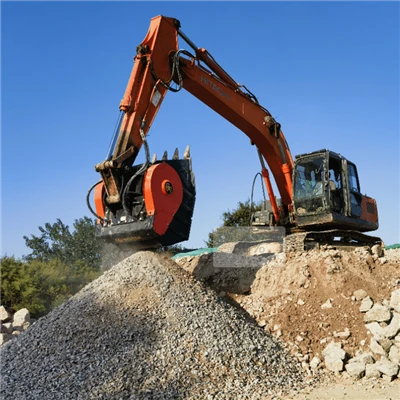
Soil screening buckets are indispensable tools in the construction, mining, and landscaping industries. These devices play a crucial role in separating different-sized materials from soil, gravel, and other aggregates. As a reputable supplier of soil screening buckets, I am often asked about the capacity of a typical soil screening bucket. In this blog post, I will delve into the factors that determine the capacity of a soil screening bucket and provide insights to help you make an informed decision when choosing the right one for your needs.
Understanding the Capacity of a Soil Screening Bucket
The capacity of a soil screening bucket refers to the volume of material that the bucket can hold and process in a single cycle. It is typically measured in cubic meters (m³) or cubic yards (yd³). The capacity of a soil screening bucket can vary significantly depending on several factors, including the size of the bucket, the design of the screening mechanism, and the type of material being screened.
Factors Affecting the Capacity of a Soil Screening Bucket
Bucket Size
The size of the soil screening bucket is one of the primary factors that determine its capacity. Larger buckets generally have a higher capacity than smaller ones because they can hold more material. However, it's important to note that the size of the bucket should be compatible with the size and lifting capacity of the excavator or loader it will be attached to. Using a bucket that is too large for the equipment can lead to instability and safety issues.
Screening Mechanism Design
The design of the screening mechanism also plays a crucial role in determining the capacity of a soil screening bucket. There are several types of screening mechanisms available, including static screens, vibrating screens, and rotating screens. Each type of screening mechanism has its own advantages and disadvantages in terms of screening efficiency and capacity.
- Static Screens: Static screens are the simplest type of screening mechanism. They consist of a fixed grid or mesh that allows smaller particles to pass through while retaining larger particles. Static screens are relatively inexpensive and easy to maintain, but they have a lower screening efficiency and capacity compared to other types of screening mechanisms.
- Vibrating Screens: Vibrating screens use vibrations to separate different-sized particles. The vibrations help to loosen the material and increase the flow rate through the screen. Vibrating screens are more efficient than static screens and can handle a higher volume of material. However, they require more power and maintenance.
- Rotating Screens: Rotating screens use a rotating drum or cylinder to screen the material. The rotation of the drum helps to tumble the material and increase the contact area between the material and the screen. Rotating screens are the most efficient type of screening mechanism and can handle a large volume of material. However, they are also the most expensive and require the most maintenance.
Material Properties
The properties of the material being screened, such as particle size, shape, density, and moisture content, can also affect the capacity of a soil screening bucket. Materials with smaller particle sizes, regular shapes, and lower moisture content are generally easier to screen and can be processed at a higher rate. On the other hand, materials with larger particle sizes, irregular shapes, and high moisture content can be more difficult to screen and may require a lower feed rate to achieve optimal screening efficiency.
Typical Capacity Ranges of Soil Screening Buckets
The capacity of a typical soil screening bucket can range from a few cubic meters to several dozen cubic meters per hour, depending on the factors mentioned above. Here are some general guidelines for the typical capacity ranges of soil screening buckets based on their size and screening mechanism:
- Small-Sized Buckets (0.2 - 0.5 m³): Small-sized soil screening buckets are typically used for light-duty applications, such as landscaping and small construction projects. They have a capacity of around 5 - 15 cubic meters per hour.
- Medium-Sized Buckets (0.5 - 1.5 m³): Medium-sized soil screening buckets are suitable for a wide range of applications, including general construction, mining, and recycling. They have a capacity of around 15 - 30 cubic meters per hour.
- Large-Sized Buckets (1.5 - 3 m³): Large-sized soil screening buckets are designed for heavy-duty applications, such as large-scale construction projects and mining operations. They have a capacity of around 30 - 60 cubic meters per hour.
It's important to note that these are just general guidelines, and the actual capacity of a soil screening bucket may vary depending on the specific model, screening mechanism, and operating conditions.


Choosing the Right Soil Screening Bucket for Your Needs
When choosing a soil screening bucket, it's important to consider your specific needs and requirements. Here are some factors to keep in mind:
- Application: Determine the type of application you will be using the soil screening bucket for, such as construction, mining, or landscaping. This will help you choose the right size and type of screening mechanism for your needs.
- Material Properties: Consider the properties of the material you will be screening, such as particle size, shape, density, and moisture content. This will help you choose a screening mechanism that is suitable for the material.
- Equipment Compatibility: Make sure the size and weight of the soil screening bucket are compatible with the size and lifting capacity of the excavator or loader it will be attached to.
- Budget: Consider your budget when choosing a soil screening bucket. There are several options available at different price points, so you can choose a bucket that meets your needs and budget.
Our Soil Screening Bucket Offerings
As a leading supplier of soil screening buckets, we offer a wide range of high-quality products to meet the diverse needs of our customers. Our soil screening buckets are available in various sizes and configurations, with different screening mechanisms to suit different applications.
- Screening Bucket Attachment: Our screening bucket attachments are designed to be easily attached to excavators and loaders. They are available in different sizes and screening mechanisms to meet your specific needs.
- Screening Bucket Excavator: Our screening bucket excavators are specifically designed for screening applications. They are equipped with powerful engines and advanced screening mechanisms to ensure high efficiency and productivity.
- Digger Screening Bucket: Our digger screening buckets are suitable for a wide range of applications, including construction, mining, and landscaping. They are available in different sizes and screening mechanisms to meet your specific needs.
Contact Us for More Information
If you are interested in learning more about our soil screening buckets or have any questions about their capacity and suitability for your application, please feel free to contact us. Our team of experts will be happy to assist you in choosing the right soil screening bucket for your needs and provide you with a detailed quote.
References
- "Soil Screening Bucket: A Comprehensive Guide." Construction Equipment Guide, 2023.
- "The Importance of Screening Mechanisms in Soil Screening Buckets." Mining Technology, 2022.
- "Factors Affecting the Capacity of Soil Screening Buckets." Landscaping Magazine, 2021.