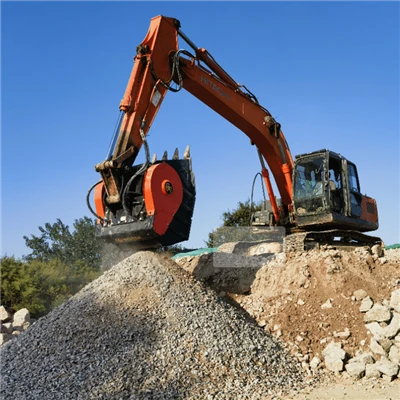
Soil mixing equipment plays a pivotal role in various construction and environmental projects. As a leading supplier of Soil Mixing Equipment, I am excited to delve into the details of what this equipment is, its types, applications, and benefits.
What is Soil Mixing Equipment?
Soil mixing equipment refers to a range of machinery designed to blend soil with other materials such as cement, lime, fly ash, or chemical stabilizers. The primary goal of soil mixing is to improve the engineering properties of the soil, including its strength, durability, and permeability. This process is known as soil stabilization, which is crucial for ensuring the stability and longevity of structures built on or with soil.
The equipment works by mechanically or hydraulically mixing the soil and the additives in a controlled manner. The mixing can occur in - situ (at the project site) or in a central mixing plant. In - situ mixing is often preferred for large - scale projects where transporting the soil to a central plant is not practical.
Types of Soil Mixing Equipment
1. Mixing Trucks
Mixing trucks are commonly used for smaller - scale projects or for transporting pre - mixed soil materials to the construction site. These trucks are equipped with a rotating drum that continuously mixes the soil and additives during transportation. They are versatile and can be easily maneuvered around the site, making them ideal for projects with limited access.
2. Central Mixing Plants
Central mixing plants are large - scale facilities where soil and additives are mixed in a controlled environment. These plants are equipped with high - capacity mixers that can produce large volumes of stabilized soil. They offer precise control over the mixing process, ensuring consistent quality of the final product. Central mixing plants are often used for large infrastructure projects such as highways, airports, and large building complexes.
3. In - Situ Mixing Rigs
In - situ mixing rigs are specialized machines used for mixing soil directly at the project site. These rigs are typically mounted on a crawler or a truck and are equipped with mixing tools such as augers or paddles. The rigs penetrate the soil to a specified depth and mix the soil with additives as they move forward. In - situ mixing is suitable for projects where the existing soil needs to be stabilized without excavation.
Applications of Soil Mixing Equipment
1. Road Construction
In road construction, soil mixing equipment is used to stabilize the subgrade, which is the layer of soil on which the road pavement is built. By mixing the subgrade soil with cement or lime, the strength and load - bearing capacity of the subgrade can be significantly improved. This helps to prevent road failures such as cracking and rutting, extending the lifespan of the road.
2. Building Foundations
For building foundations, soil mixing equipment can be used to improve the stability of the soil. In areas with soft or expansive soils, stabilizing the soil can prevent differential settlement, which can cause structural damage to the building. By creating a more uniform and stable foundation, the safety and durability of the building are enhanced.
3. Landfill Liners
Soil mixing equipment is also used in the construction of landfill liners. By mixing soil with bentonite or other impermeable materials, a low - permeability liner can be created. This liner helps to prevent the leakage of leachate from the landfill into the surrounding environment, protecting groundwater quality.
4. Environmental Remediation
In environmental remediation projects, soil mixing equipment can be used to treat contaminated soil. By mixing the contaminated soil with chemical stabilizers or other treatment agents, the contaminants can be immobilized or transformed into less harmful forms. This helps to reduce the environmental impact of the contamination and restore the site to a usable condition.
Benefits of Using Soil Mixing Equipment
1. Improved Soil Properties
One of the main benefits of using soil mixing equipment is the improvement of soil properties. By adding stabilizers to the soil, the strength, stiffness, and durability of the soil can be enhanced. This allows for the construction of more stable and long - lasting structures on or with the soil.
2. Cost - Effectiveness
Soil mixing equipment can be a cost - effective solution for construction projects. Instead of excavating and replacing large volumes of unsuitable soil, the existing soil can be stabilized on - site. This reduces the cost of soil transportation and disposal, as well as the cost of importing new soil materials.
3. Environmental Sustainability
Using soil mixing equipment promotes environmental sustainability. By reusing the existing soil, the need for soil excavation and disposal is minimized, reducing the environmental impact associated with these activities. Additionally, soil stabilization can help to prevent soil erosion and protect natural habitats.


4. Time - Saving
Soil mixing equipment can significantly reduce the construction time. In - situ mixing allows for the immediate use of the stabilized soil, eliminating the need for waiting for the soil to be transported and compacted. This helps to speed up the construction process and reduce project delays.
The Role of Slurry Infrastructure Maker
As a Slurry Infrastructure Maker, we understand the importance of high - quality soil mixing equipment. Our products are designed to meet the diverse needs of our customers in various industries. We offer a wide range of soil mixing equipment, from small - scale mixing trucks to large - scale central mixing plants.
Our equipment is built with the latest technology and high - quality materials, ensuring reliable performance and long - term durability. We also provide comprehensive after - sales service, including maintenance, repair, and technical support. Our team of experts is always ready to assist our customers in choosing the right equipment for their projects and providing guidance on the proper use and maintenance of the equipment.
Soil Stabilization Products
In addition to our soil mixing equipment, we also offer a wide range of Soil Stabilization Products. These products include cement - based stabilizers, lime - based stabilizers, and chemical additives. Our soil stabilization products are carefully formulated to provide optimal performance in different soil types and project requirements.
We work closely with our customers to understand their specific needs and recommend the most suitable soil stabilization products and equipment. Our goal is to provide our customers with a complete solution for soil stabilization, from product selection to equipment operation and maintenance.
Conclusion
Soil mixing equipment is an essential tool in modern construction and environmental projects. It offers numerous benefits, including improved soil properties, cost - effectiveness, environmental sustainability, and time - saving. As a leading supplier of soil mixing equipment and Soil Stabilization Products, we are committed to providing our customers with high - quality products and excellent service.
If you are interested in learning more about our soil mixing equipment or need assistance with your soil stabilization project, we encourage you to reach out to us. Our team of experts is ready to discuss your requirements and provide you with the best solutions. Whether you are working on a small - scale residential project or a large - scale infrastructure development, we have the right equipment and products to meet your needs. Contact us today to start the conversation and take the first step towards a successful soil stabilization project.
References
- Holtz, R. D., & Kovacs, W. D. (1981). An introduction to geotechnical engineering. Prentice - Hall.
- Mitchell, J. K. (1993). Fundamentals of soil behavior. Wiley.
- ASTM International. (2021). Standards related to soil stabilization and mixing equipment.