

What are the dynamic characteristics of an excavator jaw bucket during operation?
As a proud supplier of Excavator Jaw Buckets, I've had the privilege of closely observing and understanding the dynamic characteristics of these remarkable pieces of equipment during operation. In this blog, I'll delve into the key aspects that define the performance and functionality of an excavator jaw bucket, shedding light on what makes it an indispensable tool in the construction and excavation industries.
Force and Power Transmission
One of the most prominent dynamic characteristics of an excavator jaw bucket is its ability to generate and transmit significant force. The hydraulic system of the excavator serves as the powerhouse, providing the necessary energy to drive the movement of the jaw bucket. When the operator activates the hydraulic controls, high - pressure fluid is directed into the hydraulic cylinders attached to the jaw bucket. These cylinders convert the hydraulic energy into linear mechanical force, which is then used to open and close the jaws of the bucket.
The force exerted by the jaw bucket is crucial for its primary functions, such as crushing and gripping materials. Whether it's breaking up concrete, rock, or other hard substances, the high - force capacity of the jaw bucket allows it to handle even the most challenging tasks. The design of the jaw mechanism is optimized to maximize the force transmission efficiency. The shape and arrangement of the jaws, along with the pivot points, are engineered to ensure that the applied force is concentrated at the point of contact with the material, enhancing the crushing and gripping effectiveness.
Movement and Mobility
The movement of an excavator jaw bucket is another dynamic characteristic that significantly impacts its performance. The bucket is attached to the excavator's arm, which provides a wide range of motion. The operator can control the vertical, horizontal, and rotational movements of the bucket with precision. This mobility allows the jaw bucket to access different areas of the worksite and position itself accurately for the task at hand.
The bucket can be raised and lowered to adjust the height for loading or unloading materials. It can also be extended and retracted horizontally to reach distant objects or move closer to the working area. Additionally, the ability to rotate the bucket around its axis provides greater flexibility in handling materials. For example, when crushing large rocks, the operator can rotate the bucket to align the jaws with the most vulnerable part of the rock, increasing the chances of a successful break.
The smoothness of the movement is also an important factor. A well - designed excavator jaw bucket will have minimal friction in its joints and moving parts, ensuring that the bucket can be operated smoothly and efficiently. This reduces wear and tear on the components and improves the overall reliability of the equipment.
Crushing and Material Handling Efficiency
The main purpose of an excavator jaw bucket is to crush and handle materials. Its dynamic characteristics play a crucial role in determining the efficiency of these processes. The speed at which the jaws open and close affects the crushing cycle time. A faster closing speed means that more crushing operations can be carried out in a given period, increasing the productivity of the equipment.
The size and shape of the jaws also influence the material handling efficiency. The jaws are typically designed with a specific profile that is optimized for different types of materials. For example, a jaw bucket used for crushing concrete may have a different tooth pattern and shape compared to one used for handling softer materials. The tooth design helps to grip the material firmly and prevent it from slipping out during the crushing process.
Moreover, the capacity of the jaw bucket to hold and process materials is an important consideration. A larger bucket can handle more material in each cycle, reducing the number of trips required to move the crushed material to the desired location. This not only saves time but also improves the overall efficiency of the worksite operations.
Durability and Resistance to Wear
Operating in harsh construction and excavation environments, an excavator jaw bucket needs to be highly durable and resistant to wear. The dynamic forces and stresses experienced during operation can cause significant damage to the bucket if it is not properly designed and constructed.
The materials used in the manufacturing of the jaw bucket are carefully selected to ensure high strength and wear resistance. High - quality steel alloys are commonly used for the jaws and other critical components. These materials can withstand the impact and abrasion caused by the repeated crushing and gripping of hard materials.

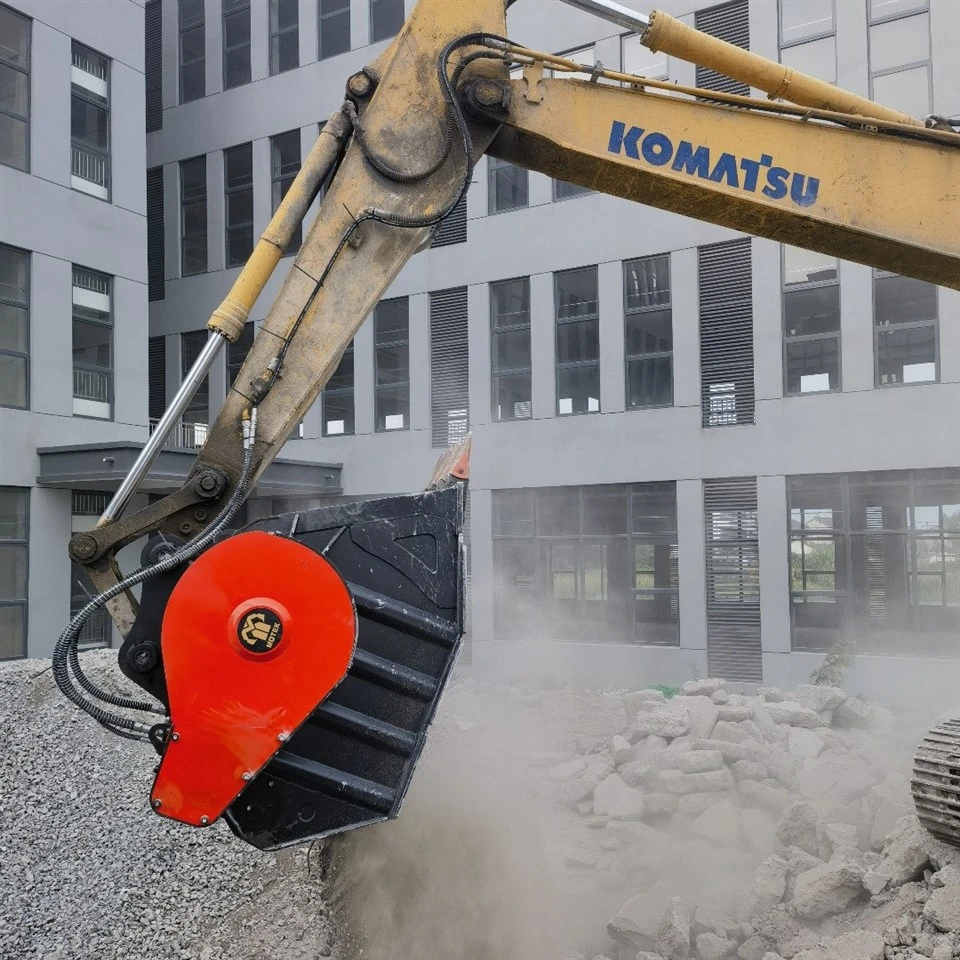
The design of the bucket also incorporates features to enhance its durability. For example, reinforced areas around the pivot points and high - stress regions help to distribute the load evenly and prevent premature failure. Additionally, some jaw buckets are equipped with replaceable wear parts, such as teeth and liners. These parts can be easily replaced when they become worn, extending the lifespan of the bucket and reducing the maintenance costs.
Adaptability and Compatibility
In today's diverse construction and excavation projects, an excavator jaw bucket needs to be adaptable and compatible with different types of excavators and materials. Our Excavator Jaw Bucket is designed to be compatible with a wide range of excavator models. This compatibility allows our customers to easily integrate the jaw bucket into their existing equipment fleet without the need for extensive modifications.
The bucket can also be customized to suit specific project requirements. For example, the size of the jaws, the tooth pattern, and the hydraulic system can be adjusted according to the type of material to be crushed and the expected workload. This adaptability ensures that the jaw bucket can perform optimally in various applications, whether it's a small - scale demolition project or a large - scale mining operation.
Comparison with Other Crusher Buckets
When considering the dynamic characteristics of an excavator jaw bucket, it's useful to compare it with other types of crusher buckets, such as the Hydraulic Crusher Bucket and the Concrete Crusher Bucket for Excavator. While all these buckets are used for crushing materials, they have different design features and performance characteristics.
The jaw bucket is known for its high - force crushing ability and precise gripping. It is particularly effective for handling large and irregularly shaped materials. The hydraulic crusher bucket, on the other hand, often uses a different crushing mechanism, such as a rotating blade or a hydraulic hammer. It may be more suitable for smaller - sized materials and applications where a different type of crushing action is required.
The concrete crusher bucket is specifically designed for crushing concrete. It may have specialized teeth and a more robust design to handle the high - strength and abrasive nature of concrete. However, the excavator jaw bucket offers a more versatile solution, as it can be used for a wider range of materials and applications.
Conclusion
In conclusion, the dynamic characteristics of an excavator jaw bucket, including force and power transmission, movement and mobility, crushing and material handling efficiency, durability, and adaptability, make it a powerful and versatile tool in the construction and excavation industries. Our company, as a leading supplier of Excavator Jaw Bucket, is committed to providing high - quality products that meet the diverse needs of our customers.
If you're in the market for an excavator jaw bucket or have any questions about our products, we encourage you to reach out to us for a detailed discussion. Our team of experts is ready to assist you in finding the right solution for your specific project requirements. Let's work together to enhance the efficiency and productivity of your worksite.
References
- Construction Equipment Handbook, various editions.
- Hydraulic Engineering Principles for Heavy Machinery, a technical manual.
- Industry research reports on excavator attachments.





