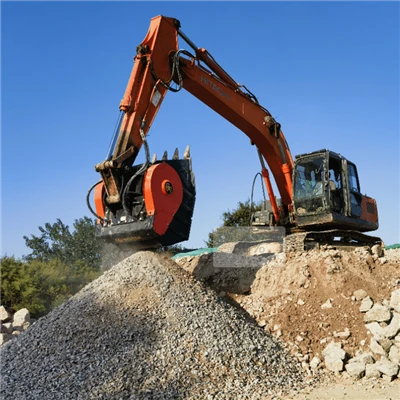
Adapting a rock screening bucket to different types of rocks is a crucial skill for anyone in the construction, mining, or landscaping industries. As a supplier of high - quality rock screening buckets, I understand the challenges and opportunities that come with working with various rock materials. In this blog post, I'll share some insights on how to optimize the performance of a rock screening bucket for different types of rocks.
Understanding the Types of Rocks
Before we delve into the adaptation process, it's essential to understand the different types of rocks you might encounter. Rocks can be broadly classified into three main categories: igneous, sedimentary, and metamorphic.
Igneous rocks, such as granite and basalt, are formed from the cooling and solidification of magma or lava. They are typically hard, dense, and have a crystalline structure. Sedimentary rocks, like sandstone and limestone, are created by the accumulation and cementation of sediment particles. These rocks are often more porous and less dense than igneous rocks. Metamorphic rocks, such as marble and slate, are formed when existing rocks are subjected to high pressure and temperature, causing them to change their physical and chemical properties.
Selecting the Right Rock Screening Bucket
The first step in adapting to different types of rocks is to choose the appropriate rock screening bucket. Our Rock Screening Bucket for Excavator is designed to handle a wide range of rock materials. It comes in various sizes and configurations, allowing you to select the one that best suits your specific needs.
For hard and dense igneous rocks, a bucket with stronger screening teeth and a more robust frame is recommended. The teeth should be made of high - strength steel to withstand the abrasion and impact forces generated during the screening process. Our Rock Screening Bucket features hardened steel teeth that are designed to last longer and provide efficient screening performance.
When dealing with sedimentary rocks, which are often more fragile and porous, a bucket with a finer screening mesh may be more suitable. This will help to separate smaller particles and improve the quality of the screened material. Our rock screening buckets can be equipped with different mesh sizes to meet your specific requirements.
Adjusting the Screening Process
Once you have selected the right rock screening bucket, the next step is to adjust the screening process according to the type of rock. The speed of the excavator or skid steer, the angle of the bucket, and the frequency of shaking all play important roles in the screening efficiency.
For hard igneous rocks, a slower speed and a more aggressive shaking motion are usually required. This allows the bucket to break up larger rocks and separate them from the smaller particles. The angle of the bucket should be adjusted to ensure that the rocks are properly fed into the screening area. Our Skid Steer Screening Bucket is designed with a user - friendly control system that allows you to easily adjust these parameters.
When screening sedimentary rocks, a faster speed and a gentler shaking motion may be more appropriate. This helps to prevent the rocks from breaking into too many small pieces and ensures a more consistent screening result. The angle of the bucket can be adjusted to optimize the flow of the rocks through the screening mesh.
Maintenance and Inspection
Regular maintenance and inspection are essential for ensuring the optimal performance of your rock screening bucket. Different types of rocks can cause varying degrees of wear and tear on the bucket components.
After each use, it's important to clean the bucket thoroughly to remove any debris and rock particles. Check the screening teeth for signs of wear and replace them if necessary. Inspect the mesh for any holes or damage and repair or replace it as needed. Lubricate all moving parts to ensure smooth operation.


For buckets used with hard igneous rocks, more frequent maintenance may be required due to the higher levels of abrasion. On the other hand, buckets used with sedimentary rocks may require less frequent maintenance but still need to be inspected regularly to ensure proper functioning.
Customization Options
As a rock screening bucket supplier, we understand that different customers may have unique requirements. That's why we offer a range of customization options to adapt our buckets to different types of rocks and specific job sites.
We can customize the size and shape of the screening teeth to improve the screening efficiency for different rock materials. For example, for very hard rocks, we can provide longer and thicker teeth that can penetrate and break up the rocks more effectively. We can also customize the mesh size and pattern to achieve the desired screening result.
In addition, we can install additional features such as hydraulic shakers or vibration dampeners to enhance the performance of the bucket. These features can be particularly useful when dealing with challenging rock types or when high - volume screening is required.
Training and Support
We believe that providing our customers with proper training and support is crucial for the successful adaptation of our rock screening buckets to different types of rocks. Our team of experts can provide on - site training to your operators, teaching them how to select the right bucket, adjust the screening process, and perform regular maintenance.
We also offer ongoing technical support to answer any questions you may have and to help you troubleshoot any issues that may arise. Whether you are a new customer or an experienced user, our goal is to ensure that you get the most out of your rock screening bucket.
Conclusion
Adapting a rock screening bucket to different types of rocks requires a combination of the right equipment, proper adjustment of the screening process, regular maintenance, and customization options. As a supplier of high - quality rock screening buckets, we are committed to providing our customers with the best products and services to meet their specific needs.
If you are interested in learning more about our rock screening buckets or have any questions about adapting them to different types of rocks, please feel free to contact us for a consultation. We look forward to working with you to find the perfect solution for your rock screening needs.
References
- Brady, B. H. G., & Brown, E. T. (1985). Rock mechanics for underground mining. Allen & Unwin.
- Goodman, R. E. (1989). Introduction to rock mechanics. Wiley.
- Hoek, E., & Brown, E. T. (1980). Underground excavation in rock. Institution of Mining and Metallurgy.