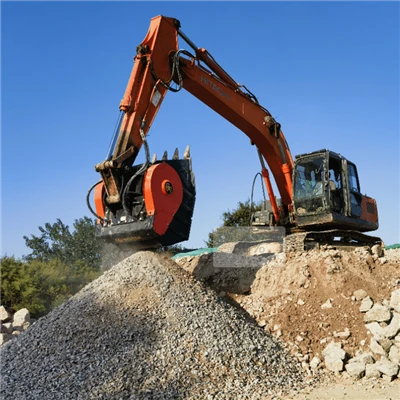
Can a soil screening bucket separate stones from soil?


As a seasoned supplier of soil screening buckets, this is a question I'm frequently asked, and today, I'm excited to delve into a comprehensive analysis of how these remarkable tools handle the task of separating stones from soil.
The Fundamentals of Soil Screening Buckets
At its core, a soil screening bucket is a specialized piece of equipment designed to sift through materials, in this case, soil, to separate different components based on size. It attaches to heavy machinery such as excavators or skid - steers, leveraging their power and stability to perform the screening operation effectively.
The construction of a soil screening bucket typically consists of a frame and a system of bars or mesh. The bars or mesh are arranged in a way that allows smaller particles, like soil, to pass through while larger objects, such as stones, are retained within the bucket. This simple yet ingenious design forms the basis of its ability to separate stones from soil.
How the Separation Process Works
When the soil screening bucket is engaged in the screening process, the attached machinery moves the bucket through the soil. The movement causes the soil to tumble and shift within the bucket. As the soil tumbles, the smaller soil particles fall through the gaps between the bars or the holes in the mesh. Larger stones, which are too big to pass through these openings, stay inside the bucket.
For example, in a construction site where the ground is filled with a mixture of top - soil and small rocks, a soil screening bucket can be used to quickly and efficiently separate these elements. The excavator equipped with the screening bucket scoops up the soil - stone mixture. Once the bucket starts to rotate or sift, the fine soil begins to pour out, leaving the stones behind. This process not only saves time and labor but also ensures that the separated soil can be used for other purposes, such as landscaping or back - filling.
Factors Affecting Stone Separation
However, the effectiveness of a soil screening bucket in separating stones from soil is influenced by several factors.
- Bucket Design
- The spacing of the bars or the size of the mesh holes is crucial. If the gaps are too large, smaller stones may also pass through with the soil, reducing the separation efficiency. On the other hand, if the gaps are too small, the bucket may clog easily, slowing down the screening process. For instance, for separating small pebbles from fine garden soil, a screening bucket with smaller mesh holes would be more appropriate.
- The shape and structure of the bucket can also impact how well the tumbling action occurs. A well - designed bucket will ensure that the soil has enough movement to allow for proper separation.
- Soil Properties
- The moisture content of the soil plays a significant role. Wet soil tends to clump together, and stones may get trapped within these clumps. This can make it difficult for the soil to pass through the screening mechanism and also reduce the overall separation quality. Dry soil, on the other hand, is more likely to flow freely through the bucket, facilitating better separation.
- The particle size distribution of the soil is also important. If the soil has a wide range of particle sizes, including many that are close to the size of the small stones, the separation process may be more challenging.
- Machine Operation
- The speed and movement of the attached machinery can affect the screening process. If the machine moves too quickly, the soil may not have enough time to tumble and separate properly. Conversely, if the movement is too slow, the process becomes inefficient. Operators need to find the right balance to achieve optimal results.
Types of Soil Screening Buckets for Stone Separation
There are different types of soil screening buckets available, each with its own advantages when it comes to separating stones from soil.
- Best Screening Bucket
- These buckets are often designed with advanced features to ensure high - efficiency screening. They usually have a well - engineered bar or mesh system that maximizes the separation of stones from soil. The Best Screening Buckets are typically made from high - quality materials, ensuring durability even in tough working conditions. They are suitable for a wide range of applications, from small - scale landscaping projects to large - scale construction sites.
- Skid Steer Screener Bucket
- Skid steer screener buckets are specifically designed to be attached to skid - steer loaders. They are more compact and maneuverable compared to larger excavator - attached buckets. This makes them ideal for projects where space is limited, such as urban construction sites or backyard landscaping. The skid steer screener bucket can effectively separate stones from soil in these confined areas, providing a quick and efficient solution.
- Recycling Screening Bucket
- Recycling screening buckets are often used in applications where soil and stones need to be separated for recycling purposes. They are designed to handle a variety of materials, including recycled construction waste. These buckets can effectively separate stones from soil mixed with other debris, allowing for the reuse of the separated components. For example, the separated soil can be used for land reclamation projects, and the stones can be crushed and used as aggregate in new construction.
Real - World Applications and Success Stories
In the agricultural sector, soil screening buckets have been a game - changer. Farmers often need to prepare their fields for planting, which involves removing stones from the soil. Using a soil screening bucket attached to a tractor or an excavator, they can quickly clear large areas of land. This not only improves the quality of the soil but also reduces the wear and tear on farming equipment that could be caused by stones.
In the construction industry, soil screening buckets are essential for site preparation. Before building foundations or laying roads, the soil needs to be free of large stones. Screening buckets can process large volumes of soil on - site, saving the cost of transporting soil to off - site processing facilities.
There are numerous success stories where companies have seen significant improvements in their operations after using soil screening buckets. For example, a landscaping company was struggling to separate stones from top - soil for their garden projects. After investing in a high - quality soil screening bucket, they were able to increase their productivity by 50% and improve the quality of their soil products.
Conclusion and Call to Action
In conclusion, a soil screening bucket is a highly effective tool for separating stones from soil. However, the efficiency of this process depends on various factors such as bucket design, soil properties, and machine operation. By choosing the right type of screening bucket for the specific application, users can achieve optimal results in separating stones from soil.
If you're looking to enhance your productivity in separating stones from soil for your construction, landscaping, or other projects, I invite you to reach out. Our team of experts is here to assist you in selecting the most suitable soil screening bucket for your needs. We can provide detailed product information, answer your questions, and guide you through the purchasing process. Whether you need a Best Screening Bucket, Skid Steer Screener Bucket, or Recycling Screening Bucket, we have the solutions. So, don't hesitate to start the conversation and take your operations to the next level.
References
- Smith, J. (2022). "Advancements in Soil Screening Technology". Construction Equipment Journal.
- Brown, A. (2021). "The Role of Screening Buckets in Sustainable Land Use". Agricultural Sciences Journal.
- Johnson, M. (2020). "Case Studies of Effective Stone Separation Using Screening Buckets". Environmental Engineering Review.