

Can a soil screening bucket be used for silt screening? This is a question that often arises among those in the construction, landscaping, and environmental management industries. As a supplier of high - quality soil screening buckets, I'm here to provide an in - depth analysis of this topic.
Understanding the Basics of Soil Screening Buckets
Soil screening buckets are versatile attachments designed to separate different materials based on their size. They are commonly used with excavators and other heavy machinery. These buckets are equipped with a series of bars or mesh screens that allow smaller particles to pass through while retaining larger ones. The Screening Bucket for Digger is a popular choice among contractors due to its compatibility with various digger models and its efficient screening capabilities.
The main function of a soil screening bucket is to sift through soil, gravel, sand, and other aggregates. It helps in removing debris, rocks, and other unwanted materials, thus preparing the soil for further use. For example, in construction projects, screened soil can be used for backfilling, landscaping, or as a base for foundations.
Characteristics of Silt
Silt is a type of sedimentary material that consists of fine particles, smaller than sand but larger than clay. It has unique physical and chemical properties. Silt particles are smooth and powdery, and they can hold water relatively well. Due to its fine nature, silt can easily clog small openings and is often associated with sedimentation in water bodies.
In environmental management, silt screening is crucial. For instance, when dealing with dredged materials from waterways, screening the silt can help in separating it from larger debris and contaminants. In construction sites near water sources, proper silt management is necessary to prevent soil erosion and water pollution.
Can a Soil Screening Bucket be Used for Silt Screening?
The answer is yes, a soil screening bucket can be used for silt screening, but with certain considerations.
Advantages of Using a Soil Screening Bucket for Silt
- Efficiency: Soil screening buckets can process large volumes of material quickly. When screening silt, this means that a significant amount of material can be sorted in a relatively short time. For example, in a large - scale dredging project, a Screening Bucket Attachment can be attached to an excavator, and it can continuously screen the dredged silt, separating it from larger rocks and debris.
- Versatility: These buckets come with adjustable screens. This allows operators to customize the screening process according to the specific requirements of the silt. If the silt contains a mix of different particle sizes, the screen size can be adjusted to ensure that only the desired particles pass through.
- Cost - effectiveness: Compared to some specialized silt screening equipment, soil screening buckets are relatively more affordable. They are also multi - purpose, which means that they can be used for other materials apart from silt. This reduces the need for investing in separate equipment for different screening tasks.
Challenges of Using a Soil Screening Bucket for Silt
- Clogging: One of the main challenges is the tendency of silt to clog the screens. Since silt particles are fine and can stick together, they can accumulate on the screen bars or mesh, reducing the screening efficiency. To mitigate this issue, some soil screening buckets are designed with self - cleaning mechanisms. For example, the Bucket Screener may have a vibrating or rotating screen system that helps to dislodge the clogged silt particles.
- Moisture content: Silt often has a high moisture content, especially when it is dredged from water bodies. The wet silt can be more difficult to screen as it can form clumps. In such cases, pre - treatment methods such as drying or adding agents to reduce the stickiness may be required before using the soil screening bucket.
Factors to Consider When Using a Soil Screening Bucket for Silt
- Screen design: The design of the screen is crucial. For silt screening, a screen with a smaller mesh size may be required to separate the fine silt particles from larger debris. However, as mentioned earlier, a very fine mesh is more prone to clogging. Therefore, a balance needs to be struck between the screen size and the potential for clogging.
- Machine power: The power of the excavator or the machinery to which the soil screening bucket is attached is important. Silt screening can be a demanding task, especially when dealing with large volumes or wet silt. A machine with sufficient power can ensure that the screening process is carried out smoothly and efficiently.
- Environmental conditions: The operating environment also plays a role. In areas with high humidity or near water sources, the moisture content of the silt may be higher, and additional measures may be needed to address this. Additionally, in environmentally sensitive areas, proper waste management and disposal of the screened materials are essential to comply with environmental regulations.
Case Studies
- Dredging project in a river: In a recent dredging project in a river, a soil screening bucket was used to screen the dredged silt. The silt contained a mix of small rocks, branches, and other debris. By using a soil screening bucket with an adjustable screen, the operators were able to separate the larger debris from the silt. However, due to the high moisture content of the silt, the screens clogged frequently. To solve this problem, they installed a vibrating screen system on the bucket, which significantly improved the screening efficiency.
- Landscaping project: In a landscaping project, the contractor needed to screen silt - rich soil to prepare it for planting. They used a soil screening bucket attached to a small excavator. The adjustable screens allowed them to remove large stones and roots from the silt - soil mixture. The screened silt was then used to create a smooth and fertile base for the new plants.
Conclusion
In conclusion, a soil screening bucket can be a valuable tool for silt screening. It offers efficiency, versatility, and cost - effectiveness. However, it also comes with challenges such as clogging and dealing with high moisture content. By considering factors such as screen design, machine power, and environmental conditions, these challenges can be overcome.
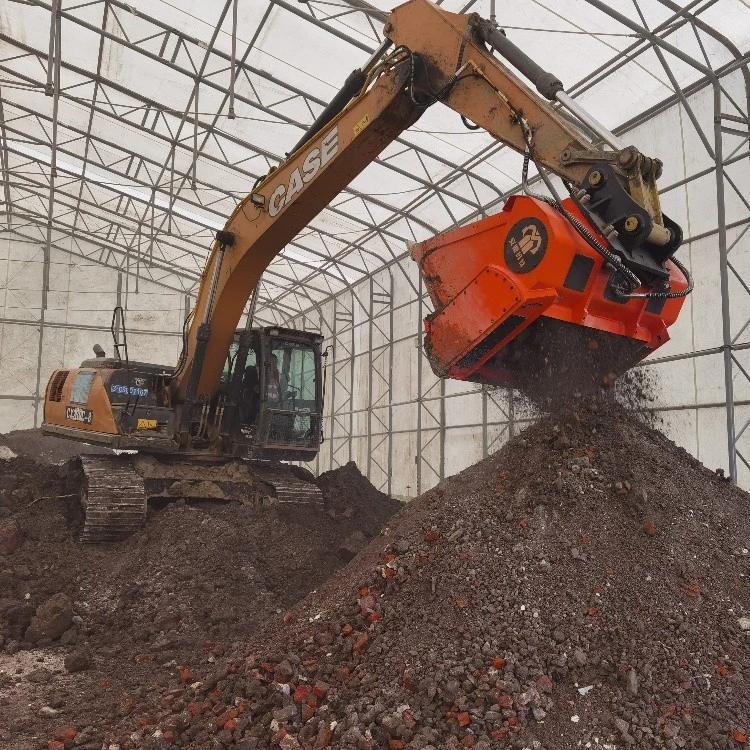

If you are involved in projects that require silt screening or any other material screening, our soil screening buckets are designed to meet your needs. We offer a wide range of Screening Bucket for Digger, Screening Bucket Attachment, and Bucket Screener options. Contact us for more information and to discuss your specific requirements. We are ready to assist you in finding the best screening solution for your project.
References
- "Soil Mechanics and Foundations" by Braja M. Das. This book provides in - depth knowledge about different soil types, including silt, and their properties.
- "Construction Equipment Handbook" which offers detailed information about the operation and use of various construction attachments, including soil screening buckets.





