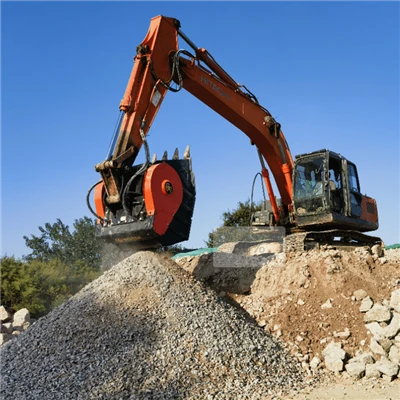
Hey there! As a supplier of Soil Mixing Heads, I often get asked about the sampling method for the soil mixture from a soil mixing head. It's a crucial topic, especially for those involved in Soil Remediation and Soil Improvement System. In this blog, I'll share some insights on this matter.
First off, let's understand why sampling the soil mixture from a soil mixing head is so important. When we're working on soil - related projects, whether it's to clean up contaminated soil or improve its engineering properties, we need to know if the mixing process is effective. Sampling helps us determine if the additives are evenly distributed in the soil, if the desired chemical and physical changes are taking place, and if the end - product meets the project requirements.
There are several sampling methods that can be used for the soil mixture from a soil mixing head. One of the most common methods is grab sampling. This is a relatively simple and straightforward approach. You basically take a small sample of the soil mixture directly from the output of the soil mixing head at regular intervals. For example, you might take a grab sample every 10 minutes during the mixing operation.
The advantage of grab sampling is its simplicity. It doesn't require a lot of equipment or complex procedures. You just need a suitable sampling tool, like a scoop or a trowel, and a container to store the sample. However, grab sampling has its limitations. It only provides a snapshot of the soil mixture at a particular moment. The soil mixture can vary over time, and a single grab sample might not be representative of the entire batch.


Another method is composite sampling. In composite sampling, you collect multiple grab samples from different points and at different times during the mixing process. Then, you combine these samples to form a single composite sample. This method gives a more comprehensive view of the soil mixture because it takes into account the variations that occur over time and space.
To perform composite sampling, you need to plan your sampling strategy carefully. Decide on the number of grab samples you'll take, the locations where you'll take them, and the time intervals. For instance, you could take grab samples from the front, middle, and back of the soil mixing head's output chute every 15 minutes for an hour, and then combine all these samples.
Composite sampling is more time - consuming and labor - intensive than grab sampling, but it provides more reliable results. It's especially useful when you need to make accurate assessments of the soil mixture's quality, such as when you're dealing with strict environmental regulations or high - stakes projects.
There's also the option of using automated sampling systems. These systems can be integrated with the soil mixing head to take samples at predefined intervals or based on certain conditions. Automated sampling systems are great because they reduce the human error associated with manual sampling. They can also provide a continuous record of the soil mixture's properties over time.
For example, some automated sampling systems use sensors to detect changes in the soil mixture's density, moisture content, or chemical composition. When a certain threshold is reached, the system takes a sample. This way, you can be sure that you're getting samples that are relevant to the key parameters you're interested in.
However, automated sampling systems can be quite expensive to purchase and maintain. They also require technical expertise to install and operate properly. So, they might not be suitable for every project, especially smaller - scale ones.
When it comes to choosing the right sampling method for the soil mixture from a soil mixing head, you need to consider several factors. The nature of the project is a big one. If it's a small - scale, low - risk project, grab sampling might be sufficient. But if it's a large - scale project with strict quality requirements, like a major Soil Remediation project, composite sampling or an automated sampling system might be more appropriate.
The type of soil and the additives being used also matter. Different soils have different properties, and some additives can react differently with the soil. For example, if you're using a cement - based additive in clayey soil, you might need to sample more frequently to ensure that the cement is properly mixed and hydrated.
The equipment you have available is another factor. If you don't have the budget or resources for an automated sampling system, you'll have to rely on manual methods like grab or composite sampling.
Once you've taken the samples, it's important to handle them properly. Store the samples in a suitable container to prevent contamination or changes in their properties. Label the samples clearly with information such as the sampling time, location, and the batch number of the soil mixture.
After collecting the samples, you'll need to analyze them in a laboratory. The laboratory analysis can include tests for physical properties like particle size distribution, moisture content, and density, as well as chemical tests to determine the concentration of contaminants or additives.
The results of the laboratory analysis will help you make informed decisions about the soil mixing process. If the analysis shows that the soil mixture doesn't meet the requirements, you can adjust the mixing parameters, such as the mixing speed, the amount of additives, or the mixing time.
As a Soil Mixing Head supplier, I've seen firsthand how important proper sampling is for the success of soil - related projects. Our Mixer is designed to provide a consistent and high - quality soil mixture, but without proper sampling, you won't be able to fully evaluate its performance.
If you're involved in soil - mixing projects and need a reliable Soil Mixing Head, or if you have any questions about sampling methods or soil mixing in general, don't hesitate to reach out. We're here to help you ensure that your projects are a success. Whether it's choosing the right sampling method or selecting the best Soil Mixing Head for your needs, we've got the expertise and experience to guide you.
References
- ASTM International. (2019). Standard practices for soil sampling from the field. ASTM D1586 - 19.
- US Environmental Protection Agency. (2018). Soil sampling guidance for environmental investigations. EPA/600/R - 18/101.