Hey there! As a supplier of Big Jaw Crushers, I've been getting a lot of questions about the role of the belt pulley in these machines. So, I thought I'd take a moment to break it down for you.
First off, let's talk about what a Big Jaw Crusher is. It's a heavy - duty machine used in the mining, construction, and recycling industries. Its main job is to break large rocks, ores, and other materials into smaller, more manageable pieces. And the belt pulley is a crucial part of this process.
The Basics of a Belt Pulley
A belt pulley is a simple yet effective mechanical device. It's basically a wheel with a grooved rim around which a belt runs. In the context of a Big Jaw Crusher, the belt pulley is connected to the motor and the crusher's main shaft. The motor provides the power, and the belt pulley transfers this power from the motor to the crusher's moving parts.
Think of it like a relay race. The motor is the first runner with the baton (power). The belt pulley is the second runner who takes that baton and passes it on to the crusher's main shaft, which then gets the crusher's jaws moving to crush the materials.
Power Transmission
One of the primary roles of the belt pulley in a Big Jaw Crusher is power transmission. The motor generates a certain amount of power, usually measured in horsepower (hp). But this power needs to be transferred efficiently to the crusher's moving parts. The belt pulley does just that.
The size and design of the belt pulley are carefully chosen to match the power requirements of the crusher. A larger pulley can transmit more power, while a smaller one may be used for more precise control. The belt that runs around the pulley also plays a crucial role. It needs to be strong enough to handle the tension and friction involved in power transmission.
For example, if you have a high - powered motor in your Big Jaw Crusher, you'll need a belt pulley that can handle that power. A well - designed belt pulley system ensures that the power from the motor is smoothly transferred to the crusher's main shaft, allowing the jaws to open and close with the right amount of force to crush the materials effectively.
Speed Regulation
Another important role of the belt pulley is speed regulation. Different types of materials require different crushing speeds. For instance, softer materials may be crushed at a faster speed, while harder materials need a slower, more forceful crushing action.
The ratio between the size of the motor pulley and the crusher pulley can be adjusted to change the speed of the crusher's main shaft. By changing the pulley sizes, you can increase or decrease the rotational speed of the shaft, which in turn affects the speed at which the jaws open and close.
Let's say you're crushing limestone, a relatively soft material. You might want to increase the speed of the crusher by using a larger motor pulley and a smaller crusher pulley. On the other hand, if you're dealing with granite, a very hard material, you'd likely decrease the speed by using a smaller motor pulley and a larger crusher pulley.
Vibration Dampening
Big Jaw Crushers can generate a lot of vibration during operation. These vibrations can not only be noisy but also cause damage to the machine over time. The belt pulley system helps to dampen these vibrations.
The belt that runs around the pulley acts as a shock absorber. It can absorb some of the vibrations generated by the crusher's moving parts and prevent them from being transferred to the rest of the machine and its surroundings. This not only reduces noise but also extends the lifespan of the crusher by minimizing wear and tear on its components.
Safety
The belt pulley also plays a role in safety. In a Big Jaw Crusher, the belt pulley system is usually enclosed in a protective housing. This housing prevents operators from coming into contact with the moving belt and pulley, reducing the risk of accidents.
Additionally, the belt pulley system can be designed with safety features such as belt guards and tensioners. Belt guards prevent objects from getting caught in the belt, while tensioners ensure that the belt stays at the right tension. If the belt becomes too loose, it can slip off the pulley, causing the crusher to stop working. If it's too tight, it can put excessive stress on the motor and other components.
Compatibility with Different Crushers
As a Big Jaw Crusher supplier, I know that different crushers have different requirements. That's why we offer a variety of belt pulley options to ensure compatibility with our range of crushers.


Whether you have a small - scale jaw crusher for a construction site or a large - scale industrial crusher for a mining operation, we can provide the right belt pulley system. Our team of experts can help you choose the appropriate pulley size, belt type, and tensioning mechanism based on your specific needs.
Related Products
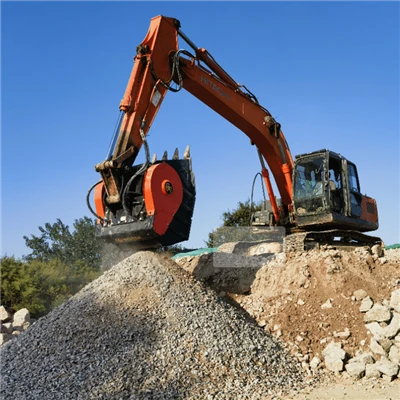
If you're interested in other crusher - related products, we have some great options. Check out our Excavator Jaw Crusher Bucket, which is a versatile attachment for excavators that can crush materials on - site. It's a great solution for contractors who need to crush materials in different locations.
We also have the Best Crusher Bucket, which is designed to provide high - performance crushing with minimal maintenance. And for those looking for a specific model, the Motek - MTC200 is a reliable and efficient crusher bucket that has been well - received in the market.
Conclusion
In conclusion, the belt pulley is an essential component of a Big Jaw Crusher. It plays a vital role in power transmission, speed regulation, vibration dampening, and safety. As a supplier, we understand the importance of having a well - designed belt pulley system in our crushers.
If you're in the market for a Big Jaw Crusher or need to replace the belt pulley system in your existing crusher, don't hesitate to get in touch. We're here to help you find the right solution for your needs. Whether you're a small business owner or a large - scale industrial operator, we have the expertise and products to meet your requirements. Contact us today to start the procurement process and let's work together to get your crushing operations running smoothly.
References
- Machinery's Handbook: A comprehensive guide to mechanical engineering and machinery design, which provides in - depth information on belt pulleys and their applications in industrial machinery.
- Crusher Manufacturer's Manuals: The official manuals from crusher manufacturers offer detailed information on the components of their crushers, including the belt pulley system.
- Industry Journals: Publications such as Mining Engineering and Construction Equipment Magazine often feature articles on the latest developments in crusher technology, including the role of belt pulleys.