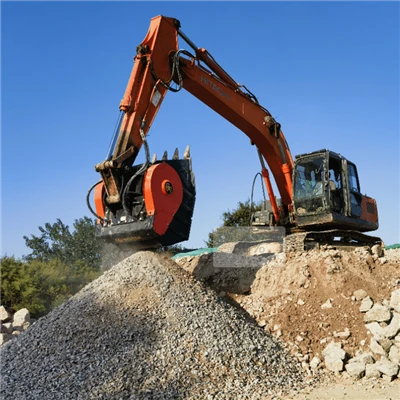
The production capacity of a crushing production line with a Big Jaw Crusher is a multifaceted topic that involves understanding various factors influencing the output. As a supplier of Big Jaw Crushers, I am well - versed in the intricacies of these machines and the production lines they are part of.
Understanding the Big Jaw Crusher
A Big Jaw Crusher is a primary crushing machine widely used in the mining, construction, and recycling industries. It operates by compressing the material between a fixed jaw and a movable jaw. The movable jaw exerts force on the material, causing it to break into smaller pieces. The size of the feed opening and the discharge setting are two critical parameters that determine the type and size of the material the crusher can handle.
The feed opening of a Big Jaw Crusher can range from several hundred millimeters to over a meter. This large opening allows it to accept large - sized rocks and ores directly from the quarry or mining site. The discharge setting, on the other hand, can be adjusted to control the size of the crushed product. A smaller discharge setting will result in a finer crushed product but may also reduce the production capacity.
Factors Affecting the Production Capacity
1. Material Properties
The hardness, density, and moisture content of the material being crushed have a significant impact on the production capacity. Harder materials, such as granite and basalt, require more energy to break, which can slow down the crushing process and reduce the output. For example, crushing granite may result in a lower production capacity compared to crushing limestone, which is a relatively softer material.
The density of the material also matters. Denser materials take up more space in the crusher chamber, which can limit the amount of material that can be processed at one time. Moisture content can cause the material to stick to the jaws of the crusher, reducing the efficiency of the crushing process and potentially clogging the machine.
2. Crusher Design and Specifications
The size and power of the Big Jaw Crusher are crucial factors. Larger crushers generally have a higher production capacity as they can handle more material at once. The power of the motor driving the crusher also plays a role. A more powerful motor can provide the necessary force to crush the material more efficiently, increasing the production rate.
The design of the crusher's jaws also affects the production capacity. Jaws with a more optimized shape can ensure better material flow and more effective crushing, leading to higher output.
3. Operating Conditions
The continuous operation of the crushing production line is essential for achieving high production capacity. Any downtime due to maintenance, breakdowns, or feeding interruptions can significantly reduce the overall output. Regular maintenance, including checking and replacing worn - out parts, is necessary to keep the crusher running smoothly.


The feeding rate also needs to be carefully controlled. Overfeeding can cause the crusher to overload and reduce its efficiency, while underfeeding will result in underutilization of the crusher's capacity.
Calculating the Production Capacity
The production capacity of a crushing production line with a Big Jaw Crusher can be estimated using the following formula:
[Q = K\times e\times n\times s\times \rho]
Where:
- (Q) is the production capacity (tons per hour)
- (K) is a coefficient related to the material properties and crusher efficiency (usually ranging from 0.1 - 0.3)
- (e) is the discharge opening size (mm)
- (n) is the number of revolutions of the eccentric shaft per minute
- (s) is the cross - sectional area of the feed opening ((m^{2}))
- (\rho) is the bulk density of the material ((t/m^{3}))
However, this is just a theoretical estimate. In practice, the actual production capacity may vary due to the factors mentioned above.
Real - World Examples
In a mining operation where a Big Jaw Crusher is used to crush iron ore, with a feed opening of 1200mm×800mm, a discharge setting of 100mm, and a motor power of 160kW, the theoretical production capacity can be calculated based on the formula. Assuming a coefficient (K = 0.2), an eccentric shaft speed (n = 250) revolutions per minute, and a bulk density of iron ore (\rho=2.5t/m^{3}), the production capacity can be estimated.
First, calculate the cross - sectional area of the feed opening (s=1.2\times0.8 = 0.96m^{2}). Then, using the formula (Q = K\times e\times n\times s\times \rho), we get (Q=0.2\times100\times250\times0.96\times2.5 = 1200) tons per hour.
In a real - world scenario, due to factors such as the hardness of the iron ore and possible maintenance requirements, the actual production capacity may be around 800 - 1000 tons per hour.
Related Products in the Crushing Production Line
In addition to the Big Jaw Crusher, other equipment in the crushing production line also contributes to the overall production capacity. For example, the Hydraulic Crusher Bucket can be used for secondary crushing and on - site recycling. It is a versatile tool that can be attached to an excavator, allowing for more flexible crushing operations.
The Jaw Crusher for Excavator is another useful piece of equipment. It is designed to be mounted on an excavator, providing a convenient solution for crushing in hard - to - reach areas. The Bucket Jaw Crusher is also a popular choice, offering high - efficiency crushing in a compact design.
Contact for Purchase and Consultation
If you are interested in our Big Jaw Crushers or other related products, and want to know more about the production capacity of the crushing production line, feel free to contact us. We have a team of experts who can provide you with detailed information and customized solutions based on your specific needs. Whether you are in the mining, construction, or recycling industry, we can help you optimize your crushing production line for maximum efficiency and output.
References
- "Crushing and Screening Handbook" by Finlay
- "Mineral Processing Design and Operations: An Introduction" by Barry A. Wills and Tim Napier - Munn