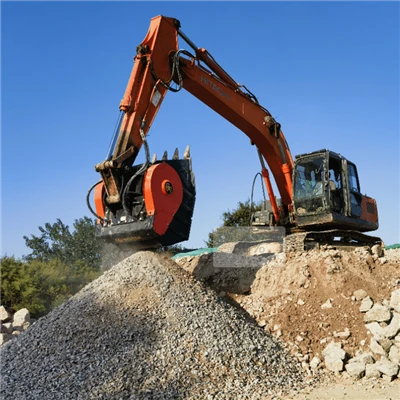
Hey there! I'm working as a supplier of Bucket Screeners, and today I wanna chat about what makes these nifty machines tick – the power source of a Bucket Screener.
First off, let's understand what a Bucket Screener is. It's a super - useful attachment that can be fitted to various heavy - duty equipment. You might use it for screening different materials like soil, gravel, compost, and construction waste. And you know what? It helps in separating and sorting materials more efficiently, which is a huge plus in construction, landscaping, and waste management projects.
So, what are the power sources for these Bucket Screeners? Well, there are a few common ones, and each has its own set of pros and cons.
Hydraulic Power
One of the most popular power sources for Bucket Screeners is hydraulic power. Most modern Bucket Screeners are designed to be powered by the hydraulic system of the host machine. Why? Because it's a pretty straightforward setup. If you've got a wheel loader, an excavator, or a skid - steer loader, chances are they already have a hydraulic system in place.
When you attach a Bucket Screener to a machine with a hydraulic system, the hydraulic fluid from the host machine is used to drive the motor of the screener. This motor then powers the screening process. The hydraulic power provides a lot of torque, which is great for handling heavy and dense materials.


For example, if you're using a Wheel Loader Screener, the wheel loader's hydraulic system can easily transfer power to the screener. The operator can control the speed and the operation of the screener right from the cab of the wheel loader. It's convenient and gives you a lot of flexibility.
However, there are also some drawbacks to hydraulic - powered Bucket Screeners. One of the main issues is that the performance of the screener is directly related to the hydraulic capacity of the host machine. If the host machine doesn't have a powerful enough hydraulic system, the screener might not work as efficiently. Also, hydraulic systems require regular maintenance. You need to keep an eye on the hydraulic fluid levels, check for leaks, and make sure the filters are clean. Otherwise, you could end up with a breakdown, which can be a real pain in the neck, especially when you're in the middle of a project.
Electric Power
Another option for powering a Bucket Screener is electric power. Electric - powered Bucket Screeners are becoming more and more popular, especially in indoor or noise - sensitive areas. They're generally quieter than their hydraulic counterparts, which is a big advantage if you're working in a residential area or a building site with strict noise regulations.
When it comes to an electric - powered Soil Screener Bucket, it's relatively easy to set up. You just need to connect it to a power source, and you're good to go. Electric motors are also known for their reliability and long lifespan. They don't have as many moving parts as hydraulic motors, so there's less that can go wrong.
But electric power also has its limitations. The main one is the need for a reliable power source. You need to be close to an electrical outlet or have a generator on - site. If you're working in a remote area, this can be a real problem. Also, the power output of electric motors might not be as high as that of hydraulic motors in some cases. So, if you're dealing with really tough and heavy materials, an electric - powered screener might struggle.
PTO (Power Take - Off)
Some Bucket Screeners can be powered by a PTO system. A PTO is a device that transfers power from a vehicle's engine to another piece of equipment. This is commonly used in agricultural and some industrial applications.
For example, if you have a tractor with a PTO, you can attach a Bucket Screener to it. The PTO takes the power from the tractor's engine and uses it to drive the screener. This setup can be quite powerful, as tractors usually have strong engines.
However, using a PTO - powered Bucket Screener also has its challenges. Not all vehicles have a PTO system, so it limits the compatibility of the screener. Also, the installation and operation of a PTO - powered screener can be a bit more complicated compared to hydraulic or electric ones. You need to make sure the PTO is properly connected and adjusted to ensure smooth operation.
Adjustable Screening Buckets
Now, I wanna talk a bit about Adjustable Screening Buckets. These are a special type of Bucket Screener that allows you to change the size of the screening openings. This is a really handy feature because it gives you the flexibility to screen different materials with different particle sizes.
The power source for adjustable screening buckets can be any of the ones we've discussed earlier – hydraulic, electric, or PTO. No matter which power source you choose, the adjustable feature still works in the same way. You can adjust the screening settings while the machine is in operation, which saves a lot of time and effort.
One of the great things about adjustable screening buckets is that they can be used in a variety of industries. Whether you're a construction company looking to recycle concrete, a landscaping business dealing with soil and mulch, or a waste management firm screening different types of waste, an adjustable screening bucket can be a great asset.
Which Power Source is Right for You?
So, how do you decide which power source is the best for your Bucket Screener? Well, it depends on a few factors.
If you already have a machine with a powerful hydraulic system and you're working on heavy - duty projects, a hydraulic - powered Bucket Screener might be the way to go. It can handle large volumes of tough materials efficiently.
On the other hand, if you're working in an area where noise is an issue or you need a simple and reliable power solution, an electric - powered screener could be more suitable.
And if you have a tractor or a vehicle with a PTO system and you're looking for a powerful option for agricultural or certain industrial applications, a PTO - powered Bucket Screener might be the right choice.
As a Bucket Screener supplier, I've seen firsthand how the right power source can make a huge difference in the performance of these machines. No matter your needs, we've got a range of Bucket Screeners with different power sources to suit you.
If you're interested in learning more about our Bucket Screeners or if you want to discuss which power source and model would be the best fit for your project, don't hesitate to reach out. We're always here to answer your questions, provide more information, and help you make the right decision.
References
- Construction Equipment Handbook
- Industrial Machinery Manuals
So, what are you waiting for? Contact us for a detailed discussion and let's find the perfect Bucket Screener for you.