

Power consumption is a critical factor to consider when it comes to rock crusher jaws. As a leading supplier of rock crusher jaws, we understand the importance of providing our customers with accurate information about the power requirements of these essential pieces of equipment. In this blog post, we will delve into the factors that influence the power consumption of rock crusher jaws, how to calculate it, and the implications for your operations.
Factors Influencing Power Consumption
Material Properties
The type and hardness of the rock being crushed play a significant role in determining power consumption. Harder rocks, such as granite or basalt, require more energy to break compared to softer materials like limestone. The size and shape of the rock also matter. Irregularly shaped rocks may require more power to crush as they do not fit neatly into the crushing chamber, causing the jaws to work harder.
Crusher Design
The design of the rock crusher jaws has a direct impact on power consumption. Crushers with a larger crushing chamber and more efficient jaw movement can process more material with less power. For example, modern crushers are often designed with optimized jaw profiles that reduce friction and improve the crushing efficiency. Additionally, the type of drive system used in the crusher, whether it is hydraulic, electric, or mechanical, can also affect power consumption.
Operating Conditions
The operating conditions of the rock crusher, such as the feed rate and the setting of the jaws, can significantly influence power consumption. A higher feed rate may require more power as the crusher has to process more material in a given time. Similarly, a smaller jaw setting, which results in a finer output, will generally require more power as the crusher has to work harder to break the rock into smaller pieces.
Calculating Power Consumption
Calculating the power consumption of rock crusher jaws can be a complex process, as it depends on multiple factors. However, a general approach involves considering the following steps:
Determine the Crusher Capacity
The crusher capacity is the amount of material that the crusher can process in a given time. This is typically measured in tons per hour (t/h). The capacity of the crusher is influenced by factors such as the size of the crushing chamber, the speed of the jaws, and the type of material being crushed.
Estimate the Specific Energy Consumption
The specific energy consumption (SEC) is the amount of energy required to crush a unit mass of material. It is usually expressed in kilowatt - hours per ton (kWh/t). The SEC can vary depending on the material properties and the crusher design. For example, crushing hard rock may have a higher SEC compared to soft rock.
Calculate the Power Consumption
Once the crusher capacity and the specific energy consumption are known, the power consumption (P) can be calculated using the following formula:
[P=\frac{SEC\times Q}{1000}]
where (Q) is the crusher capacity in tons per hour.

Implications for Operations
Understanding the power consumption of rock crusher jaws is crucial for several reasons. Firstly, it helps in estimating the operating costs of the crusher. Higher power consumption means higher electricity or fuel costs, which can have a significant impact on the overall profitability of the operation.
Secondly, it can aid in equipment selection. When choosing a rock crusher, it is important to consider the power requirements based on the expected production volume and the type of material to be crushed. A crusher with lower power consumption can offer long - term savings.
Finally, power consumption can also affect the environmental impact of the operation. Reducing power consumption not only saves money but also reduces the carbon footprint of the crushing process.
Our Rock Crusher Jaws
As a supplier of rock crusher jaws, we offer a wide range of products designed to meet the diverse needs of our customers. Our crusher jaws are made from high - quality materials that ensure durability and efficient performance. We understand the importance of power efficiency, and our products are engineered to minimize power consumption while maximizing crushing capacity.
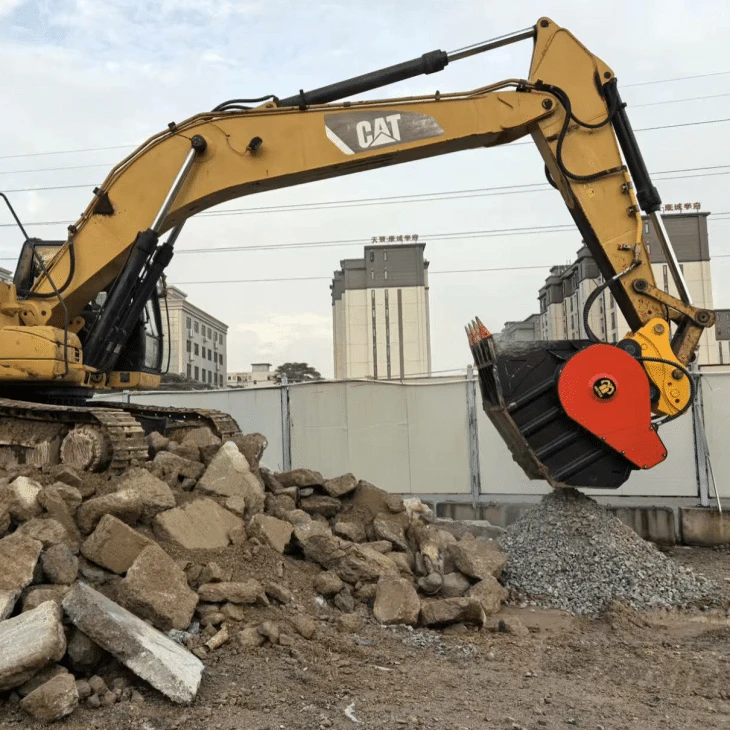
We offer different types of crusher jaws suitable for various applications. For example, our Jaw Bucket is a versatile attachment that can be used on excavators to crush rocks on - site. It is designed to be energy - efficient and can handle a variety of rock types.
Our Crusher Bucket Attachment is another popular product. It can be easily attached to different types of machinery, such as loaders, and is known for its high - performance and low power consumption.
For smaller operations, our Skid Steer Crusher is a great option. It is compact, easy to operate, and consumes less power compared to larger crushers.
Contact Us for Purchase and Consultation
If you are in the market for rock crusher jaws or need more information about power consumption and crusher selection, we are here to help. Our team of experts can provide you with detailed advice on the best products for your specific needs. We can also assist you in calculating the power consumption and estimating the operating costs of our crushers.
Whether you are a large mining company or a small construction firm, we have the right solution for you. Contact us today to start a discussion about your rock crushing requirements. We look forward to working with you to optimize your crushing operations and reduce your power consumption.
References
- ASTM International. (2023). Standard Test Methods for Abrasion Resistance of Rock. ASTM D7625 - 18.
- Jaw Crusher Handbook. Manufacturer's Manual.
- "Energy Efficiency in Mining Equipment" - Journal of Mining and Minerals Engineering, Vol. 12, Issue 3, 2022.





