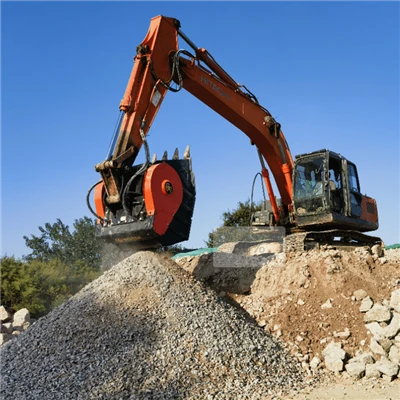
Hey there! As a supplier of the Best Crusher Bucket, I often get asked about the output size of the crushed material. It's a crucial question, especially for those in the construction, demolition, and recycling industries. So, let's dive right in and explore this topic.
Understanding the Basics of Crusher Buckets
First off, what exactly is a crusher bucket? Well, it's an attachment that can be fitted onto an excavator or a loader. This nifty device allows you to crush materials right at the job site, saving you time and money on transportation. There are different types of crusher buckets available, each designed for specific materials. For instance, we have the Concrete Crusher Bucket, which is perfect for breaking down concrete, and the Asphalt Crushing Bucket, ideal for asphalt recycling. And if you're dealing with rocks, our Jaw Rock Crusher is the way to go.
Factors Affecting Output Size
The output size of the crushed material from a crusher bucket isn't set in stone. It depends on several factors. One of the most significant factors is the type of material being crushed. Different materials have different hardness levels and structures, which can influence how they break down. For example, concrete is generally more brittle than granite, so it may produce smaller pieces when crushed.
Another factor is the settings of the crusher bucket. Most modern crusher buckets allow you to adjust the gap between the jaws or the crushing chamber. By changing this gap, you can control the size of the output. A smaller gap will result in finer crushed material, while a larger gap will produce coarser pieces.
The size and shape of the input material also play a role. If you're feeding large, irregularly shaped chunks into the crusher bucket, it may take longer to break them down, and the output size may be less consistent. On the other hand, if the input material is more uniform in size and shape, you're likely to get a more predictable output.
Typical Output Sizes
So, what can you expect in terms of output size? Well, it varies depending on the type of crusher bucket and the settings. Generally speaking, crusher buckets can produce crushed material ranging from fine sand-like particles to larger gravel-sized pieces.
For our Concrete Crusher Bucket, when set to a fine crushing mode, you can expect output sizes as small as 0 - 10 mm. This is great for producing material that can be used as a base for roads or in concrete production. In a coarser setting, the output size can range from 10 - 50 mm, which is suitable for backfilling or drainage applications.
The Asphalt Crushing Bucket typically produces output sizes in the range of 5 - 30 mm. This material can be reused in asphalt production or as a sub-base for new roads.


Our Jaw Rock Crusher can handle a wide range of output sizes. In a fine setting, it can produce material as small as 5 - 20 mm, which is useful for making concrete aggregates. In a coarser setting, the output can be anywhere from 20 - 100 mm, perfect for large-scale construction projects.
Benefits of Controlling Output Size
Being able to control the output size of the crushed material offers several benefits. For one, it allows you to produce material that meets the specific requirements of your project. Whether you need fine particles for a smooth finish or larger pieces for structural support, you can adjust the crusher bucket accordingly.
It also helps with recycling. By producing the right-sized material, you can reuse it more effectively. For example, if you're recycling concrete, you can crush it into the appropriate size to be used as a substitute for natural aggregates in new concrete production. This not only reduces waste but also saves on the cost of purchasing new materials.
Real-World Examples
Let's take a look at some real-world examples to see how the output size of a crusher bucket can make a difference. A construction company was working on a road resurfacing project. They used our Asphalt Crushing Bucket to recycle the old asphalt from the road. By adjusting the settings to produce an output size of 10 - 20 mm, they were able to reuse the crushed asphalt as a base for the new road surface. This not only saved them money on transporting the old asphalt to a recycling facility but also reduced the need for new aggregate materials.
In another case, a demolition contractor was tasked with demolishing a large concrete building. They used our Concrete Crusher Bucket to crush the concrete on-site. By setting the crusher to a fine output size of 0 - 10 mm, they were able to produce a high-quality material that was used in the production of new concrete blocks. This not only reduced the amount of waste sent to landfills but also provided a sustainable solution for the project.
How to Choose the Right Output Size
When it comes to choosing the right output size for your project, it's important to consider the end use of the crushed material. If you're using it for a decorative purpose, such as in a garden path, you may want a finer output size for a more polished look. On the other hand, if you're using it for a structural application, like a foundation, you'll need a coarser output size for better stability.
It's also a good idea to consult with a professional. Our team of experts is always available to help you determine the best output size for your specific needs. We can take into account factors such as the type of material, the project requirements, and the equipment you're using to provide you with the most accurate advice.
Conclusion
In conclusion, the output size of the crushed material from a crusher bucket is a crucial factor that can have a significant impact on your project. By understanding the factors that affect output size, you can make the most of your crusher bucket and produce the right-sized material for your needs. Whether you're in the construction, demolition, or recycling industry, our Best Crusher Bucket can help you achieve your goals.
If you're interested in learning more about our crusher buckets or have any questions about output size, don't hesitate to get in touch. We're here to help you find the perfect solution for your project.
References
- Industry standards and guidelines for crusher bucket operation
- Case studies from construction and recycling projects
- Manufacturer's specifications for Best Crusher Bucket products