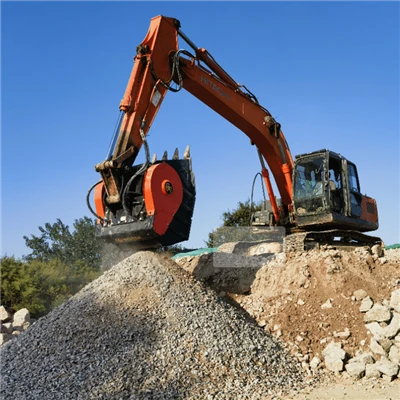
Hey there! As a supplier of Soil Mixing Machines, I often get asked about the mixing ratio that these machines can achieve. It's a crucial question, especially for those in the construction, environmental, and geotechnical industries. So, let's dive right in and explore this topic.
Understanding Mixing Ratios
First off, what exactly do we mean by the mixing ratio? In the context of soil mixing machines, it refers to the proportion of different materials that are combined during the mixing process. These materials can include soil, cement, lime, fly ash, and other additives. The mixing ratio is typically expressed as a percentage or a ratio, such as 10% cement by weight or a 1:5 ratio of additive to soil.
The ideal mixing ratio depends on several factors, including the type of soil, the intended use of the mixed soil, and the specific requirements of the project. For example, if you're stabilizing soft clay soil for a building foundation, you might need a higher proportion of cement or lime to increase the soil's strength and stability. On the other hand, if you're using the mixed soil for backfilling or landscaping, a lower mixing ratio might be sufficient.
Factors Affecting Mixing Ratios
Soil Type
Different types of soil have different properties, such as particle size, moisture content, and plasticity. These properties can significantly affect the mixing ratio required to achieve the desired results. For instance, sandy soils are typically more porous and less cohesive than clay soils, so they may require less binder material to achieve the same level of stabilization.
Intended Use
The intended use of the mixed soil also plays a crucial role in determining the mixing ratio. If the mixed soil is going to be used for structural purposes, such as a building foundation or a retaining wall, a higher mixing ratio is usually required to ensure sufficient strength and durability. Conversely, if the mixed soil is for non - structural applications like backfilling or erosion control, a lower mixing ratio may be adequate.
Project Requirements
Each project has its own set of requirements, including strength, permeability, and environmental considerations. For example, in some environmental remediation projects, the mixing ratio may be adjusted to ensure that the mixed soil meets specific regulatory standards for contaminant immobilization.
Mixing Ratios Achievable by Soil Mixing Machines
Now, let's talk about the mixing ratios that our soil mixing machines can achieve. Our machines are designed to offer a high degree of flexibility and precision, allowing for a wide range of mixing ratios.
Cement - Soil Mixing
When it comes to cement - soil mixing, our machines can typically achieve mixing ratios ranging from 5% to 20% cement by weight. This range is suitable for a variety of applications, from soil stabilization for light - load structures to more demanding projects like highway embankments. For example, in a project where we need to improve the bearing capacity of soft soil for a small building, a 5 - 10% cement mixing ratio may be sufficient. However, for a large - scale infrastructure project, a 15 - 20% ratio might be required.
Lime - Soil Mixing
For lime - soil mixing, our machines can achieve mixing ratios between 3% and 15% lime by weight. Lime is often used to treat clay soils, as it can reduce the soil's plasticity and increase its strength. In projects where we are dealing with highly plastic clay soils, a higher lime mixing ratio (around 10 - 15%) may be necessary to achieve the desired improvement in soil properties.


Additive - Soil Mixing
In addition to cement and lime, our soil mixing machines can also handle a variety of other additives, such as fly ash, slag, and polymers. The mixing ratios for these additives can vary widely depending on the specific additive and the project requirements. For example, fly ash can be added at ratios of 5% to 30% by weight, depending on its pozzolanic activity and the desired effect on the soil.
Our Soil Mixing Machine Features
Our soil mixing machines are equipped with advanced technology to ensure accurate and consistent mixing ratios. They have precise dosing systems that can control the amount of binder and additive materials being added to the soil. This means that you can achieve the exact mixing ratio required for your project, every time.
The Mixer in our machines is designed to provide thorough and uniform mixing. It has a powerful motor and specially designed blades that can break up soil clumps and ensure that the binder and additive materials are evenly distributed throughout the soil.
We also offer a range of Soil Mixing Tools that can be customized to suit different soil types and project requirements. These tools can help to optimize the mixing process and achieve the best possible mixing ratios.
In - situ Soil Stabilization and Mixing Ratios
In - situ soil stabilization is a popular technique that involves mixing binder materials directly into the existing soil on - site. Our soil mixing machines are well - suited for in - situ soil stabilization projects. By using in - situ soil stabilization, you can save time and money by avoiding the need to excavate and transport large amounts of soil.
When it comes to in - situ soil stabilization, the mixing ratio is even more critical. The In - situ Soil Stabilization Methods employed by our machines ensure that the binder materials are thoroughly mixed with the existing soil to achieve the desired improvement in soil properties.
Contact Us for Your Soil Mixing Needs
If you're working on a project that requires soil mixing, we'd love to hear from you. Whether you need to achieve a specific mixing ratio for soil stabilization, backfilling, or any other application, our team of experts can help you choose the right soil mixing machine and provide you with all the support you need.
We understand that every project is unique, and we're committed to providing customized solutions that meet your specific requirements. So, don't hesitate to reach out to us to discuss your soil mixing needs and get a quote for our products.
References
- ASTM International. (20XX). Standard test methods for soil and rock.
- Das, B. M. (20XX). Principles of geotechnical engineering.
- Holtz, R. D., & Kovacs, W. D. (20XX). An introduction to geotechnical engineering.