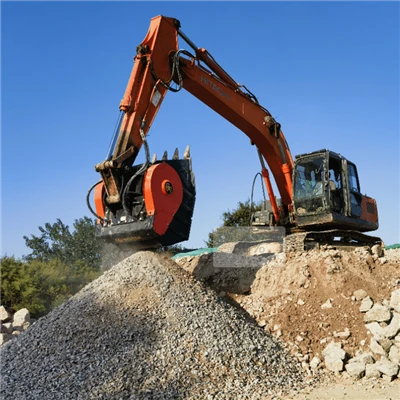
As a supplier of Rock Screening Buckets, I often get asked about the minimum size of the screening mesh available. It's a question that comes up a lot, especially for those in the construction, mining, and landscaping industries. So, I thought I'd take a moment to break it down and share what I know.
First off, let's talk about what a Rock Screening Bucket is. In case you're not familiar, a Rock Screening Bucket is a specialized attachment for excavators, loaders, or skid - steers. It's designed to separate materials like rocks, soil, and debris based on size. This is super useful for a variety of tasks, from preparing a construction site to recycling materials.
Now, onto the main question: what's the minimum size of the screening mesh? Well, the minimum size can vary depending on the manufacturer and the specific model of the screening bucket. But generally speaking, the smallest mesh sizes we offer start around 3mm. That's pretty tiny!
A 3mm mesh is great for very fine screening. For example, if you're working on a soil remediation project, you might need to separate out small particles of contaminants from the soil. Our Soil Remediation Screener with a 3mm mesh can do just that. It allows you to get rid of fine debris and ensure that the soil meets the required standards.
But why would you need such a small mesh? There are a few reasons. In the landscaping industry, a fine - screened material can be used for top - dressing lawns or creating a smooth base for planting. In construction, it can be used to produce high - quality aggregates for concrete or asphalt. And in the mining industry, it can help in the separation of valuable minerals from the ore.


However, it's important to note that using a very small mesh size does come with some challenges. One of the main issues is clogging. Smaller meshes are more likely to get blocked by fine particles, which can slow down the screening process. To deal with this, our screening buckets are designed with features like self - cleaning mechanisms. These help to keep the mesh clear and ensure that the screening operation runs smoothly.
Another factor to consider is the wear and tear on the mesh. Smaller meshes are more delicate and can wear out faster, especially when dealing with abrasive materials. That's why we use high - quality materials for our meshes, like hardened steel or polyurethane. These materials are durable and can withstand the rigors of heavy - duty use.
When it comes to choosing the right mesh size for your project, it's all about understanding your specific needs. You need to think about the type of material you're screening, the size of the particles you want to separate, and the end - use of the screened material. If you're not sure which mesh size is best for you, our team of experts is always here to help.
We offer a wide range of Screening Buckets with different mesh sizes to suit various applications. Whether you need a coarse screening for large rocks or a fine screening for small particles, we've got you covered.
In addition to the standard mesh sizes, we also offer custom - made meshes. If you have a unique project that requires a specific mesh size or pattern, we can work with you to create a solution that meets your exact requirements. This flexibility is one of the things that sets us apart from other suppliers.
So, if you're in the market for a Rock Screening Bucket and you're wondering about the minimum mesh size, I hope this blog has given you some useful information. Remember, the minimum size of 3mm can open up a lot of possibilities for fine screening, but it's important to consider the associated challenges and choose the right solution for your project.
If you're interested in learning more about our Rock Screening Buckets or have any questions about mesh sizes, don't hesitate to get in touch. We're here to help you find the perfect screening solution for your needs. Whether you're a small landscaping business or a large mining operation, we can provide you with the equipment and support you need to get the job done right. Contact us today to start a conversation about your screening requirements.
References
- Industry standards and best practices for rock screening equipment
- In - house research and development data on screening mesh performance
- Customer feedback and case studies on the use of different mesh sizes in various projects