Hey there! As a supplier of Jaw Rock Crushers, I often get asked about the installation space requirements for these powerful machines. It's a crucial question because getting the space right is key to making sure your crusher works efficiently and safely. So, let's dive into what you need to know about the installation space for a Jaw Rock Crusher.
First off, the size of the crusher itself plays a huge role. Jaw Rock Crushers come in different sizes, from small ones that can be used for light - duty jobs to large industrial - grade crushers. If you're looking at a Large Jaw Crusher, you're going to need a lot more space compared to a smaller model.
The footprint of the crusher is the starting point. This is the actual area on the ground that the crusher takes up. You need to measure the length and width of the crusher at its widest and longest points. But it's not just about the crusher's base. You also have to consider any additional equipment that comes with it, like the feeder, conveyor belts, and discharge chutes. These can add quite a bit to the overall space needed.
Let's talk about the height requirements. Crushers can be pretty tall, especially when you factor in the hopper where the rocks are loaded. You need to make sure there's enough vertical space above the crusher for easy loading of materials. If you're using an excavator to feed the crusher, you need to account for the height of the excavator's boom when it's in the loading position. This will prevent any collisions and ensure a smooth operation.
Another important aspect is the clearance around the crusher. You need to have enough space on the sides and behind the crusher for maintenance and inspection. Mechanics need room to access different parts of the machine, replace worn - out components like Rock Crusher Jaws, and perform routine checks. A general rule of thumb is to have at least a couple of feet of clearance on all sides.
Now, let's consider the space for the feed and discharge areas. The feed area should be large enough to hold a sufficient amount of rocks waiting to be crushed. This depends on the rate at which the crusher can process the material. If it's a high - capacity crusher, you'll need a bigger feed area. The discharge area, on the other hand, needs to be designed to handle the crushed material. You might have a conveyor belt taking the crushed rocks away, and you need to make sure there's enough space for the belt to operate without any obstructions.
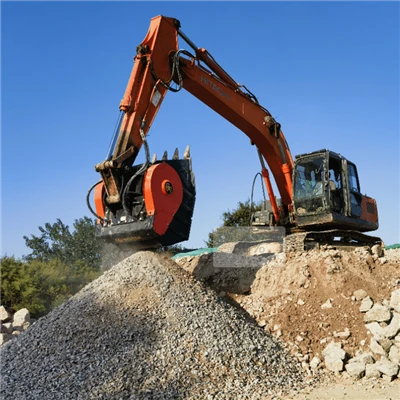
If you're using an Excavator Crusher Bucket, the installation space requirements are a bit different. Since it's attached to an excavator, you mainly need to think about the space for the excavator to maneuver. The excavator needs enough room to move around, position itself for loading and unloading, and operate the crusher bucket safely.
The layout of the installation site also matters. You want to design the space in a way that minimizes the distance the rocks have to travel from the source to the crusher and then to the final destination. This not only saves time but also reduces the energy consumption associated with moving the materials.
It's also important to consider the environmental factors. If the installation site is outdoors, you need to account for things like wind and rain. You might need to provide some form of shelter or protection for the crusher to prevent damage from the elements. In an indoor setting, you need to make sure there's proper ventilation to remove dust and fumes generated during the crushing process.
Let's take a look at a real - world example. Suppose you have a medium - sized Jaw Rock Crusher with a capacity of processing around 50 tons of rock per hour. For this crusher, you'll need a footprint of approximately 10 feet by 15 feet. You'll also need about 8 - 10 feet of clearance on each side for maintenance. The feed area should be able to hold at least 10 - 15 tons of rocks at a time, and the discharge area should be designed to handle the continuous flow of crushed material.


In summary, the installation space requirements for a Jaw Rock Crusher depend on several factors, including the size of the crusher, the additional equipment, the feed and discharge systems, and the need for maintenance and environmental protection. By carefully planning the space, you can ensure that your crusher operates efficiently and safely.
If you're in the market for a Jaw Rock Crusher and need more detailed information about the installation space requirements for your specific needs, don't hesitate to reach out. We're here to help you make the right choice and get your crushing operation up and running smoothly. Whether you're a small - scale contractor or a large industrial operation, we have the expertise and the right equipment for you. Contact us today to start the conversation about your Jaw Rock Crusher purchase.
References:
- Industry standards for Jaw Rock Crusher installation
- Manufacturer's guidelines for various Jaw Rock Crusher models