Hey there! As a supplier of Jaw Rock Crushers, I often get asked about the differences between stationary and portable jaw rock crushers. So, I thought I'd write this blog to break it all down for you.
Basics of Jaw Rock Crushers
First off, let's quickly go over what a jaw rock crusher is. It's a machine used to crush large rocks into smaller pieces. The basic working principle involves a fixed jaw and a movable jaw. The movable jaw moves back and forth against the fixed jaw, squeezing the rocks in between and breaking them into smaller sizes. This is a common and effective way to process all sorts of rocks, from limestone to granite.
Stationary Jaw Rock Crushers
Let's start with stationary jaw rock crushers. These bad boys are designed to be set up in one place and stay there. They're usually installed in a permanent location, like a quarry or a mining site.
Advantages
One of the biggest advantages of stationary jaw rock crushers is their high production capacity. Since they're fixed in one place, they can be built bigger and more robust. They're connected to a stable power source, which allows them to run continuously for long periods. This means they can crush a large amount of rock in a short time. For example, if you're running a big quarry operation and need to process tons of rocks every day, a stationary jaw rock crusher is the way to go.
Another plus is their stability. Because they're firmly installed on a solid foundation, they vibrate less during operation. This not only makes them more reliable but also reduces the wear and tear on the machine. You won't have to worry about the crusher moving around or getting out of alignment easily.
They also offer better control over the crushing process. You can set up a more complex feeding and screening system around a stationary crusher. This allows you to precisely control the size and quality of the crushed rocks. You can also integrate it with other processing equipment in the quarry, creating a more efficient and streamlined production line.
Disadvantages
However, stationary jaw rock crushers do have some drawbacks. The biggest one is their lack of mobility. Once they're installed, it's really hard to move them to another location. If you need to change the crushing site, you'll have to go through a lot of trouble and expense to disassemble, transport, and reinstall the crusher.


They also require a significant upfront investment. You need to build a proper foundation, install the necessary power supply, and set up the feeding and screening systems. This can cost a lot of money, especially for small to medium - sized businesses.
Portable Jaw Rock Crushers
Now, let's talk about portable jaw rock crushers. As the name suggests, these crushers are designed to be moved around easily.
Advantages
The most obvious advantage is their mobility. You can take them to different job sites as needed. This is great for contractors who work on multiple projects in different locations. For example, if you're doing road construction in one area and then need to move to another site, you can simply load the portable jaw rock crusher onto a truck and transport it to the new location.
They're also more flexible in terms of operation. You can quickly set up a portable crusher at a small - scale job site, like a building demolition site or a small quarry. You don't need to spend a lot of time and money on building a permanent foundation. You can start crushing rocks almost immediately after arrival.
Portable jaw rock crushers are generally more cost - effective for small - scale operations. Since you don't need to make a huge upfront investment in infrastructure, they're a more affordable option for businesses with limited budgets.
Disadvantages
On the flip side, portable jaw rock crushers have lower production capacity compared to stationary ones. Because of their smaller size and the need to be mobile, they can't handle as much rock at once. If you have a large - scale operation, you may need to run multiple portable crushers simultaneously to achieve the same production level as a single stationary crusher.
They also rely on a mobile power source, such as a diesel engine. This can be more expensive to operate in the long run, as diesel fuel costs can add up. And diesel engines may not be as environmentally friendly as a stable grid - connected power source.
Comparing the Two in Different Applications
Let's look at how these two types of crushers perform in different scenarios.
Quarrying
In a large - scale quarry, a stationary jaw rock crusher is often the top choice. The high production capacity is crucial for processing the large volume of rocks extracted from the quarry. The ability to integrate with other equipment in a permanent production line also makes it more efficient. However, if there are some remote areas in the quarry where it's difficult to access with a stationary crusher, a portable one can be used for on - site crushing.
Construction
For construction projects, especially those that involve multiple sites, a portable jaw rock crusher is more suitable. It can be easily transported to different construction sites, such as building demolition sites or road construction areas. It allows you to recycle the crushed rocks on - site, reducing the need for transporting materials back and forth.
Recycling
In the recycling industry, both types of crushers can be used. A stationary crusher may be used in a large - scale recycling plant where a high volume of materials needs to be processed. A portable crusher, on the other hand, can be used for on - site recycling at smaller recycling locations or at construction sites where waste materials need to be crushed immediately.
Related Products
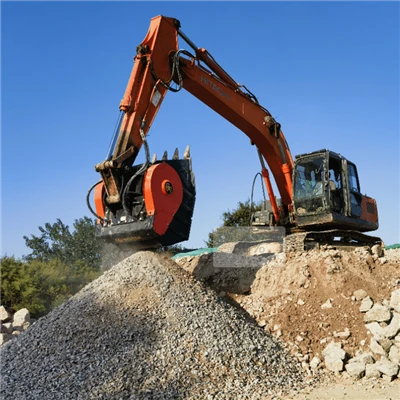
If you're interested in other types of crushing equipment, we also offer some great options. Check out our Asphalt Crushing Bucket, which is perfect for crushing asphalt on the job site. Our Hydraulic Crushing technology provides efficient and powerful crushing solutions. And for those who need a crusher that can be attached to an excavator, our Excavator Rock Crusher Bucket is a great choice.
Conclusion
So, in conclusion, the choice between a stationary and a portable jaw rock crusher depends on your specific needs. If you have a large - scale, long - term operation in a fixed location, a stationary crusher is the better option. But if you need flexibility, mobility, and a more affordable solution for small - scale or multiple - site projects, a portable crusher is the way to go.
If you're thinking about purchasing a jaw rock crusher or have any questions about our products, don't hesitate to get in touch. We're here to help you make the right choice for your business.
References
- "Crushing Equipment Handbook"
- Industry reports on rock crushing technology