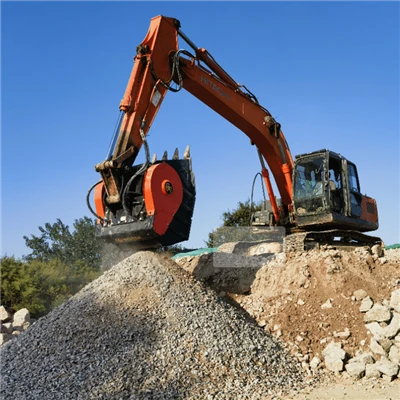
Heat-treatment processes play a crucial role in enhancing the performance and durability of excavator jaw buckets. As a trusted supplier of Excavator Jaw Buckets, I understand the significance of these processes in ensuring that our products meet the highest standards of quality and reliability. In this blog post, I will delve into the various heat-treatment processes used for excavator jaw buckets, their benefits, and how they contribute to the overall functionality of these essential construction tools.
Understanding the Basics of Heat Treatment
Heat treatment is a controlled process that involves heating and cooling metals to alter their physical and mechanical properties. For excavator jaw buckets, which are subjected to extreme stress and wear during operation, heat treatment is essential for improving hardness, toughness, and resistance to abrasion. By carefully manipulating the microstructure of the metal, heat treatment can enhance the bucket's performance and extend its service life.
Common Heat-Treatment Processes for Excavator Jaw Buckets
Annealing
Annealing is a heat-treatment process that involves heating the metal to a specific temperature and then slowly cooling it. This process is used to relieve internal stresses, improve machinability, and increase ductility. In the context of excavator jaw buckets, annealing can help to reduce the risk of cracking and improve the overall toughness of the material. By annealing the bucket, we can ensure that it can withstand the high impact forces and heavy loads encountered during excavation work.
Normalizing
Normalizing is similar to annealing, but it involves a faster cooling rate. This process is used to refine the grain structure of the metal, improve its strength and hardness, and enhance its uniformity. Normalizing is particularly useful for excavator jaw buckets as it helps to improve the material's resistance to wear and deformation. By normalizing the bucket, we can ensure that it maintains its shape and performance over time, even under harsh operating conditions.
Quenching and Tempering
Quenching and tempering is a two-step heat-treatment process that involves heating the metal to a high temperature and then rapidly cooling it (quenching) followed by reheating it to a lower temperature (tempering). This process is used to achieve a combination of high strength and toughness. Quenching creates a hard and brittle structure, while tempering reduces the brittleness and improves the material's ductility and toughness. For excavator jaw buckets, quenching and tempering are essential for ensuring that the bucket can withstand the high impact forces and abrasive wear associated with excavation work.
Case Hardening
Case hardening is a heat-treatment process that involves adding a hard outer layer (case) to the surface of the metal while maintaining a tough inner core. This process is used to improve the wear resistance and surface hardness of the excavator jaw bucket. There are several methods of case hardening, including carburizing, nitriding, and carbonitriding. Each method has its own advantages and is selected based on the specific requirements of the bucket. By case hardening the bucket, we can ensure that it has a long service life and can withstand the abrasive wear caused by contact with rocks, soil, and other materials.
Benefits of Heat Treatment for Excavator Jaw Buckets
Improved Durability
One of the primary benefits of heat treatment is improved durability. By enhancing the hardness, toughness, and wear resistance of the material, heat treatment can significantly extend the service life of the excavator jaw bucket. This means that our customers can expect fewer replacements and lower maintenance costs over the lifetime of the bucket.
Enhanced Performance
Heat treatment also improves the performance of the excavator jaw bucket. A bucket that has been properly heat-treated is better able to withstand the high impact forces and heavy loads encountered during excavation work. This results in more efficient and productive operation, as the bucket can break through tough materials more easily and with less wear and tear.
Increased Safety
In addition to improving durability and performance, heat treatment also enhances the safety of the excavator jaw bucket. A bucket that is made from high-quality, heat-treated material is less likely to crack or fail during operation, reducing the risk of accidents and injuries. This is particularly important in construction and excavation work, where safety is of the utmost importance.
Our Commitment to Quality
As a supplier of Excavator Jaw Buckets, we are committed to providing our customers with the highest quality products. That's why we use only the best materials and state-of-the-art heat-treatment processes in the manufacturing of our buckets. Our team of experienced engineers and technicians carefully monitor every step of the production process to ensure that each bucket meets our strict quality standards.
We also offer a wide range of Excavator Jaw Buckets to meet the diverse needs of our customers. Whether you need a bucket for light-duty excavation work or a heavy-duty bucket for mining and quarrying applications, we have the right solution for you. Our buckets are available in various sizes and configurations, and we can also customize them to meet your specific requirements.
Conclusion
Heat-treatment processes are essential for ensuring the performance, durability, and safety of excavator jaw buckets. By using advanced heat-treatment techniques, we can enhance the hardness, toughness, and wear resistance of the material, resulting in a bucket that can withstand the most demanding excavation conditions. As a supplier of Excavator Jaw Buckets, we are dedicated to providing our customers with the highest quality products and exceptional service. If you are in the market for an excavator jaw bucket, we invite you to [contact us] to discuss your needs and learn more about our products.


For more information on our crusher buckets, please visit the following links:
Best Crusher Bucket
Crusher Bucket Excavator
Pile Crusher
References
- ASM Handbook Volume 4: Heat Treating. ASM International.
- Metals Handbook: Properties and Selection: Irons, Steels, and High-Performance Alloys. ASM International.
- Heat Treatment Principles and Techniques. John C. Lambrakis.