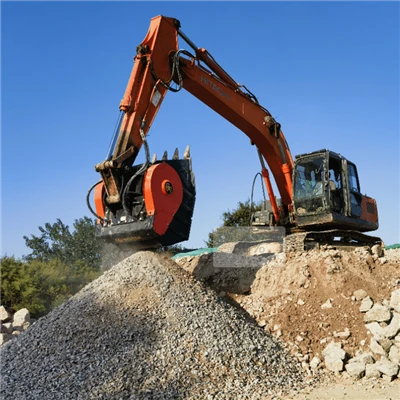
Soil mixing is a crucial process in various construction, environmental, and agricultural projects. It involves blending different types of soil, additives, and sometimes water to achieve specific engineering or environmental objectives. As a leading soil mixing tool supplier, I've witnessed firsthand the diverse range of tools available in the market, each designed for specific applications and soil conditions. In this blog post, I'll explore the different types of soil mixing tools, their features, and the scenarios where they are most effective.
1. Tractor - Mounted Soil Mixers
Tractor - mounted soil mixers are highly versatile tools commonly used in large - scale agricultural and small to medium - scale construction projects. These mixers are attached to the three - point hitch of a tractor, which provides the necessary power for operation.
The main advantage of tractor - mounted soil mixers is their mobility. They can be easily moved across different areas of a field or construction site, allowing for efficient soil mixing over large areas. They typically have a rotating mixing drum or paddles that break up the soil and blend it with additives such as fertilizers, lime, or cement.
For agricultural applications, tractor - mounted soil mixers are used to incorporate organic matter into the soil, improving its fertility and structure. In construction, they can be used for soil stabilization, where additives are mixed with the soil to increase its strength and load - bearing capacity. For more information on soil stabilization, you can visit In - situ Soil Stabilization Methods.
2. Stationary Soil Mixing Plants
Stationary soil mixing plants are large - scale industrial tools used in major construction projects, such as road building, foundation construction, and large - scale land reclamation. These plants are designed to produce large volumes of well - mixed soil mixtures continuously.
A stationary soil mixing plant usually consists of a series of hoppers for storing different materials, a conveyor system to transport the materials to the mixing chamber, and a powerful mixing unit. The mixing unit can be either a twin - shaft paddle mixer or a planetary mixer, which ensures thorough mixing of the soil and additives.
One of the key features of stationary soil mixing plants is their ability to precisely control the proportion of different materials in the mixture. This is essential for achieving consistent quality in the final product. They are also equipped with advanced control systems that monitor and adjust the mixing process in real - time. Stationary soil mixing plants are often used in projects where high - quality soil mixtures are required for large - scale infrastructure development.
3. Hand - Held Soil Mixers
Hand - held soil mixers are small, portable tools suitable for small - scale gardening, landscaping, and DIY projects. These mixers are typically powered by electricity or batteries, making them easy to use in areas where access to a power source is limited.
Hand - held soil mixers usually have a small mixing blade or auger that can be inserted into the soil. They are ideal for mixing small amounts of soil with compost, peat moss, or other additives in flower beds, planters, or small vegetable gardens. Their compact size and ease of use make them a popular choice for homeowners and hobby gardeners.
4. Pneumatic Soil Mixing Tools
Pneumatic soil mixing tools use compressed air to mix the soil. These tools are often used in soil decontamination projects, where they can be used to inject air or additives into the soil to break up contaminants and improve soil aeration.
In soil decontamination, pneumatic tools can be used to create a network of air channels in the soil, allowing for the efficient distribution of oxygen and other treatment agents. This helps in the degradation of organic contaminants and the improvement of soil quality. For more details on soil decontamination, you can refer to Soil Decontamination.
Pneumatic soil mixing tools are also used in some agricultural applications, such as improving soil porosity and promoting root growth. They are relatively lightweight and can be easily maneuvered in the field.
5. Auger - Based Soil Mixers
Auger - based soil mixers are designed with a large, rotating auger that digs into the soil and mixes it as it moves. These mixers are commonly used in deep soil mixing applications, such as in foundation construction and ground improvement projects.
The auger can be either a single - helix or a multi - helix design, depending on the specific requirements of the project. Auger - based soil mixers can penetrate deep into the soil, mixing it with additives such as cement or lime to form a stable soil - cement column. This technique is often used to improve the bearing capacity of soft soils and reduce settlement.
6. Jet - Based Soil Mixing Tools
Jet - based soil mixing tools use high - pressure water or air jets to mix the soil. These tools are particularly useful in situations where the soil is cohesive or difficult to break up.
In environmental applications, jet - based soil mixers can be used for soil remediation, where they are used to inject treatment agents into the soil to remove contaminants. In construction, they can be used for soil mixing in confined spaces or areas with limited access. The high - pressure jets can effectively break up the soil and distribute additives evenly.
7. Drum - Type Soil Mixers
Drum - type soil mixers are simple yet effective tools for soil mixing. They consist of a rotating drum that holds the soil and additives. As the drum rotates, the materials inside are tumbled and mixed together.
Drum - type soil mixers are commonly used in small to medium - scale construction projects and in some agricultural applications. They are relatively inexpensive and easy to operate. However, they may not provide as thorough a mix as some of the more advanced mixing tools, especially for complex soil mixtures.


Considerations When Choosing a Soil Mixing Tool
When selecting a soil mixing tool, several factors need to be considered. Firstly, the scale of the project is crucial. For large - scale projects, stationary soil mixing plants or tractor - mounted mixers may be more suitable, while hand - held mixers are better for small - scale tasks.
The type of soil also plays an important role. Cohesive soils may require more powerful mixing tools, such as auger - based or jet - based mixers, while loose soils can be mixed with less powerful equipment. The nature of the additives being used is another factor. Some additives may require specific mixing techniques to ensure proper dispersion.
Cost is also a significant consideration. Different soil mixing tools vary widely in price, and it's important to balance the cost with the requirements of the project. Additionally, the availability of power sources and the ease of maintenance should be taken into account.
Conclusion
As a soil mixing tool supplier, I understand the importance of choosing the right tool for the job. Each type of soil mixing tool has its own unique features and advantages, and the selection should be based on the specific requirements of the project. Whether it's a large - scale construction project, an environmental remediation task, or a small - scale gardening project, there is a suitable soil mixing tool available.
If you are in need of soil mixing tools for your project, I encourage you to reach out to us. We have a wide range of high - quality soil mixing tools that can meet your specific needs. Our team of experts can provide you with professional advice and support to ensure that you choose the right tool for your project. For more information on soil improvement systems, you can visit Soil Improvement System. Contact us today to start the procurement process and discuss how we can help you achieve your project goals.
References
- ASTM International. (20XX). Standard test methods for soil and rock properties.
- Das, B. M. (20XX). Principles of Geotechnical Engineering. Cengage Learning.
- Holtz, R. D., & Kovacs, W. D. (20XX). An Introduction to Geotechnical Engineering. Prentice - Hall.