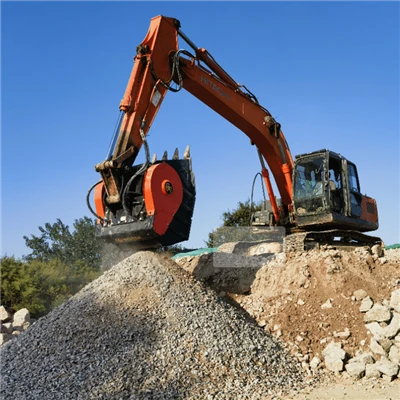
Hey there! As a supplier of soil screener buckets, I've seen firsthand how crucial it is to pick the right one for your job. Whether you're in construction, landscaping, or waste management, the right soil screener bucket can make your work a whole lot easier and more efficient. So, let's dive into how you can choose the perfect soil screener bucket for your needs.
1. Consider Your Application
First things first, you need to think about what you'll be using the soil screener bucket for. Different applications require different types of buckets.
If you're into construction and need to separate large rocks and debris from soil, an Adjustable Screening Bucket might be your best bet. These buckets allow you to adjust the screening size, so you can customize the output based on your project requirements. You can easily change the gap between the screening bars to screen for different particle sizes, whether you're looking for fine soil or need to remove larger chunks.
On the other hand, if you're in the recycling business, a Recycling Screening Bucket is designed to handle a variety of materials, such as concrete, asphalt, and wood chips. These buckets are built to be durable and can withstand the wear and tear of recycling operations. They're great for separating different materials for reuse, which is not only good for the environment but also cost - effective in the long run.


2. Compatibility with Your Equipment
Another important factor is whether the soil screener bucket is compatible with your existing equipment. You need to make sure that the bucket can be easily attached to your excavator, loader, or other machinery. Check the mounting system of the bucket and compare it with the connection points on your equipment.
Most soil screener buckets come with a standard mounting system, but it's still a good idea to double - check. A Screening Bucket Attachment that fits properly will ensure smooth operation and prevent any unnecessary stress on your equipment. You don't want to end up with a bucket that doesn't fit, as it can lead to inefficiencies and even damage to your machinery.
3. Screening Efficiency
The screening efficiency of the bucket is a key consideration. This refers to how well the bucket can separate the materials you're working with. Look for a bucket with a well - designed screening mechanism. Some buckets have a high - speed rotating drum or a vibrating screen, which can significantly improve the screening process.
A bucket with a larger screening area will generally be more efficient, as it allows for more material to pass through at once. Also, consider the shape and size of the screening holes or gaps. The right size will depend on the type of material you're screening. For example, if you're screening fine sand, you'll need smaller holes, while larger holes are suitable for screening gravel or large debris.
4. Durability and Maintenance
Construction and earth - moving work can be tough on equipment, so durability is a must. Choose a soil screener bucket made from high - quality materials, such as heavy - duty steel. A well - built bucket will be able to withstand the impact of rocks and other hard materials without getting damaged easily.
Maintenance is also an important aspect. Look for a bucket that is easy to clean and maintain. Some buckets have removable screening panels, which makes it easier to replace worn - out parts or clean out any clogged material. Regular maintenance will not only extend the lifespan of the bucket but also ensure that it continues to perform at its best.
5. Capacity
The capacity of the soil screener bucket is something you can't overlook. It's important to choose a bucket with a capacity that matches the scale of your project. If you're working on a small - scale landscaping project, a smaller capacity bucket might be sufficient. However, for large - scale construction or recycling operations, you'll need a bucket with a larger capacity to handle more material in less time.
Keep in mind that a larger capacity bucket may also require more powerful equipment to operate effectively. So, make sure your machinery can handle the weight and volume of the bucket when it's full.
6. Cost
Of course, cost is always a factor. While you don't want to compromise on quality, you also need to find a soil screener bucket that fits your budget. Compare the prices of different buckets from various suppliers, but also consider the long - term value. A more expensive bucket that is durable and efficient may end up saving you money in the long run by reducing maintenance costs and increasing productivity.
When comparing prices, make sure you're comparing apples to apples. Consider all the features and benefits of each bucket, not just the price tag. You might find that a slightly more expensive bucket offers better screening efficiency, durability, or other features that are worth the extra investment.
Conclusion
Choosing the right soil screener bucket is a decision that can have a big impact on your work. By considering your application, compatibility with your equipment, screening efficiency, durability, maintenance, capacity, and cost, you can make an informed choice.
If you're still not sure which soil screener bucket is right for you, don't hesitate to reach out. As a supplier, I'm here to help you find the perfect bucket for your needs. Whether you have questions about the products or need advice on which one to choose, feel free to contact me for a detailed discussion. We can work together to find the best solution for your project.
References
- Construction Equipment Handbook
- Earth - Moving Machinery Industry Reports