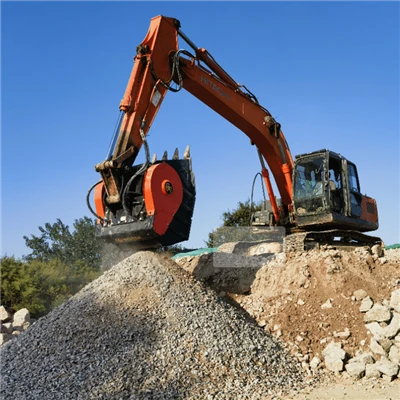
The soil mixing head is a crucial component in various geotechnical and environmental engineering applications, such as Tailings Treatment Mixer, Soil Remediation, and Excavator Silt Solidification System. One of the key design factors that significantly impacts its performance is the length of the mixing shaft. In this blog post, we will delve into the relationship between the length of the mixing shaft in a soil mixing head and the mixing depth, providing insights from a soil mixing head supplier's perspective.
Theoretical Background
The mixing depth in soil mixing operations is primarily determined by the ability of the mixing shaft to penetrate the soil and distribute the stabilizing agents effectively. The length of the mixing shaft directly influences the maximum depth to which the soil can be mixed. In theory, a longer mixing shaft allows for deeper penetration into the soil, enabling the treatment of deeper soil layers.
The penetration of the mixing shaft is governed by several factors, including the mechanical properties of the soil, the design of the mixing head, and the power of the driving equipment. In cohesive soils, the frictional resistance between the soil and the mixing shaft increases with depth, which can limit the penetration depth. On the other hand, in granular soils, the penetration may be more influenced by the compaction and dilation of the soil particles around the mixing shaft.


Impact on Mixing Efficiency
The length of the mixing shaft also affects the mixing efficiency at different depths. A longer mixing shaft can cover a greater depth range, but it may also face challenges in achieving uniform mixing throughout the entire length. As the shaft penetrates deeper, the torque required to rotate the mixing blades increases, and the distribution of the stabilizing agents may become less uniform.
In some cases, a longer mixing shaft may lead to a decrease in the rotational speed of the mixing blades at deeper depths, which can result in incomplete mixing. To overcome this issue, the design of the mixing head needs to be optimized to ensure that the torque is transmitted effectively along the length of the shaft. This may involve using larger diameter shafts, stronger materials, or more efficient blade designs.
Practical Considerations in Design
When designing a soil mixing head, the length of the mixing shaft needs to be carefully selected based on the specific requirements of the project. The following practical considerations should be taken into account:
Soil Conditions
The type and properties of the soil are the primary factors that determine the appropriate length of the mixing shaft. In soft soils, a longer shaft may be used to achieve deeper mixing depths, while in hard or compacted soils, a shorter shaft may be more suitable to avoid excessive wear and tear on the equipment.
Project Requirements
The required mixing depth and the volume of soil to be treated also play a crucial role in determining the length of the mixing shaft. For large-scale projects with deep soil treatment requirements, a longer shaft may be necessary to increase productivity and reduce the number of passes required.
Equipment Compatibility
The length of the mixing shaft needs to be compatible with the power and capacity of the driving equipment. A longer shaft requires more torque to rotate, and the equipment needs to be able to provide sufficient power to ensure smooth operation.
Case Studies
To illustrate the impact of the mixing shaft length on the mixing depth, let's consider a few case studies.
Case Study 1: Tailings Treatment
In a tailings treatment project, the goal was to stabilize a large volume of tailings to prevent the release of contaminants into the environment. The soil mixing head was equipped with a relatively long mixing shaft to achieve a deep mixing depth of up to 10 meters. The longer shaft allowed for the treatment of the entire tailings layer, ensuring effective stabilization and reducing the risk of environmental contamination.
Case Study 2: Soil Remediation
In a soil remediation project, the contaminated soil needed to be treated to a depth of 5 meters. A shorter mixing shaft was used in this case, as the soil was relatively soft and the required mixing depth was not very deep. The shorter shaft provided better control over the mixing process and ensured more uniform distribution of the remediation agents.
Case Study 3: Excavator Silt Solidification
In an excavator silt solidification system, the length of the mixing shaft was selected based on the depth of the silt layer to be treated. A medium-length shaft was used to achieve optimal mixing efficiency and productivity. The shaft was designed to be easily attached to the excavator, allowing for flexible operation on different construction sites.
Conclusion and Call to Action
In conclusion, the length of the mixing shaft in a soil mixing head has a significant impact on the mixing depth. A longer shaft generally allows for deeper penetration and the treatment of deeper soil layers, but it also presents challenges in terms of mixing efficiency and equipment compatibility. Therefore, the selection of the appropriate mixing shaft length should be based on a comprehensive consideration of the soil conditions, project requirements, and equipment capabilities.
As a leading soil mixing head supplier, we have extensive experience in designing and manufacturing high-quality mixing heads for various applications. Our team of experts can help you select the most suitable mixing shaft length for your specific project, ensuring optimal performance and cost-effectiveness. If you are interested in our products or have any questions, please feel free to contact us for a consultation and potential procurement. We look forward to working with you to achieve your soil treatment goals.
References
- Smith, J. (2018). Geotechnical Engineering Handbook. McGraw-Hill.
- Johnson, R. (2019). Soil Stabilization and Remediation Techniques. Wiley.
- Brown, S. (2020). Advances in Soil Mixing Technology. Elsevier.