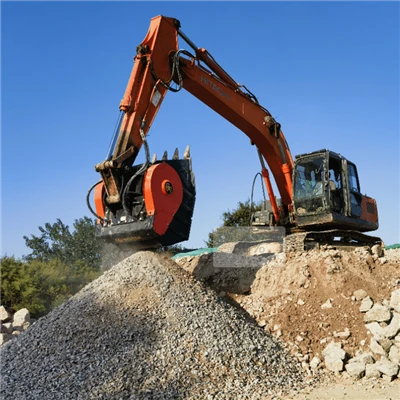
Mass soil mixing is a critical technique in geotechnical engineering that has far - reaching implications for soil compaction characteristics. As a supplier of mass soil mixing solutions, I have witnessed firsthand the transformative power of this process on various construction projects. In this blog, we will explore how mass soil mixing influences soil compaction characteristics and why it is an essential part of modern construction.
Understanding Mass Soil Mixing
Mass soil mixing involves the in - situ mixing of soil with additives such as cement, lime, or other binders. This process is carried out using specialized equipment like the Mass Mixing Machine and Soil Mixing Machine. The goal is to improve the engineering properties of the soil, including its strength, stiffness, and durability.
The process begins with a detailed soil investigation to determine the soil type, its moisture content, and other relevant properties. Based on this information, the appropriate additive and mixing ratio are selected. The additives are then introduced into the soil, and the mixing equipment thoroughly blends them to create a homogeneous mixture.
Influence on Soil Compaction Characteristics
1. Density and Porosity
One of the primary ways mass soil mixing affects soil compaction is by altering the soil's density and porosity. When additives are mixed with the soil, they fill the voids between soil particles. This reduces the porosity of the soil, leading to an increase in its dry density. A higher dry density is generally associated with better compaction, as it indicates that the soil particles are more closely packed together.
For example, in cohesive soils, the addition of cement can cause the soil particles to flocculate and form larger aggregates. These aggregates reduce the void ratio and increase the density of the soil. In granular soils, lime can act as a binder, holding the particles together and improving the overall compaction.
2. Compaction Curve
The compaction curve, which shows the relationship between dry density and moisture content, is also significantly influenced by mass soil mixing. The addition of binders changes the optimum moisture content (OMC) and the maximum dry density (MDD) of the soil.
In many cases, the OMC may decrease after mass soil mixing. This is because the binders help to hold the soil particles together, reducing the need for excess water to achieve proper compaction. At the same time, the MDD may increase, indicating that a higher density can be achieved with less water.
3. Strength and Stiffness
Mass soil mixing can greatly enhance the strength and stiffness of the soil, which are closely related to its compaction characteristics. The binders react with the soil particles to form a cementitious matrix that binds the particles together. This matrix provides additional strength and stiffness to the soil, allowing it to withstand greater loads without excessive deformation.
For instance, in soft clay soils, the addition of cement can increase the unconfined compressive strength by several times. This increased strength means that the soil can be more effectively compacted and can support heavier structures. The improved stiffness also reduces the settlement of the soil under load, which is crucial for the long - term stability of construction projects.


4. Permeability
Permeability is another important soil compaction characteristic that is affected by mass soil mixing. The reduction in porosity due to the addition of binders generally leads to a decrease in soil permeability. A lower permeability is beneficial in many construction applications, as it reduces the risk of water seepage and erosion.
In embankment construction, for example, a soil with low permeability is less likely to be affected by water infiltration, which can cause slope instability. Mass soil mixing can be used to create a soil layer with the desired permeability, ensuring the long - term stability of the embankment.
Case Studies
1. Road Construction
In road construction, mass soil mixing has been widely used to improve the subgrade soil. In a recent project, a section of road was built on a soft clay subgrade. The original soil had poor compaction characteristics, with low strength and high compressibility.
By using a Soil Improvement System to mix cement with the soil, the subgrade's engineering properties were significantly enhanced. The dry density of the soil increased, and the compaction became more uniform. This led to a stronger and more stable road foundation, reducing the risk of pavement distress and extending the service life of the road.
2. Building Foundation
For building foundations, mass soil mixing can also play a crucial role. In an urban construction project, a building was planned on a site with loose sandy soil. The soil had low bearing capacity and was prone to settlement.
Mass soil mixing with lime was carried out to improve the soil's compaction characteristics. The lime reacted with the soil particles, increasing the soil's strength and stiffness. As a result, the foundation could be more effectively compacted, and the building was able to be constructed on a stable soil base.
Advantages of Mass Soil Mixing for Soil Compaction
1. Cost - Effectiveness
Mass soil mixing can be a cost - effective solution for improving soil compaction. Instead of importing large amounts of high - quality fill material, the existing soil can be treated in - situ. This reduces the cost of transportation and the need for disposal of excavated soil.
2. Environmental Benefits
Using mass soil mixing techniques is more environmentally friendly than traditional methods. It reduces the amount of soil excavation and disposal, which helps to conserve natural resources. Additionally, the use of binders can reduce the carbon footprint of construction projects by improving the performance of the soil and reducing the need for additional construction materials.
3. Improved Construction Quality
By enhancing soil compaction characteristics, mass soil mixing improves the overall quality of construction projects. It reduces the risk of settlement, cracking, and other forms of structural damage, ensuring the long - term stability and durability of buildings, roads, and other infrastructure.
Conclusion
Mass soil mixing is a powerful technique that has a profound impact on soil compaction characteristics. By altering the density, porosity, compaction curve, strength, stiffness, and permeability of the soil, it can transform poor - quality soil into a suitable foundation material for various construction projects.
As a supplier of mass soil mixing solutions, I am committed to providing high - quality equipment and expertise to help our clients achieve the best possible results. Whether you are working on a small building project or a large - scale infrastructure development, mass soil mixing can offer significant benefits in terms of cost, environmental impact, and construction quality.
If you are interested in learning more about how mass soil mixing can improve your project's soil compaction, or if you are considering purchasing our Mass Mixing Machine, Soil Mixing Machine, or Soil Improvement System, please feel free to contact us for a detailed discussion and procurement negotiation.
References
- Das, B. M. (2016). Principles of Geotechnical Engineering. Cengage Learning.
- Holtz, R. D., & Kovacs, W. D. (1981). An Introduction to Geotechnical Engineering. Prentice - Hall.
- Mitchell, J. K. (1993). Fundamentals of Soil Behavior. Wiley.