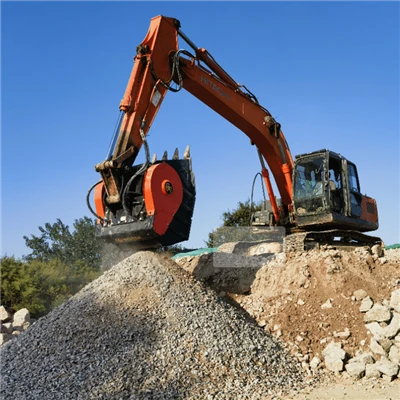
A large jaw crusher is a fundamental piece of equipment in the mining, construction, and recycling industries. Its primary function is to reduce large chunks of materials into smaller, more manageable sizes. As a leading supplier of large jaw crushers, I am often asked about the detailed process of how these machines achieve this crucial task. In this blog, I will delve into the working principles, components, and factors that contribute to the efficient size reduction of materials by a large jaw crusher.
Working Principles of a Large Jaw Crusher
The basic working principle of a large jaw crusher is relatively straightforward yet highly effective. It operates on the principle of compression crushing. The crusher consists of a fixed jaw and a movable jaw. The fixed jaw is stationary, while the movable jaw moves back and forth against the fixed jaw in a cyclic motion. This movement is typically driven by an eccentric shaft, which is powered by a motor.
When the materials are fed into the crushing chamber between the two jaws, the movable jaw exerts a powerful compressive force on the materials as it moves towards the fixed jaw. This force causes the materials to break along their natural lines of weakness, such as cracks and fissures. As the movable jaw retreats, the crushed materials fall down due to gravity and are discharged from the bottom of the crusher.
The cyclic motion of the movable jaw is crucial for continuous crushing. Each cycle of movement applies a new round of compressive force on the materials, gradually reducing their size with each pass. The size of the final crushed materials can be adjusted by changing the distance between the two jaws at the bottom of the crushing chamber, known as the discharge opening. A smaller discharge opening will result in finer crushed materials, while a larger opening will produce coarser output.


Key Components of a Large Jaw Crusher
To understand how a large jaw crusher reduces the size of materials, it is essential to familiarize ourselves with its key components. These components work together to ensure the efficient operation of the crusher.
1. Frame
The frame is the backbone of the jaw crusher. It provides a rigid structure to support all the other components and withstand the high forces generated during the crushing process. The frame is usually made of high-quality steel or cast iron, which offers excellent strength and durability.
2. Eccentric Shaft
The eccentric shaft is a critical component that drives the movement of the movable jaw. It is connected to the motor through a belt and pulley system. As the motor rotates, the eccentric shaft rotates as well, causing the movable jaw to move in an elliptical path. This elliptical motion is what generates the compressive force needed to crush the materials.
3. Movable Jaw and Fixed Jaw
The movable jaw and the fixed jaw are the main crushing surfaces of the jaw crusher. They are typically made of high manganese steel, which has excellent wear resistance and can withstand the high impact and abrasion during the crushing process. The shape and design of the jaws are optimized to ensure efficient crushing and uniform size reduction of the materials.
4. Toggle Plate
The toggle plate is a safety device that protects the crusher from damage in case of overloading. It is located between the movable jaw and the frame. If the crusher encounters an uncrushable object, such as a piece of metal, the toggle plate will break first, preventing damage to the more expensive components of the crusher. After the toggle plate breaks, it can be easily replaced, allowing the crusher to resume operation quickly.
5. Flywheel
The flywheel stores and releases energy during the crushing process. It helps to balance the load on the motor and ensures smooth operation of the crusher. When the movable jaw moves towards the fixed jaw, the flywheel releases energy to assist in the crushing process. When the movable jaw retreats, the flywheel stores energy from the motor, ready for the next crushing cycle.
Factors Affecting the Size Reduction Efficiency of a Large Jaw Crusher
Several factors can affect the efficiency of a large jaw crusher in reducing the size of materials. Understanding these factors can help operators optimize the performance of the crusher and achieve the desired output size.
1. Material Properties
The properties of the materials being crushed, such as hardness, toughness, and particle size distribution, have a significant impact on the crushing efficiency. Hard and tough materials require more energy to break, which may result in lower crushing capacity and higher wear on the jaws. On the other hand, materials with a more uniform particle size distribution are easier to crush and can achieve better size reduction results.
2. Feeding Rate
The feeding rate of the materials into the crusher is another important factor. If the feeding rate is too high, the crusher may become overloaded, leading to reduced efficiency and potential damage to the machine. If the feeding rate is too low, the crusher may not operate at its full capacity, resulting in lower productivity. Therefore, it is crucial to maintain a proper feeding rate to ensure optimal performance.
3. Discharge Opening Setting
As mentioned earlier, the discharge opening setting determines the size of the final crushed materials. A smaller discharge opening will produce finer materials but may also reduce the throughput of the crusher. A larger discharge opening will increase the throughput but result in coarser output. Operators need to adjust the discharge opening according to the specific requirements of the application.
4. Crusher Speed
The speed of the crusher, which is determined by the rotational speed of the eccentric shaft, also affects the size reduction efficiency. A higher speed can increase the number of crushing cycles per unit time, leading to more efficient size reduction. However, too high a speed may cause excessive wear on the components and increase the power consumption. Therefore, the crusher speed needs to be optimized based on the material properties and the desired output size.
Applications of Large Jaw Crushers
Large jaw crushers are widely used in various industries due to their high efficiency and reliability in reducing the size of materials. Some of the common applications include:
1. Mining Industry
In the mining industry, large jaw crushers are used to crush large ore rocks into smaller sizes for further processing. They are often the first stage of the crushing process in a mining operation, reducing the size of the raw materials before they are sent to secondary and tertiary crushers.
2. Construction Industry
In the construction industry, large jaw crushers are used to crush construction waste, such as concrete and bricks, into reusable aggregates. These aggregates can be used in the production of new concrete, asphalt, and other construction materials, reducing the need for virgin materials and promoting sustainable construction practices.
3. Recycling Industry
The recycling industry also benefits from the use of large jaw crushers. They can be used to crush various types of waste materials, such as scrap metal, glass, and plastics, into smaller pieces for recycling. This helps to reduce the volume of waste and recover valuable resources.
Related Products
If you are looking for other types of crushers or crushing equipment, we also offer a range of related products, including the Excavator Rock Crusher Bucket, Pile Crusher, and Jaw Bucket. These products are designed to provide efficient and versatile crushing solutions for different applications.
Conclusion
In conclusion, a large jaw crusher reduces the size of materials through the principle of compression crushing. Its key components, such as the frame, eccentric shaft, movable and fixed jaws, toggle plate, and flywheel, work together to ensure the efficient operation of the crusher. The size reduction efficiency of the crusher is affected by factors such as material properties, feeding rate, discharge opening setting, and crusher speed. Understanding these factors and optimizing the operation of the crusher can help achieve the desired output size and improve the overall productivity of the crushing process.
If you are interested in our large jaw crushers or any of our related products, please feel free to contact us for more information and to discuss your specific requirements. We are committed to providing high-quality crushing solutions and excellent customer service.
References
- "Crushing and Screening Handbook" by Finlay
- "Mineral Processing Technology" by Barry A. Wills and Tim Napier-Munn