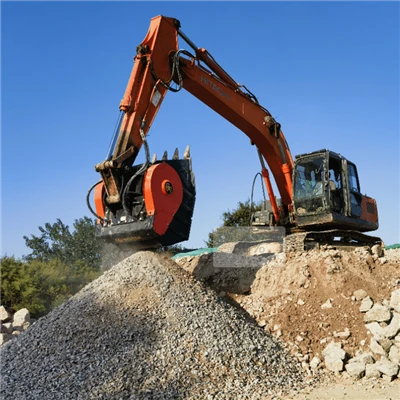
In the realm of mining, construction, and aggregate production, rock crusher jaws play a pivotal role. They are the workhorses that break down large rocks into smaller, more manageable pieces. Over the years, the industry has witnessed a continuous evolution in the technologies applied to rock crusher jaws. As a dedicated rock crusher jaws supplier, I am excited to delve into the new technologies that are revolutionizing this field.
Advanced Materials for Enhanced Durability
One of the most significant advancements in rock crusher jaws is the use of advanced materials. Traditional crusher jaws were often made of cast iron or steel, which had limitations in terms of wear resistance and toughness. Today, manufacturers are turning to high - chromium alloys and composite materials.
High - chromium alloys offer exceptional wear resistance. These alloys are designed to withstand the abrasive forces generated during the crushing process. When large rocks are fed into the crusher, the jaws come into direct contact with the hard surfaces, causing significant wear. High - chromium alloys can resist this wear much better than traditional materials, resulting in longer jaw life.
Composite materials are another innovation. They combine the best properties of different materials to create a jaw that is both strong and lightweight. For example, some composite jaws may have a core of a high - strength polymer surrounded by a layer of a wear - resistant metal. This combination not only reduces the weight of the jaw, which can lead to energy savings during operation, but also provides excellent durability.
Precision Manufacturing Techniques
Modern manufacturing techniques have also had a profound impact on rock crusher jaws. Computer - Numerical - Control (CNC) machining has become the standard in the production of crusher jaws. CNC machines can produce jaws with extremely high precision, ensuring that the dimensions are accurate to within a few thousandths of an inch.
This precision is crucial for several reasons. Firstly, it ensures a proper fit within the crusher. A well - fitting jaw will operate more efficiently, reducing the risk of misalignment and premature wear. Secondly, precise manufacturing allows for better control of the crushing chamber geometry. The shape of the crushing chamber affects the way rocks are crushed, and a precisely machined chamber can improve the crushing efficiency and the quality of the final product.
3D printing is another emerging technology in the manufacturing of rock crusher jaws. Although it is still in its early stages, 3D printing offers several advantages. It allows for the creation of complex geometries that would be difficult or impossible to achieve with traditional machining methods. This can lead to the development of jaws with optimized shapes for specific types of rocks or crushing applications. Additionally, 3D printing can reduce the lead time for producing custom - made jaws, which is beneficial for customers with unique requirements.
Smart Monitoring and Control Systems
The integration of smart monitoring and control systems is a game - changer in the operation of rock crusher jaws. These systems use sensors to collect data on various parameters such as temperature, vibration, and pressure during the crushing process.
Temperature sensors can detect overheating in the jaws, which may indicate excessive friction or a mechanical problem. By monitoring the temperature, operators can take preventive measures to avoid damage to the jaws, such as adjusting the feed rate or lubricating the moving parts.
Vibration sensors are used to detect abnormal vibrations in the crusher. Unusual vibrations can be a sign of misalignment, worn - out parts, or uneven feeding of rocks. By analyzing the vibration patterns, the system can alert the operator to potential issues before they cause significant damage.
Pressure sensors measure the force exerted on the jaws during the crushing process. This data can be used to optimize the crushing operation. For example, if the pressure is too high, it may indicate that the rocks are too large or the feed rate is too fast. The system can then adjust the crusher settings accordingly to ensure efficient and safe operation.
Hydraulic Adjustment Systems
Hydraulic adjustment systems have become increasingly popular in rock crushers. These systems allow for easy and precise adjustment of the crusher jaws. In traditional crushers, adjusting the gap between the jaws was a time - consuming and labor - intensive process. With hydraulic adjustment systems, operators can simply use a control panel to change the jaw opening.
This is particularly useful in applications where the size of the crushed material needs to be changed frequently. For example, in a quarry where different sizes of aggregates are required for different construction projects, the hydraulic adjustment system allows for quick and efficient adjustment of the crusher to produce the desired size of rocks.
Energy - Saving Technologies
In today's world, energy efficiency is a top priority. New technologies are being developed to reduce the energy consumption of rock crusher jaws. One such technology is the use of variable - frequency drives (VFDs). VFDs allow the motor of the crusher to operate at different speeds depending on the load.
When the crusher is not fully loaded, the VFD can reduce the motor speed, which in turn reduces the energy consumption. This is in contrast to traditional crushers, which often operate at a fixed speed regardless of the load. By using VFDs, rock crushers can save a significant amount of energy over time, which not only reduces operating costs but also has a positive environmental impact.
Applications in Different Industries
The new technologies applied to rock crusher jaws have a wide range of applications in different industries. In the mining industry, crushers are used to break down large ore rocks into smaller pieces for further processing. The advanced materials and precision manufacturing techniques ensure that the jaws can withstand the harsh conditions in mines and provide reliable performance.
In the construction industry, crushers are used to produce aggregates for concrete, asphalt, and other building materials. The smart monitoring and control systems help to ensure the quality of the aggregates, while the hydraulic adjustment systems allow for quick changes in the aggregate size to meet the project requirements.
For those interested in more information about related products, you can check out our Excavator Rock Crusher Bucket, Excavator Crusher, and Bucket Rock Crusher.


Conclusion
The field of rock crusher jaws is experiencing a period of rapid technological advancement. From advanced materials and precision manufacturing techniques to smart monitoring systems and energy - saving technologies, these innovations are improving the performance, durability, and efficiency of rock crushers. As a rock crusher jaws supplier, I am committed to staying at the forefront of these technological developments to provide our customers with the best products and solutions.
If you are in the market for high - quality rock crusher jaws or have any questions about the new technologies applied in this field, we invite you to contact us for a detailed discussion. Our team of experts is ready to assist you in finding the right solution for your specific needs.
References
- Smith, J. (2020). Advances in Rock Crushing Technology. Mining Journal.
- Johnson, A. (2021). The Impact of New Materials on Crusher Jaws. Construction Engineering Review.
- Brown, R. (2022). Smart Monitoring Systems in Rock Crushers. Industrial Automation Magazine.